
Follow
the podcast on


Cicadas are on the wane towards the end of March – I still haven’t found the egg-laying site containing “Jack”s offspring ;-)
But Black field crickets (Teleogryllus commodus) are still making a heck of a noise in the late afternoon/evening, especially in the North Island and top of the South
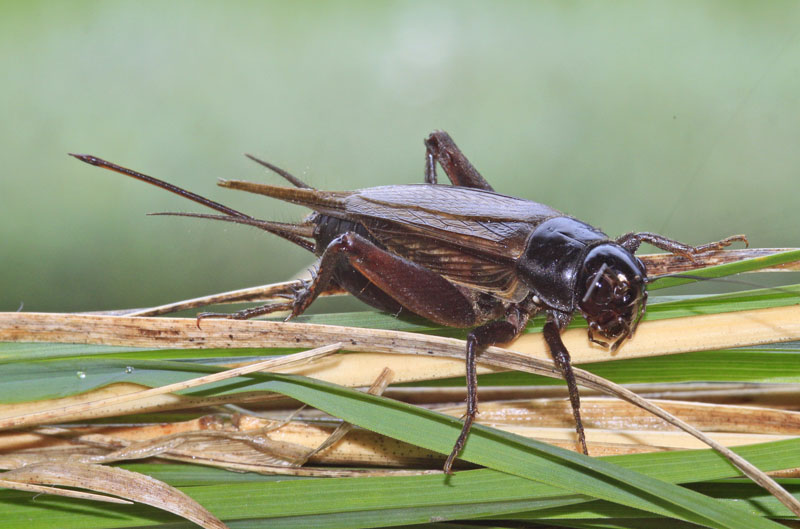
Teleogryllus commodus (Supplied)
You won’t see them often, as they hide in cracks in the soil during the day; when the sun goes down the crickets will come to the surface to eat grasses – they can do a lot of damage to pasture and lawns, leaving bare soil around their home cracks.
Black field crickets make their characteristic noise by rubbing their wings together. (Mating calls!)
Control is quite hard – In the old days, Farmers used wheat, soaked in Maldison, strewn over the paddock, in early summer (January is the month before crickets become adults and hence, reproduce!).
For a lawn it might be a nice idea to pour water with a good dash of dish-washing liquid down the holes of these insects in the middle of the day; The crickets emerge in the non-day sun (because the soapy water stings their eyes, I reckon) and the sun will heat the black bodies up real quick (Natue’s Micro-wave oven!)
Another “singer” in autumn is the Katydid (Caedicia simplex); mostly afternoon and early evening
It creates a rather unique noise by rubbing the edges of its stiff forewings together, like a fingernail on a comb. The noise has the quality produced by a ventriloquist – the insect “throws its voice” so you can never be sure where it is calling from.
Katydids feed on garden plants, especially flowers and they truly seem to like the roses and Dahlias that flower in autumn! They are well-camouflaged on green plants, so birds, frogs and lizards can find it tricky to locate them.
After dark it’s the time for tree weta to start up their communications; A soft rasping noise that is repeated frequently by rubbing the impressive hind legs onto a raised “file” situated on the abdominal segments.
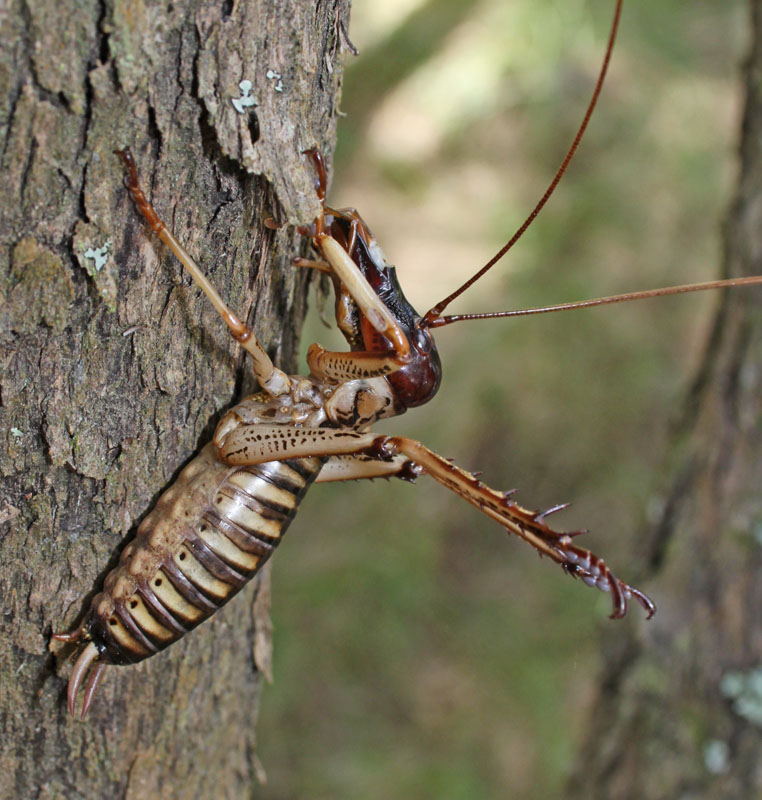
Tree weta (Supplied)
It is their way of keeping in touch with partners and flatmates while feeding at night. But sometimes they also make that noise when they feel threatened or disturbed: they raise their legs and warn you to “back off!!”
The irony is, of course, we don’t really know anything about the “language” and communication capabilities of these weta… They’ve been around for 180 million years or so, making them one of our oldest critters in Aotearoa.
LISTEN ABOVE
Take your Radio, Podcasts and Music with you
Get the iHeart App

Get more of the radio, music and podcasts you love with the FREE iHeart app. Scan the QR code to download now.

Download from the app stores


Stream unlimited music, thousands of radio stations and podcasts all in one app. iHeart is easy to use and all FREE


