


A woman who collided with a gang member fleeing from police says the man was “going so fast” on his motorbike he “came out of nowhere”.
That woman is now on trial charged with careless driving causing the death of Head Hunters gang member Sam Rasmussen, after police said she entered the intersection without looking.
“I honestly didn’t even see him coming or hear him or anything,” she said in a video police interview played in the Waitākere District Court.
“He was going so fast it was insane. [He came] just out of nowhere, he must have been going so fast.”
The defence argued that obscured visibility at the intersection, a dip in the road and Rasmussen’s speed were factors contributing to the woman, who has name suppression, not seeing him coming.
The agreed facts
What’s not in dispute is that on March 13, 2024, Rasmussen was speeding along Rimu St in New Lynn, West Auckland, on his Harley Davidson V-Rod, fleeing from a police car with red and blue flashing lights.
At the intersection of Nikau and Rimu Streets, the woman left a stop sign on Nikau St. Rasmussen, coming from her right, collided with her Toyota Wish.
He was flung from his motorcycle, landing about 29m from first impact.
He was taken to hospital where he died from injuries from the crash.
In court today, the public gallery was filled with about 15 of Rasmussen’s supporters wearing T-shirts, hoodies and badges in his memory.
They were also holding a framed photograph of Rasmussen.
The female driver was sitting in a corner of the other side of the gallery with a couple of support people.
Police crash analyst Senior Constable Gary Abbott, who carried out an assessment of the crash site, was the first witness.
“It is my belief ... that [the defendant] has not seen the Harley because she entered the intersection before making sure the coast was clear,” he said.
As the crash was just before 6pm in March, it was in daylight and the road was dry, he said.
He conceded the defendant’s view would have been restricted at the Nikau St stop sign from the overhanging from a large tree, power poles and rubbish bins on the side of the road.
Despite this, as he tested the Nikau St side of the intersection, when his car edged closer to the intersection’s “limit line” his view to the right “opened out” considerably.
From a speed camera reading taken before the crash, Abbott estimated Rasmussen was travelling at 85km/h at the time of the collision.
This was different from the defence’s forensic crash analyst who assessed Rasmussen was doing about 93km/h at the time of the crash.
Defence lawyer Anton Heyns pointed out that the Harley’s speedometer was found frozen at the equivalent of just over 120km/h.
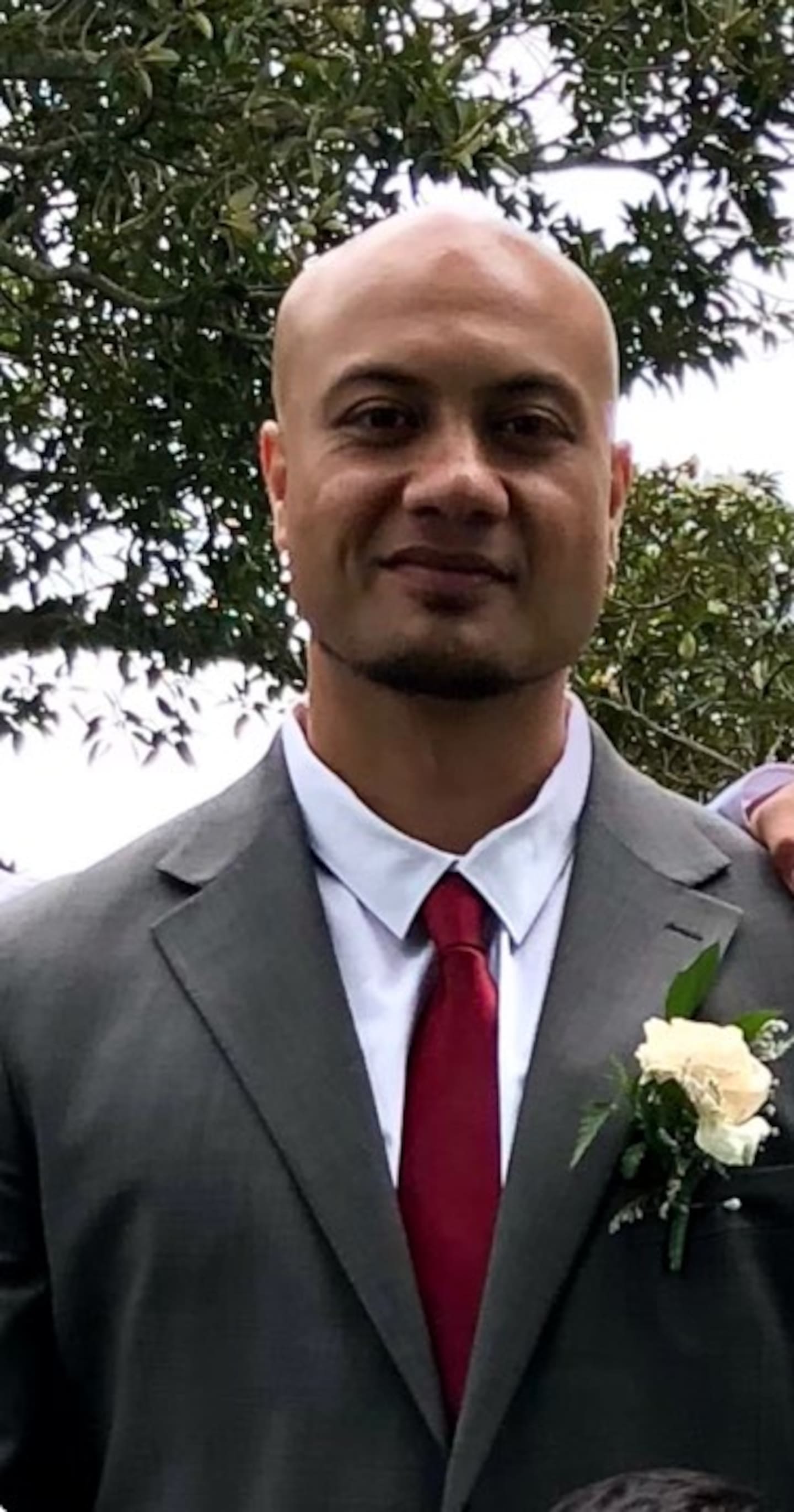
Sam Rasmussen died at the age of 43. Photo / Supplied
Abbott dismissed that reading, saying he had another specialist examine the speedometer, and that specialist was unable to determine whether that reading was correct.
He repeated that he estimated Rasmussen was going at a speed of 85km/h or “quite possibly higher”, but no more than 93km/h, when he crashed.
Heyns asked Abbott why the senior constable ruled that Rasmussen also would not have seen the defendant’s Toyota.
“It would be, most likely, the fact that she pulled out at the last moment,” he replied.
“He had no time to correct with the threat that was in front of him.”
At some point during Heyns’ cross-examination, dissent from Rasmussen’s side of the gallery started.
Judge Terry Singh told the group he could have no comment from the gallery, as it was “not fair” and hindered him from doing his job “without bias and impartiality”.

Police investigating the scene of the crash that claimed the life of Sam Rasmussen in 2024. Photo / Hayden Woodward
Defendant claims she paused at stop sign
The court was played a video police interview with the woman on the same day as the crash.
In the video, she said she had moved onto the intersection when “something” collided with her car.
“I don’t even know what it was or anything,” she told the interviewing officer.
“I don’t remember that much from that part of it.”
When she got out of the car, she saw Rasmussen on the pavement and “a lot” of blood.
The interviewing officer checked if she had stopped at the stop sign.
“Always do,” she replied.
She didn’t see or hear the loud motorcycle coming, she explained.
“He was going so fast it was insane. [He came] just out of nowhere, he must have been going so fast.
“I honestly didn’t even see him coming or hear him or anything.”
‘Human factors’
The defence’s forensic crash analyst Bruce Wilson said he had spent 16 years in the NZ Police and now works as an expert consultant.
He showed video and stills of his own assessment of the intersection, which he said showed the lack of visibility to the right of the stop sign.
He had identified a dip in the road on Rimu St that his equipment measured to be 3.3m below where the defendant’s Toyota was, before crossing the intersection.
However, Abbott had also dismissed this dip earlier, saying during his own assessment, the dip did not hide oncoming traffic from view.
Wilson also said in his research, he found out the speed limit in that area at the time was 30km/h and he spoke to what he called a driver’s “human factors”.
These were the factors that contributed to the time a driver, the defendant or Rasmussen, could be expected to respond to a road incident.
This included processing and reacting.
Heyns asked: “If we draw together all the factors you’ve spoken about, rubbish bins, visual obstructions, the speed, the human factors, what is the conclusion that you come to?”
“It is highly likely ... that the motorcyclist was visually obstructed during that time,” Wilson responded.
He added that Rasmussen’s speed had caused the crash.
“The crash would not have happened if the motorcyclist was travelling 50km/h or below,” he added.
As the day came to an end, most of Rasmussen’s loved ones filtered out of the court, save a few.
“What the f... are you looking at?” the woman asked, seemingly to one of those few.
She and a support person were then escorted out the back door of the court room by security.
The judge-alone trial will conclude tomorrow with police prosecutor Luke Foley’s cross-examination of Wilson.

Members of the Head Hunters gang gather outside the Morrisons funeral home in Henderson for the funeral of gang member Sam Rasmussen, on March 19, 2024. Photo / Michael Craig
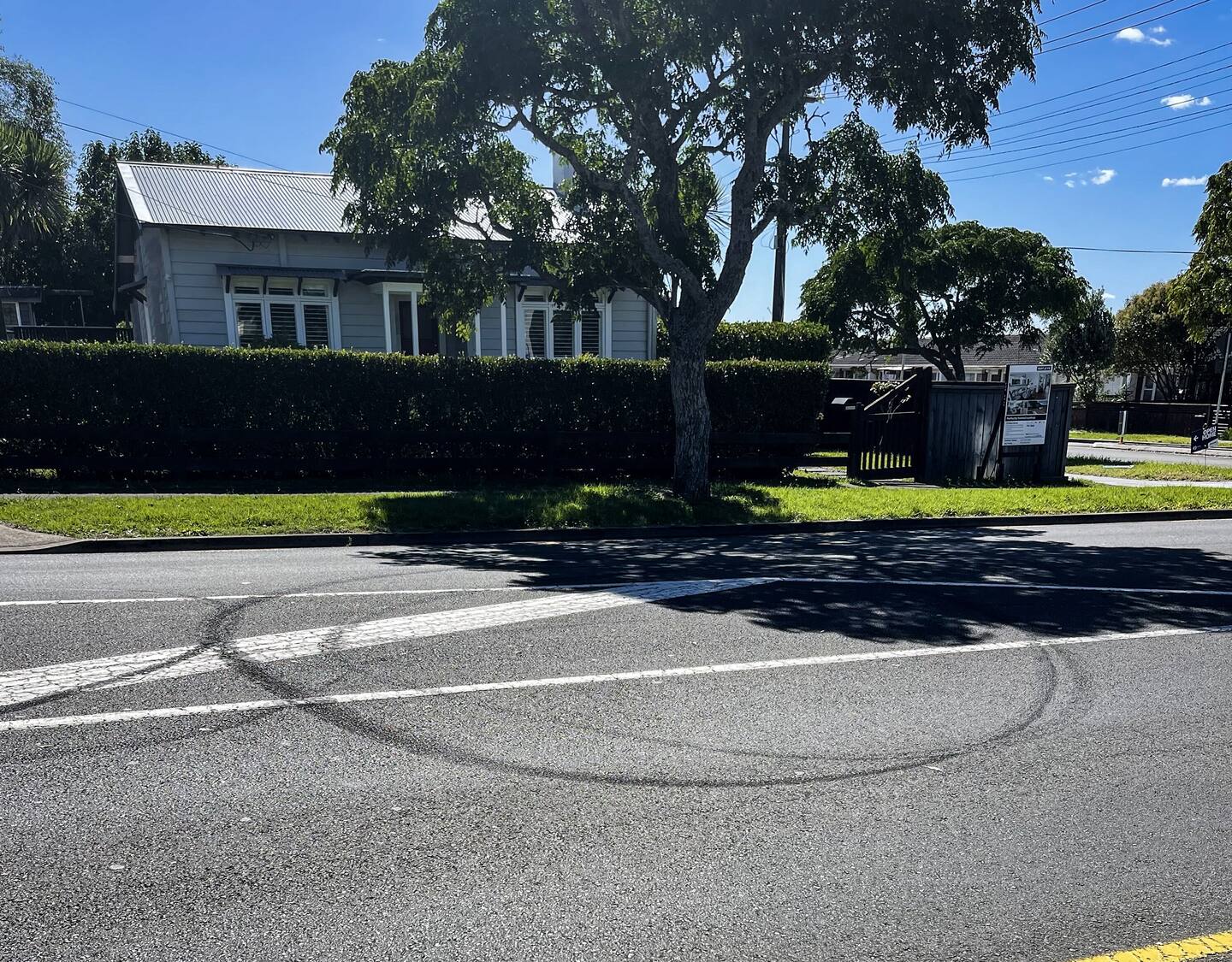
Tyre marks from burn outs on Rimu Rd, a week after Sam Rasmussen collided with the defendant and died. Photo / Joe Los'e
Ella Scott-Fleming has been a journalist for three years and previously worked at the Otago Daily Times, Gore Ensign and Metro Magazine. She has an interest in court and general reporting. She’s currently based in Auckland covering justice related stories.

Take your Radio, Podcasts and Music with you
Get the iHeart App

Get more of the radio, music and podcasts you love with the FREE iHeart app. Scan the QR code to download now.

Download from the app stores


Stream unlimited music, thousands of radio stations and podcasts all in one app. iHeart is easy to use and all FREE