Follow
the podcast on

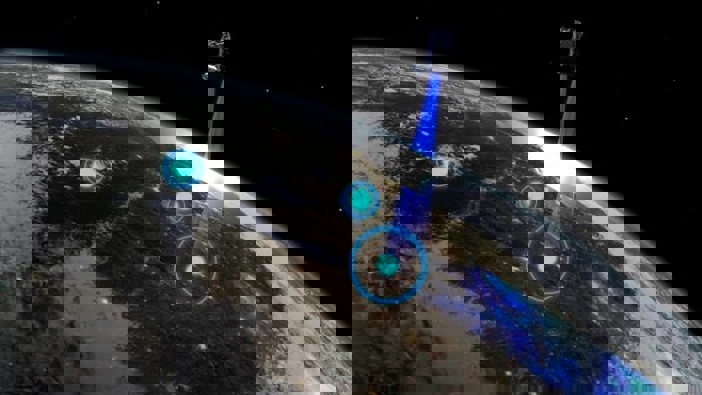
At the beginning of the week Vodafone NZ became One NZ, and to mark the occasion they announced a new agreement with Elon Musk’s Space X that will enable them to provide mobile coverage for their customers across the whole of New Zealand.
Currently if you’re a One NZ customer your mobile service is delivered through cellphone towers, but this new agreement will mean customers in areas that don’t have cellular coverage will be able to use their smartphones to connect via satellite.
At this stage, One NZ’s mobile network covers 98 percent of the places where people “lived and worked”, but that is only just over half the country’s geographical land mass. So this is a big deal, even if it is going to roll out rather slowly starting with texting being available from the end of 2024, then voice messages, and then data as capacity increases. You’re not going to be streaming Netflix or Sky Go anytime soon from the remote areas of the country.
That aside, in the wake of Cyclone Gabrielle, and the incredible damage done to our communication systems, this is good news.
But there were a couple of groups who raised an eyebrow at the announcement and dared to suggest that maybe these technical advancements were not as exciting as they seemed. Astronomers and trampers both voiced concerns.
Now to be fair, astronomers have been talking about the slow take-over of our night skies for a while now - not just by Starlink but also OneWeb, Amazon and Astra who are planning on launching satellites. As was reported in The Guardian earlier in the year, these low orbiting mega-constellations of satellites are ruining images of the night sky and threatening astronomers ability to make new discoveries. The satellites cause radio interference with sensitive astronomical instruments, and contribute to light pollution or skyglow.
As Flinders University space archaeologist Alice Gorman said, “In a couple of generations there will be no one left alive who remembers the night sky before these satellites.”
It wasn’t until I saw a Starlink satellite launch making its way across the sky at the Southern end of Lake Taupo – a line of 45 satellites, clear, shinning like stars, following each other closely and perfectly spaced that I comprehended what a proposed 47,000 Starlink satellites orbiting the globe would look like, and the space junk it would create. This is an issue which needs to remain front of mind.
But when it comes to trampers wanting time off the grid, those days are not over. It’s only an offer if you decide to switch on your phone and participate. Like all tech steps forward - it’s up to you to decide what value it brings to your life and how you want to use it. If I think of the huts I’ve stayed in, the people I’ve met aren’t the kind to head into the middle of nowhere to spend time on their phones.
I’m sure there will be many people like me who head into the bush with their phones switched off, or maybe on flight mode so they can take photos. Most importantly they will still rely for safety on a personal location beacon first and foremost, and probably still wait until reaching the end of the tramp to send that “I’m out. All good” text.
- One NZ CEO on the new rebrand and partnership with Starlink
- Vodafone marks first day as One NZ, reveals hookup with Elon Musk’s Starlink
- Federated Mountain Clubs President supports the end of mobile blackspots
But you can’t deny the benefit of 100 percent coverage. For those who like going off grid, for those who work in remote places, and those who put their lives at risk to search and rescue us when something goes wrong, having another form of communication shouldn’t be scoffed at. If you need it, use it. Otherwise you can forget it’s there. It’s up to you.
LISTEN ABOVE
Take your Radio, Podcasts and Music with you
Get the iHeart App

Get more of the radio, music and podcasts you love with the FREE iHeart app. Scan the QR code to download now.

Download from the app stores


Stream unlimited music, thousands of radio stations and podcasts all in one app. iHeart is easy to use and all FREE