
Follow
the podcast on


Cast your vote! We’re in the middle of the Fungus of the Year. An incredible series of stories about mushrooms, fungi, moulds, diseases – the poisonous and gorgeous organisms that surround our planet, gardens and —believe it or not— our food!
Surprises galore: i.e. The Fungal Kingdom is larger than the Plant Kingdom! There are more fungal species than plant species – get your head around that!
We could easily do a fungus story for each Jack Tame program between now and 2086 – My old mate Peter Buchanan (ex-DSIR – Manaaki Whenua, Bioeconomy Science Institute) has always been the storyteller and is now working with teachers. Let’s start with a few amazing organisms.
VEGETABLE CATERPILLAR
The “Vegetable Caterpillar”, Te Awheto: a native mummified caterpillar and a native stick-like fungal fruiting body. The Caterpillar gets to a large form underground, where it can be consumed by a fungus. The “fruiting body” develops from the head of the dead caterpillar to well above the ground, where the spores are released (aiming to grab more live caterpillars!).
Māori worked out relatively quickly that if Awheto was collected in good numbers and burnt, the powdered charcoal mixed with bird fat would create the perfect and stable black pigment, used to make Ta Moko.
A Caterpillar, a Fungal Fruiting Body, a Barbeque, some Bird Fat and Black Charcoal…
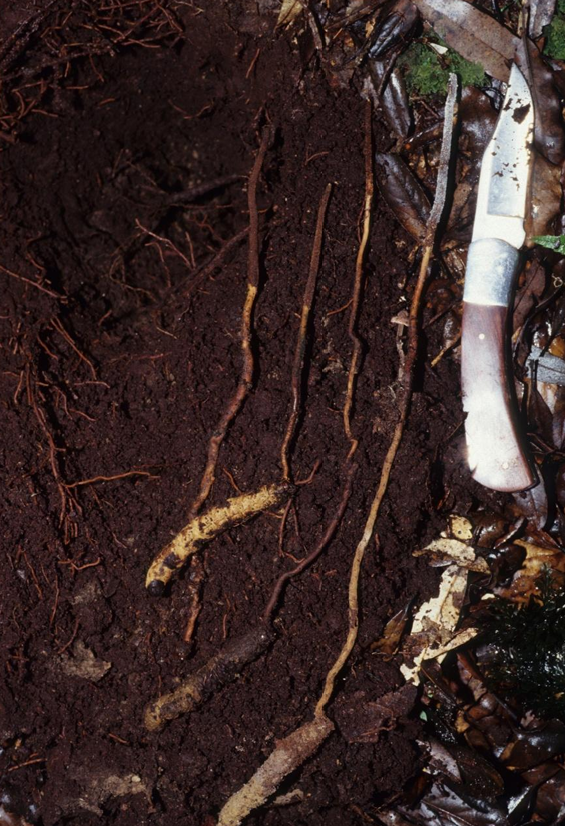 Photo / Supplied
WOOD EAR FUNGUS
I love the Wood Ear Fungus (Te Hakeke) in our Native forest. They look so Dark Brown and elegant on the dead native trees. Touch them and they feel like a human ear, chew a bit off and they are as soft as a human ear – in fact, they smell and kind-of taste like a human ear! ... But they don’t!
No smell – no taste, but a brilliant way to absorb smell and taste from cooked foods.
It wasn’t just the Māori who cottoned onto the way to harvest and cook with the ear fungus – the Chinese merchants that settled in Aotearoa realised that the New Zealand Ear Fungus was pretty closely related to the one in China!
A significant trade with China (1870 – 1910) developed from a number of ports in Aotearoa – it was known as “Taranaki Wool”. Chew Chong was the leading ear fungus exporter and has been honoured in the NZ Business Hall of Fame for to the “Fungus Trade”.
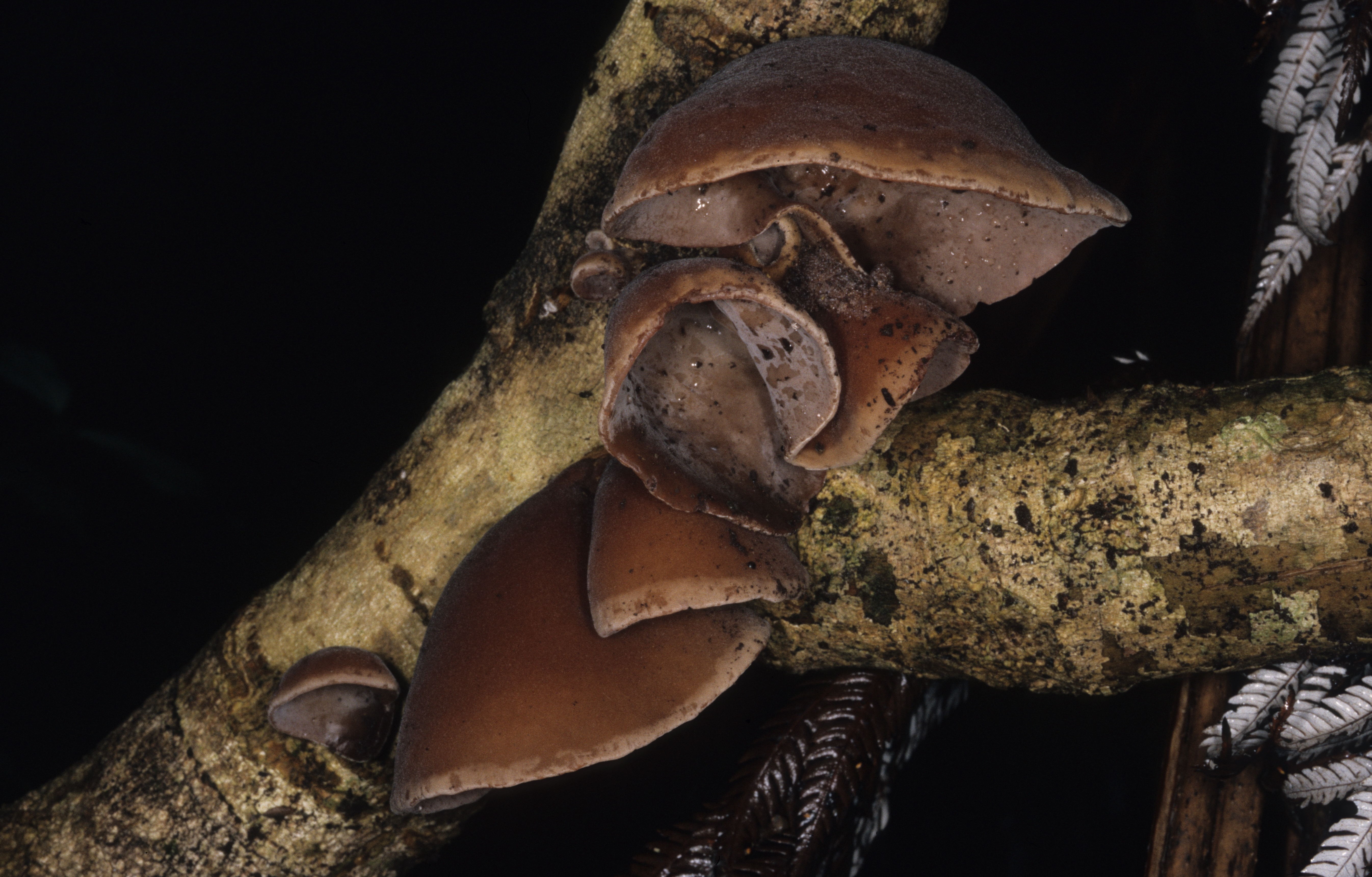 Photo / File | Peter Buchanan Landcare Research
FISCHER’S EGG
I am really keen to find one of these rare “truffels”, one fine day.
It's from just a few places in the South Island: Nelson, Dunedin and Gore and is threatened with extinction (DOC, IUCN Global Red List).
The fruitbodies of Fischer’s egg have no opening through which to release their spores. Similar “stomach-like” fungi mostly depend on animals to disperse their spores after consumption of their fruitbodies… so, here’s a question:
Did the flightless Moa feed on (and disperse) Fischer’s egg?
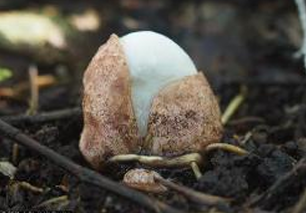 Photo / Supplied
Remember: the 18th of June is the last day to vote (click here or scan the QR code to do so).

Have a look at stuff like this to find out more about fungi, and this wonderful book that Peter put together.
LISTEN ABOVE
Take your Radio, Podcasts and Music with you
Get the iHeart App

Get more of the radio, music and podcasts you love with the FREE iHeart app. Scan the QR code to download now.

Download from the app stores


Stream unlimited music, thousands of radio stations and podcasts all in one app. iHeart is easy to use and all FREE


