

Birds have always been my number one hobby, both in the Netherlands and in New Zealand… plus the rest of the world!
If you’ve ever been to Wingspan in Rotorua, you’ll know exactly what it’s all about: Birds of Prey! How they hunt, what they eat – check it out!
Kingfishers are quite a common bird species in New Zealand, and they are beautiful, they fly fast and make loud calls around their territory (“cheek cheek cheek” etc). You often see them around estuaries, forested areas and even near nicely looked after gardens.
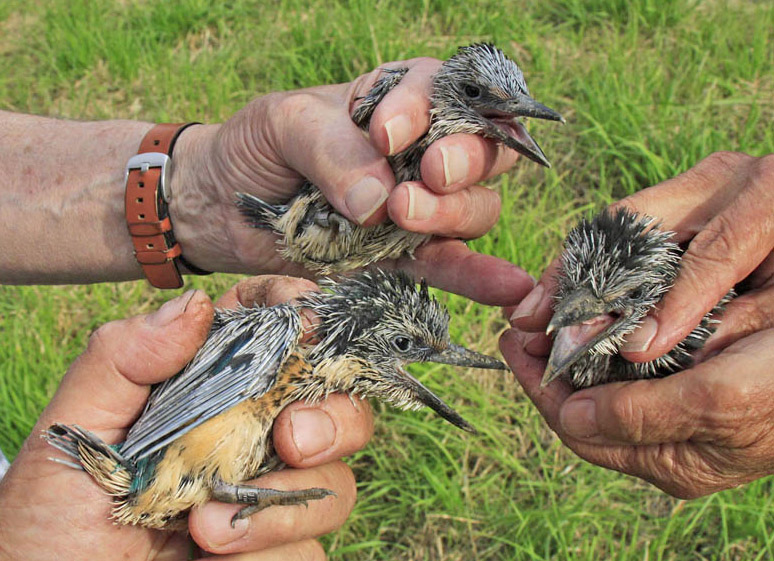
The birds are quite clever in building their nest in a vertical (clay) bank, rotting logs, etc, where they’ll raise three to five young ones in the space of just-under a month.
In the past decade or so we’ve observed nests and banded the young ones around Christmas time. The nests are pretty tight for an adult bird-bander to get full-grown hands and arms into, so my grandson (with the perfect thin arms) has been the daring and useful member of our team to get babies into the sunlight to give them their “Bling”.
Mum and Dad kingfishers go hunting for food in the area where their nest is (in our case the Halswell Quarry and surroundings) and present the nutrients at the entrance of the nest-tunnel (accompanied by a lot of baby noise which sounds brilliantly spooky).
What do you think is the diet of kingfishers?
Most people mention fish, crustaceans, tadpoles, tunnelling mud crabs Austrohelice crassa, perhaps some lizards and insects, koura and the odd cicada?
I decided to have a look near the entrance of kingfisher nests and Bingo! Like a number of meat-eating birds (owls, magpies, robins, falcons, harriers, herons, gulls and even swallows!) they actually “digest” their yummy food and compress it into “pellets” with all the remains that cannot be digested. All they need to do is spew it out.
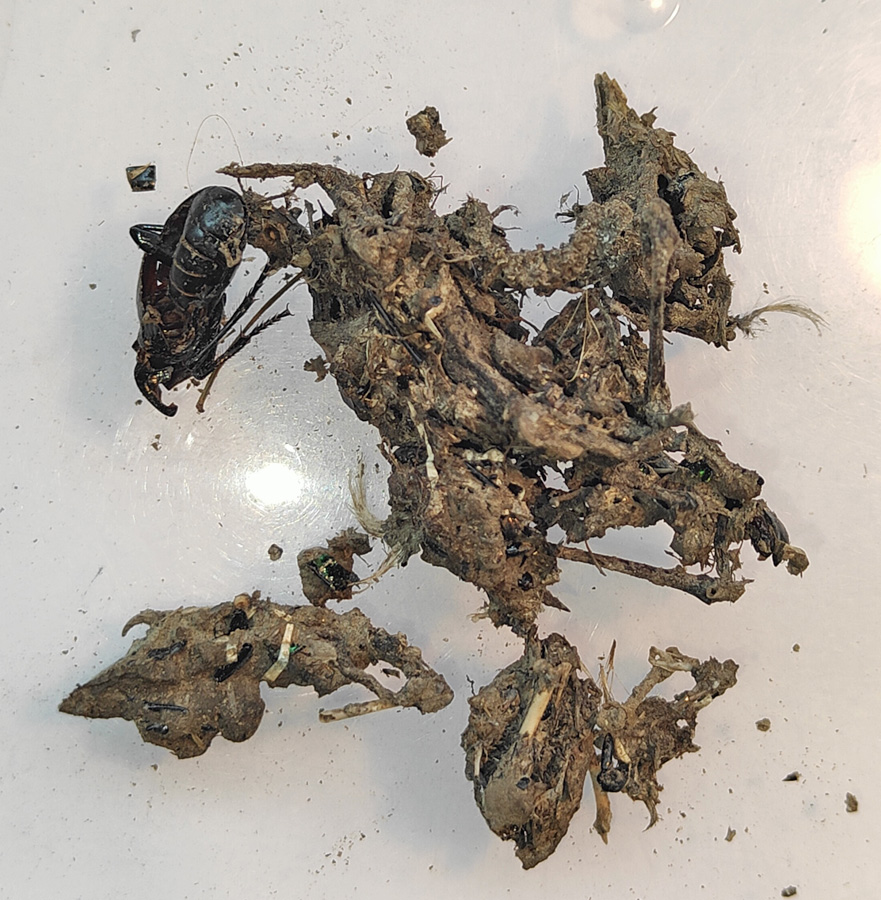
And all I need to do is collect that stuff, and identify what it was:
Large-sized bones of animals such as mice. Grey coloured mouse skin. Also, some sizeable Carabid beetles in the sample. Owls and Harriers have similar material in their pellets – seems to be a wonderful mixture of food for many birds.
One species that was very common in the Kingfisher’s pellets were the remains of the Alexander Beetle (Megadromus antarcticus), a large species with a fabulous iridescent green shine on its body.
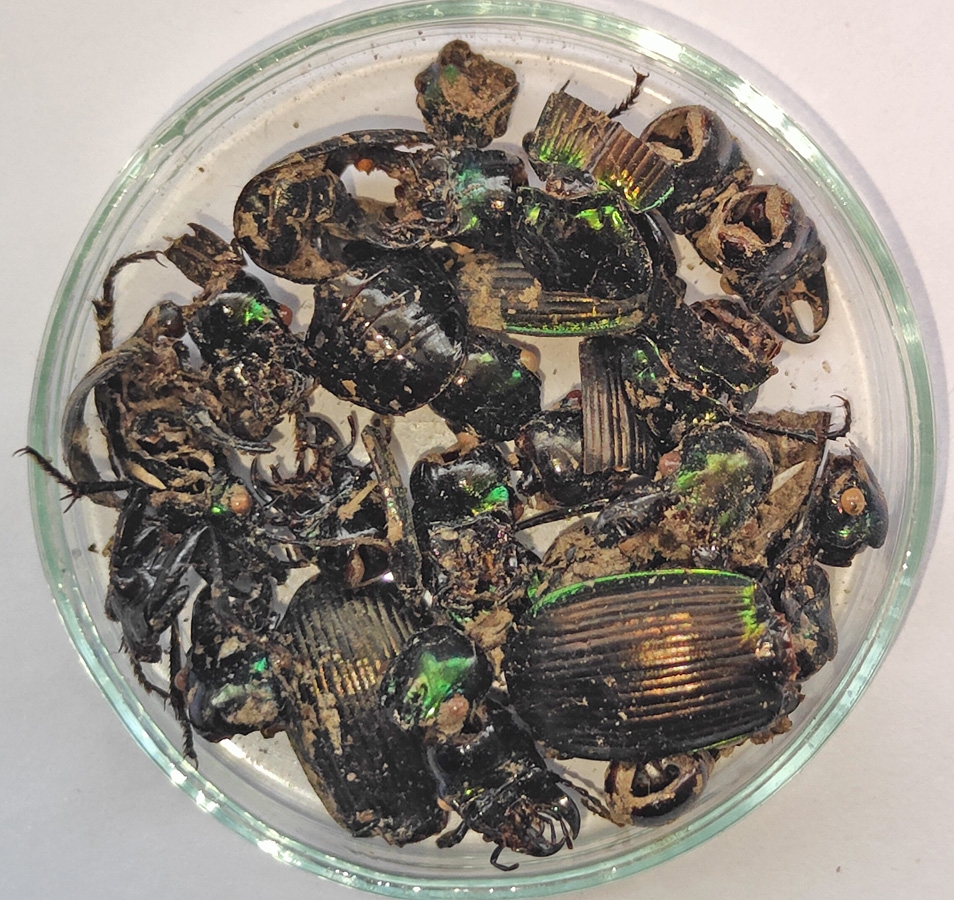
Really stands out and likely to be discovered by the clever kingfisher parents. The only place in the world where this beautiful beetle species lives, is Canterbury!
Extraordinarily, I found and almost complete Red Admiral butterfly in the samples.
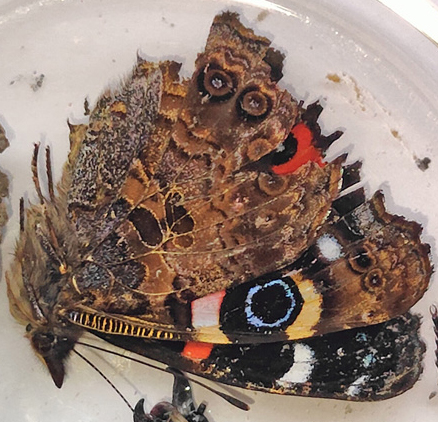
This specimen looks as if nobody had a go at eating this insect, as if the kids decided that such a butterfly is hardly edible…
I can imagine that the parents saw this gorgeous and very visible butterfly cruise through the Quarry. Kingfishers are very quick flyers and will pick these fast-moving creatures as quick as they can.
And here I came across two metal bands that were put on a bird.
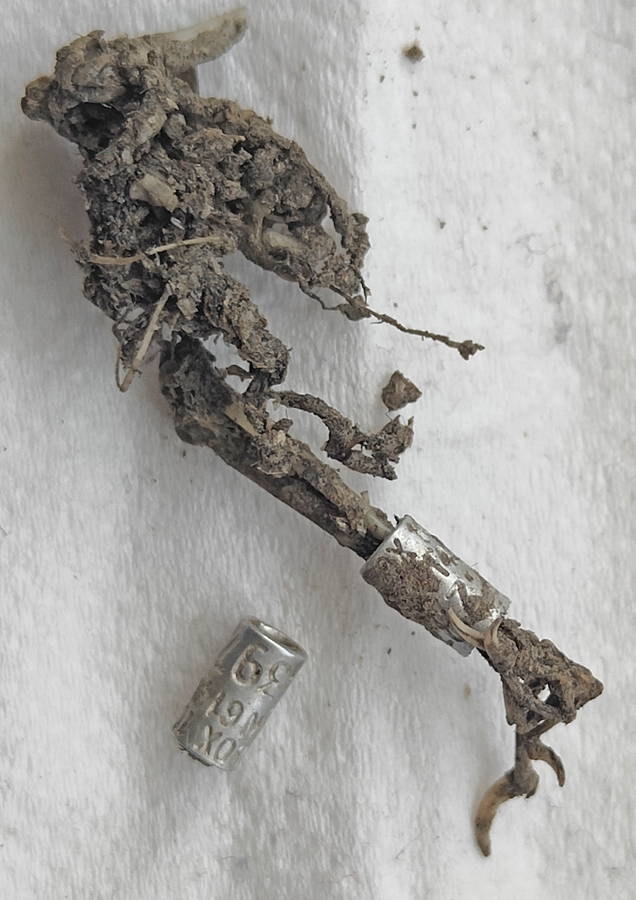
They had their numbers easily identified on the bands. One of them was still attached to its bird —the second one had fallen off— yet still easily discovered.
The first one (rather muddy) was banded at my place in the southern end of the quarry in July last year and therefore lived for just 6 Months. The second one (without its bird leg) was initially caught and banded on the northern end of the quarry in July 2021; we caught that bird a few times in its 4.5 years of life.
Both were silvereyes and in these two cases it seems that Kingfishers are pretty keen on catching silvereyes – something that has been mentioned in the in the ornithological literature from time to time. I reckon that the predators know pretty well where to find their favourite snacks too!
Shows you how a scientific hobby, such as bird banding, can be pretty inspirational, especially when you find out how these birds find their food and how they feed their offspring…
LISTEN ABOVE
Take your Radio, Podcasts and Music with you
Get the iHeart App

Get more of the radio, music and podcasts you love with the FREE iHeart app. Scan the QR code to download now.

Download from the app stores


Stream unlimited music, thousands of radio stations and podcasts all in one app. iHeart is easy to use and all FREE