Follow
the podcast on

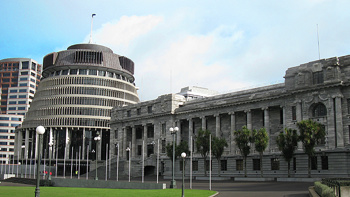
Let's talk EVs. And I better make the declaration straight away; I am an EV driver. There is a new state of the nation report from an organisation called Drive Electric which has been released. It's calling for consistent cross-party support. The report shows just 11% of new vehicles registered in New Zealand are electric – that is down from 27% in 2023 when we had the rebate. But countries like Norway, they're sitting at, wait for this, 98%. New Zealand also has one of the lowest EV to fast charger ratios in the OECD, despite 88% renewable electricity generation and promises from the Government to actually help. Drive Electric's State of the Nation report, which was launched at Parliament, is calling for long-term cross-party policies to speed up EV uptake and charging infrastructure. And the board chair of Drive Electric New Zealand, Kirsten Corson, spoke to the Mike Hosking Breakfast this morning about how far behind the rest of the world we are.
“I think the interesting thing that this report shows is there's been a shift. This isn't an environmental decision anymore, this is an economic one. And what we've seen in the last three years is a massive emergence of countries like Ethiopia, 60% electric, you know, new vehicle sales are electric, Vietnam 40% Thailand 28% Turkey 22%. These are all emerging nations that are making the transition purely from an economic perspective because they do not want to import fossil fuels.”
We're at 11%. Drive Electric's report goes on to say that New Zealand has a major advantage because we've got renewable energy, but the recent policy changes, the scrapping of that incentive, has really slowed progress. So EVs, by Drive Electric, they're now being framed as more than just transport that doesn't use fossil fuel. The report wants to call them mobile energy assets, so they can store electricity and feed it back into the grid when the demand is high.
Now transport currently accounts for about 18% of our total emissions and nearly half of the CO2 emissions as well. But electrification could boost energy security and reduce the country's $7 to $9 billion annual fuel import bill. There are of course health gains because the air pollution is a little bit lower. The key opportunity they say is vehicle to grid technology, which allows EV owners to sell stored power back to the network while their car's sitting there. Maybe it's on 80% or 90% and it could actually be providing the electricity that does the hot water heating and take the load off the entire network. Vehicle to grid technology. And of course they're asking for government money.
Now look, as I say, I have an EV and I did take advantage of the EV rebate when it was in place, just like the Prime Minister did. But the thing about that, and I felt a little guilty about it, is I didn't agree with it because EVs or a car or any product really have to rest on their own competitive advantage. Mike called it this morning the artificiality of a market, and that's not right. But the current fossil fuel crisis, it is bringing that competitiveness up without us providing any government money. So if we could help, how should we?
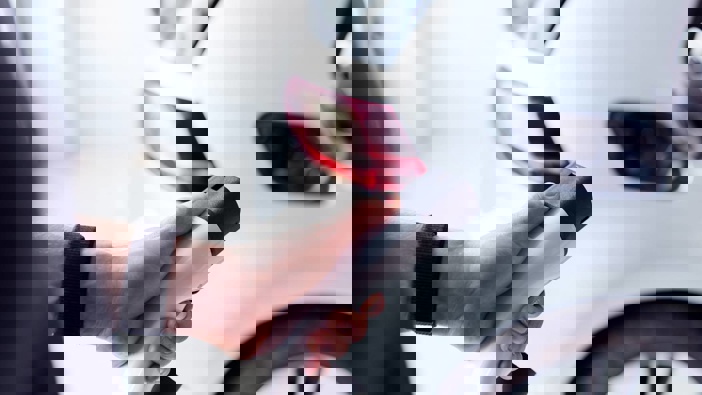
I thought about it for a while and thought, well, how could we do it? And one possibility might be the subsidy of home-based smart chargers. If they are capable of feeding back into the grid, and the Drive Electric claims are correct, that if 30% of EV users feeding back into the grid could in fact rival our entire generation capacity at any given time, then isn't that an investment in improving our electricity infrastructure? Which would be good for everybody and would mean that while it might be a subsidy to an EV driver to put in a smart charger that can feed back into the grid, it's actually an investment into the entire electricity network. Can you see the logic in that maybe?
I do not have an EV charger at home. I use fast chargers at the supermarket. I don't have an EV charger because when I bought the car, I looked at how much the home EV charger was going to cost me —$2,000— and frankly, I don't have a lazy two grand sitting around. I don't know if you've noticed, times are tight and the cost of living is high. But hey, what about if the Government pitched in half of that? Would that tip me over? I think it might. So if they put in a thousand and I put in a thousand, then I'd have an EV charger at home, which when I wasn't charging the EV, it would be feeding back into the network and saving the electricity for everybody.
So there's the question for you today: should we as a nation be offering some sort of incentives towards increasing the size of the EV fleet? And what are the ramifications of the EV fleet being expanded as is happening right now? I mean, what are the ramifications of this for us? Do we have enough renewable energy? Do we have enough electricity? We seem to swing from pillar to post in terms of electricity excess to a lack of electricity and then the prices go through the roof. So can we actually really support an EV fleet the way Norway can where 98% of their vehicle sales are in fact EVs, even though they have their own oil?
Take your Radio, Podcasts and Music with you
Get the iHeart App

Get more of the radio, music and podcasts you love with the FREE iHeart app. Scan the QR code to download now.

Download from the app stores


Stream unlimited music, thousands of radio stations and podcasts all in one app. iHeart is easy to use and all FREE