

It has been a rollercoaster term for Te Pāti Māori.
The highs were remarkable: growing from two to six electorate MPs at the last election, a stunning landslide victory in the Tāmaki Makaurau byelection against political stalwart Peeni Henare, a haka that became a global sensation and their key role rousing hundreds of thousands of frustrated New Zealanders to protest in the streets in what would become the largest hīkoi the country had ever seen.
At times, they were polling at 7% – just one point behind the Act Party.
From outside, it is unclear when things started to unravel but as this year draws to a close, the party has polled as low as 1%.
“I think we are in a place where there is only one way you can go now,” party co-leader Rawiri Waititi says.
“1% – what’s less? Is there a 0%?”
In June, Takutai Tarsh Kemp, who held the Tāmaki Makaurau Māori seat for the party, died after a battle with kidney disease. Veteran broadcaster Oriini Kaipara now holds the Auckland area seat for the party.
Eru Kapa-Kingi, a high-profile member of protest group Toitū te Tiriti, which was once closely aligned with Te Pāti Māori, accused the party of running a dictatorial leadership model.
MPs Mariameno Kapa-Kingi (Eru’s mother) and Tākuta Ferris were kicked out of the party for “serious breaches” of the constitution – allegations they dispute.
Kapa-Kingi’s membership was recently reinstated by a judge and, in an interview with RNZ’s Mata programme, Ferris hit back with allegations bullying and “despicable” treatment of Kemp in the months leading up to her death.

Expelled Te Pāti Māori MPs Tākuta Ferris and Mariameno Kapa-Kingi in the House as independents for Question Time in November. Photo / Mark Mitchell
Co-leader Debbie Ngarewa-Packer regrets how the internal riffs spilled into public view.
“The minute it’s gone too wide and you can’t contain it, then it’s gone beyond us scrapping behind closed doors. It’s gone to the electorates, it’s gone to executives, it’s gone for public opinion.”
Iwi leaders intervened, playing mediators between the divided factions of the party, and there were calls for the party’s leadership to be reconsidered, including the role of president John Tamihere.
Cutting two MPs from the party was difficult because they had “not only friendships or relationships, but there is whakapapa”, Waititi said.
“[This] is also difficult because we will see each other at the next kaupapa on the marae and we will see each other at all the kaupapas that we go to, Waitangi, Coronation, Ratana, so we have to be mature enough about how we do that.
“I’ve had scraps with many whānau before, and we’ve got through them and some of them [have been] more vicious than what we see in this House.”
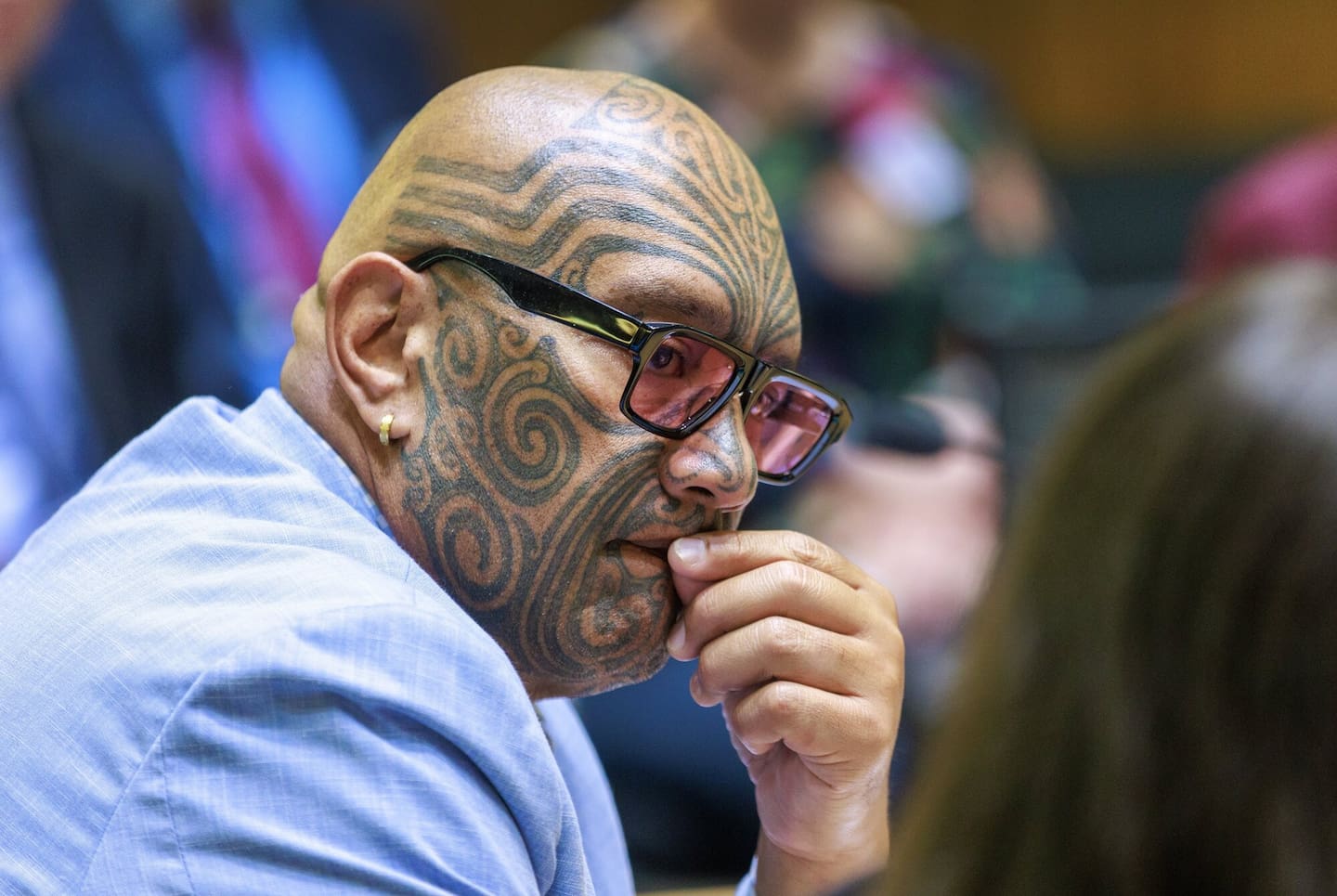
Te Pāti Māori co-leader Rawiri Waititi pictured while sitting on Parliament's finance and expenditure committee. Photo / Mark Mitchell
It’s been a few weeks since Ferris and Kapa-Kingi moved to their new offices as independents, a few floors away from Te Pāti Māori. In this pre-Christmas interview with the Herald, the co-leaders acknowledge the party needs to find a way back to the highs of just a few months ago, saying the 2026 general election year “will be the battle of our lives”.
They say the ordeal has made them grow as leaders, and they felt “huge support” from their voter base at their recent AGM in Rotorua.
“I’m really proud of where we are,” Waititi said.
“Yes, we’re in a bloody hole at the moment but, you know, you can get out of a hole.”
Reflecting on the year, Ngarewa-Packer compares the party to a car “just making it across the line with all the tread on the tyres missing”.
“Like Cool Runnings!” Waititi says, talking about the classic 1993 movie based on a Jamaican bobsled team whose sled falls apart during a race. The team pick it up and carry it across the finish line.
The party is known for being prolific on social media – it has almost twice as many followers on Instagram as National. But after this ordeal, Ngarewa-Packer implies the party will step back slightly from social media and put more fuel into on-the-ground campaigning.
“The humbling part is actually remembering how we got back in [into Parliament] in 2020, which was offline, on the ground,” she said.
Ngarewa-Packer said the pair were “really conscious that actually what we have to do is rebuild from the ground up”.
“But the difference is it’s not as hard as it was in 2020 when there was just no ground support.”

Te Pāti Māori co-leader Debbie Ngarewa-Packer at Koroneihana at Tūrangawaewae Marae in August. Photo / Mike Scott
Waititi said: “I’m confident we can do it again – we’ve got another year,” referencing the party’s swift growth from a “flatline” state in 2017 to having six MPs after the 2023 election.
“Our message [to supporters] is about belief. Don’t lose the belief because if it’s not us, then who else is going to be the voice for our people. Nobody else can advocate in this House like us.
“Today we’re in a place where every T-shirt, every song, every kapa haka group, every speech made at Manu Kōrero [high school speech competition], has an element of what we’ve done in the last five years – an element of belief, an element of pride, an element of magic,” Waititi said.
Julia Gabel is a Wellington-based political reporter. She joined the Herald in 2020 and has most recently focused on data journalism.
Take your Radio, Podcasts and Music with you
Get the iHeart App

Get more of the radio, music and podcasts you love with the FREE iHeart app. Scan the QR code to download now.

Download from the app stores


Stream unlimited music, thousands of radio stations and podcasts all in one app. iHeart is easy to use and all FREE


