
Te Pāti Māori says it will abolish prisons by 2040 in favour of community-led solutions to address the enormous inequities facing the country’s indigenous people – if it gets into power at the next election.
The most likely governing scenario for Te Pāti Māori is with Labour and the Greens, given the National Party has ruled out working with it. But the party would have to convince Labour to change its stance on prison abolition – Labour told the Herald today it did not support the policy as prisons were “necessary” for corrections and rehabilitation.
Getting rid of prisons and radically reforming the justice system is not a new vision for this era of Te Pāti Māori. In 2023, while campaigning on the same issue, co-leader Rawiri Waititi said justice reformation was about upholding Te Tiriti o Waitangi.
“Our tīpuna [ancestors] did not sign Te Tiriti o Waitangi for whānau to be in care, incarcerated and continually traumatised. The time for change is well overdue,” he said.
“This is a by Māori, for Māori, according to Māori solution and we will not compromise.”
The Herald asked Te Pāti Māori for further details on how the policy could work but the party was unable to respond by deadline.

Te Pati Maori co-leaders Debbie Ngarewa-Packer (left) and Rawiri Waititi pictured in Parliament last October. Photo / Mark Mitchell
At last count (September 2025), there were 10,860 people incarcerated in New Zealand. By mid-2027, the prison population is forecast to breach current capacity, and by early 2025, it is expected to creep over 14,000 (prisoner numbers are currently tracking below the latest justice projections).
Māori have long been overrepresented in the justice system – about 52% of prisoners and 66% of female prisoners are Māori, despite Māori making up about 17.5% of the population.
Instead of prisons, Te Pāti Māori is calling for “community-led and community-based solutions” that address the causes of crime and create environments for community accountability, restoring relationships, healing trauma, reconnecting with whakapapa (genealogy and ancestry) and rebuilding whānau and communities.
The coalition Government’s law and order programme – including sentencing reforms, new laws targeting gangs and Three Strikes 2.0 – is expected to send more people to prison for longer. Te Pāti Māori’s justice policy includes establishing a Māori Justice Authority and shutting down youth residences and the Government’s controversial military-style bootcamps.

Labour Party MP Carmel Sepuloni (from left), leader Chris Hipkins and MP Barbara Edmonds at a press conference earlier this month. Photo / Sylvie Whinray
The party said it would repeal many of the Government’s new punitive justice laws, reinstate voting rights for people in prison, increase the Steps to Freedom payment from $300 to $1000, require police to wear body cameras and bring back funding for section 27 cultural reports.
“Te Pāti Māori will shift power and resources from police and prisons to people and prevention,” the party said while announcing the policies on Instagram.
“We will invest [in] kaupapa Māori mental health, addiction and restorative justice services ... we will invest in healing, not punishment.”
Both of Te Pāti Māori’s most likely coalition partners (should the left bloc win the general election on November 7) will need convincing if the party wants to make its policy idea a reality.
Asked whether Labour would support the policy, corrections spokeswoman Tracey McLellan said: “No, prisons are a necessary measure for corrections, providing rehabilitation and services to reduce recidivism.”
McLellan said the party was yet to release its corrections policy and “does not agree with the position of Te Pāti Māori”.
Speaking to reporters at Parliament this afternoon, Labour leader Chris Hipkins said “there are clearly some policies being promoted by Te Pāti Māori that Labour would never support – such as the abolition of prisons".
“I would love to live in a society where we don’t require prisons, unfortunately we do live in that society. There will always, sadly, be a need for prisons,” he said.
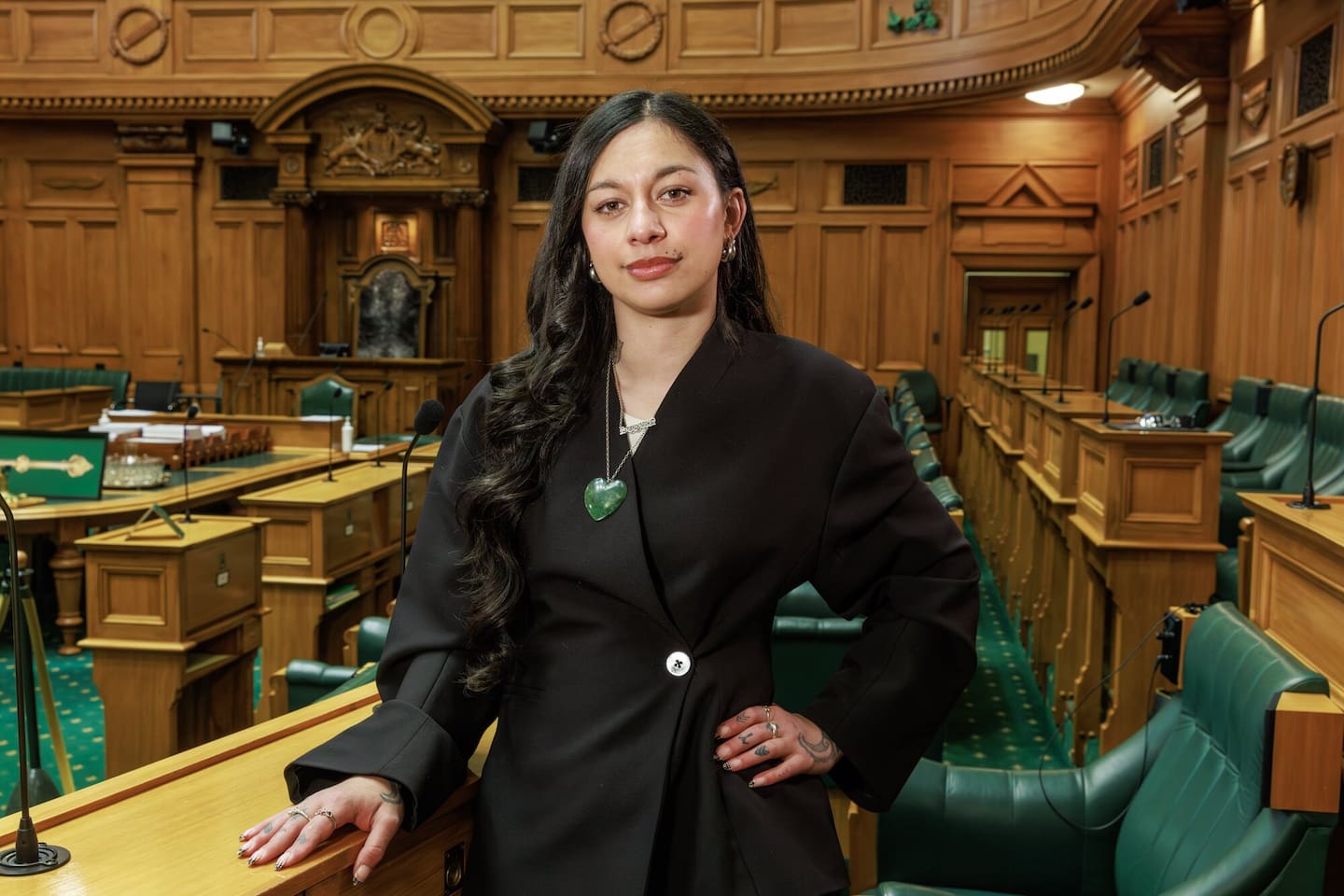
Green MP for Wellington Central MP Tamatha Paul at her seat in the debating chamber at Parliament. Photo / Mark Mitchell
“I cannot envisage a scenario at all where Labour would support their abolition.”
Green Party Corrections spokeswoman Tamatha Paul said abolition without a solid plan to reduce harm was dangerous.
“We’re interested in eliminating harm and violence in our communities. We’re interested in meaningfully addressing the social and economic disparities in our criminal justice system which has seen a major increase in the women’s prison population and the continued over-representation of Māori,” she said.
“That has been the essence of my mahi [work]. I have visited every prison and spent many hours visiting and supporting violence prevention services.”
Julia Gabel is a Wellington-based political reporter. She joined the Herald in 2020 and has most recently focused on data journalism.
Take your Radio, Podcasts and Music with you
Get the iHeart App

Get more of the radio, music and podcasts you love with the FREE iHeart app. Scan the QR code to download now.

Download from the app stores


Stream unlimited music, thousands of radio stations and podcasts all in one app. iHeart is easy to use and all FREE


