

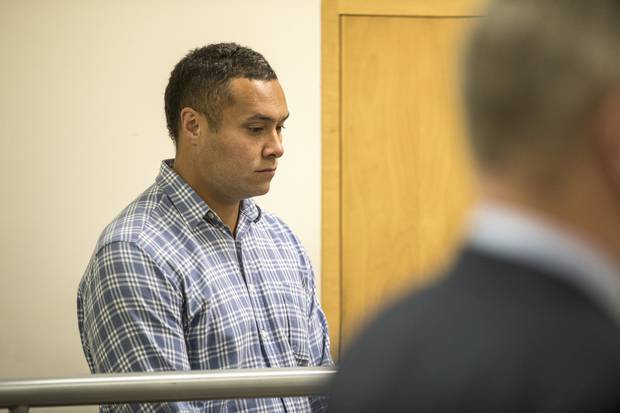
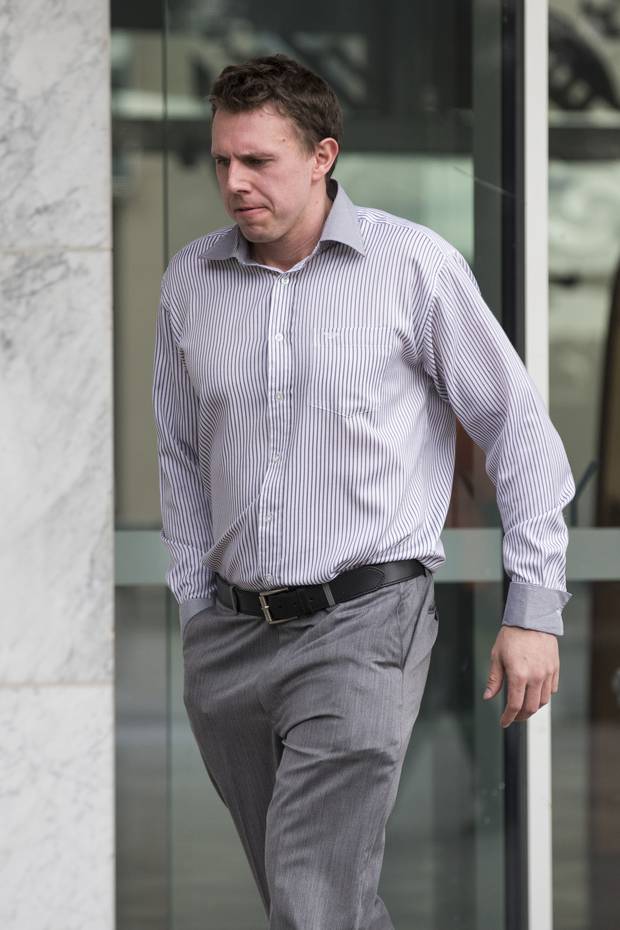
He first came under investigation in April 2015 after he kicked and punched a 23-year-old man in the head, fracturing his eye socket. The attack was caught on camera by the police Eagle helicopter flying above.
The investigation revealed two other earlier assaults.
In February 2015, Mills, investigating a report of wilful damage at the Manurewa train station, chases down a suspect - a 15-year-old boy - and tackles him, before punching him in the head several times.
In April that year another 15-year-old boy was arrested for stealing a car. When lying face down on the road Mills ran towards him and kicked him in the head.
And just two days later he attacked the 23-year-old man who was hiding from police after stealing a car.
When initially interviewed by police about the complaints, Mills said, that two of the three suspects were resisting arrest and the force he used was necessary.
Judge Andree Wiltens said at Mills' sentencing: "The aggravating factors, as I say, is that you were a serving police officer and the serious assault on the third male involving not only an attack to the head, but the fact that they were all defenceless lying prone on the ground, while one 15-year-old boy was being held by two of your colleagues."
Wellington cops accused most of misconduct
Wellington officers were accused of more misconduct and involved in more incidents during the first three quarters of last year than in any other policing district.
Police statistics show that from January to September there were 228 incidents in Wellington involving 273 staff members, resulting in 316 allegations.
Of the 143 completed investigations into the incidents 31 allegations were upheld, second only to the Waitemata district's 34 upheld allegations.
The Wellington allegations included claims of excessive use of force, service failures, unprofessional behaviour, a breach of official conduct, improper use of police resources, and poor off-duty behaviour.
The district with the best record for number of allegations made was Tasman.
With just 79 incidents involving 100 staff and resulting in 110 allegations. Of the 45 completed investigations in Tasman from January to September 13 allegations were upheld.
The top allegations were for excessive use of force, which included 178 for manual physical force, 24 for police dog bites, 23 for OC spray, and 12 for Tasers.
Eighty-five New Zealanders also alleged their rights had been breached, with nine of those complaints being upheld from 46 completed investigations.
There was also one unlawful arrest allegation upheld, seven unlawful searches, seven police pursuits resulting in injury or death were police had acted poorly, 47 for unprofessional behaviour and 98 for service failure (the top allegation group).
National manager of police professional conduct Superintendent Anna Jackson said the vast majority of staff act in accordance with police's values, and only a small number of complaints received are upheld each year.
"However, we also recognise that despite the best of intentions, individual staff members are human, they and the organisation as a whole don't always get it right," she said.
"There is always the potential for complaints to be made following situations where police are called upon to balance wants, needs and views of individuals, against the police's need to act to carry out our functions.
"We continue to expect our staff to maintain the highest levels of service and to act with integrity, empathy, professionalism, respect and in line with the principles of the Treaty of Waitangi and valuing diversity at all times as per our values."
Jackson said there is a robust process in place to manage complaints about staff conduct.
"We are not afraid to investigate and hold our people to account where appropriate."
There are a number of ways people can make complaints about police, including; on the NZ Police website, to a police officer or at a police station, and through the Independent Police Conduct Authority (IPCA).
Complaints are managed by Police Professional Conduct Group and investigators are appointed to each matter.
Each complaint investigation is reviewed both in the District Service Centre and at Police National Head Quarters.
Complaints are also reviewed by the IPCA, unless the IPCA considers them to be very minor.
"Lessons to be learned for police are identified and shared with other staff in the organisation," Jackson said.
"More serious matters, if found to be upheld, may result in further action including disciplinary action."