

The fire that tore through more than 3000ha of Tongariro National Park in November was accidentally lit by a spark from a car wheel and cost nearly $1 million to extinguish.
An investigation by Fire and Emergency New Zealand and the police found a “car tyre rim” created sparks on State Highway 47, igniting dry roadside vegetation. There was no evidence of deliberate ignition or criminal intent, Acting Detective Inspector Mike Deegan said.
The November wildfire spread fast because of high winds and dry conditions. Fire crews spent days bringing it under control and the effort cost $995,330, with the use of helicopters amounting to more than $800,000.
The devastation was compounded in early December when a second fire, also blamed on sparks from a passing vehicle, burned another 300ha.

A helicopter dampens down scorched bush in Tongariro National Park in December last year after the second fire in the area within a month. Photo / Mike Scott
While green shoots are pushing through the charred earth of the park, ecologists say the battle will be keeping fast-spreading weeds from taking over.
The Herald was given rare permission by the Department of Conservation (DoC) and local hapū Ngāti Hikairo ki Tongariro to fly a drone over the fire zone near the start of the Tongariro Alpine Crossing track – a landscape normally known for its volcanic reds and alpine greens.

Scorched slopes lead into the Mangatepopo Valley but there are pockets of fresh growth in stream beds where fire never reached. Photo / Mike Scott
From above, the burned ridge lines look like a graveyard of sooted tree skeletons, a stark monochrome where growth once rolled out in all directions.
Yet tucked beneath the blackened slopes are pockets of untouched bush that the flames skipped, offering hope and a hint of how the park might recover.
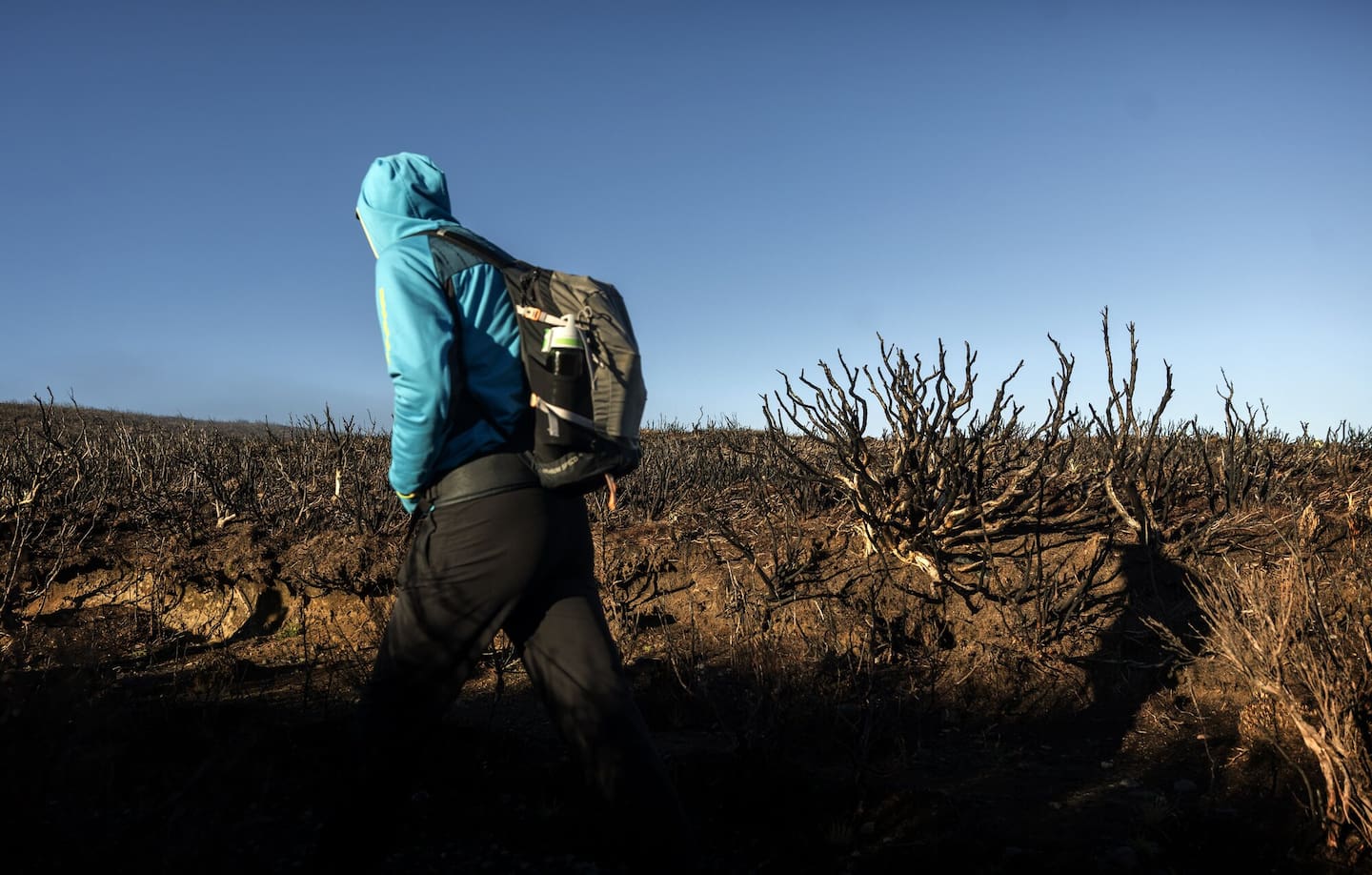
A walker on the Tongariro Alpine Crossing moves past the blackened skeletons of burned alpine shrubs. Photo / Mike Scott
Five weeks after the blaze, a team of ecologists examined the damage and found encouraging signs, DoC principal adviser Jess Scrimgeour told the Herald.
“We were seeing red tussock starting to come back, flax pushing through. A lot of the vegetation along the stream banks had held, so the erosion risk looked minimal.”

DoC ecologist Jess Scrimgeour assesses the charred landscape. Despite the destruction wrought by last year's fires, regrowth is underway. Photo / Mike Scott
The fast-moving fires in November and December wiped out most of the vegetation, exposing bare ground and leaving it vulnerable to invasive species such as broom, gorse and heather.
Scrimgeour said wind and people were the two main ways weeds could be brought into the fire zone. Those risks prompted Ngāti Hikairo ki Tongariro to impose a 10‑year restorative rāhui (restriction) over the area.

Two wildfires burned through Tongariro National Park in 2025 devastating more than 3000ha yet, as seen in this photo taken in December, pockets of bush did survive the flames. Photo / Mike Scott
“The reason we’re asking people to stay out is to reduce that spread of weeds – and because in a subalpine environment, things grow slowly. Even minimal trampling can have an impact,” she said.
The hapū and DoC were working hand‑in‑hand on the recovery. Their effort received a boost with a $3.5 million commitment over five years, announced by Conservation Minister Tama Potaka in February.
The funding, sourced from the international visitor levy (IVL), would pay for weed control and pest management.
“The IVL ensures visitor revenue goes back into maintaining and improving the places that support local jobs, businesses and communities,” Potaka said.

Walkers mingle under Te Ririō, the kaitiaki for those heading on to the Tongariro Alpine Crossing. Photo / Mike Scott
Alongside the practical reasons for the rāhui, there were also deep cultural ones, Te Rūnanganui o Ngāti Hikairo ki Tongariro spokesman Te Ngaehe Wanikau said.
“One of the key reasons for the rāhui being imposed on the affected area for 10 years is to ensure the restorative process is done appropriately ... and that’s going to require a bit of mahi.”
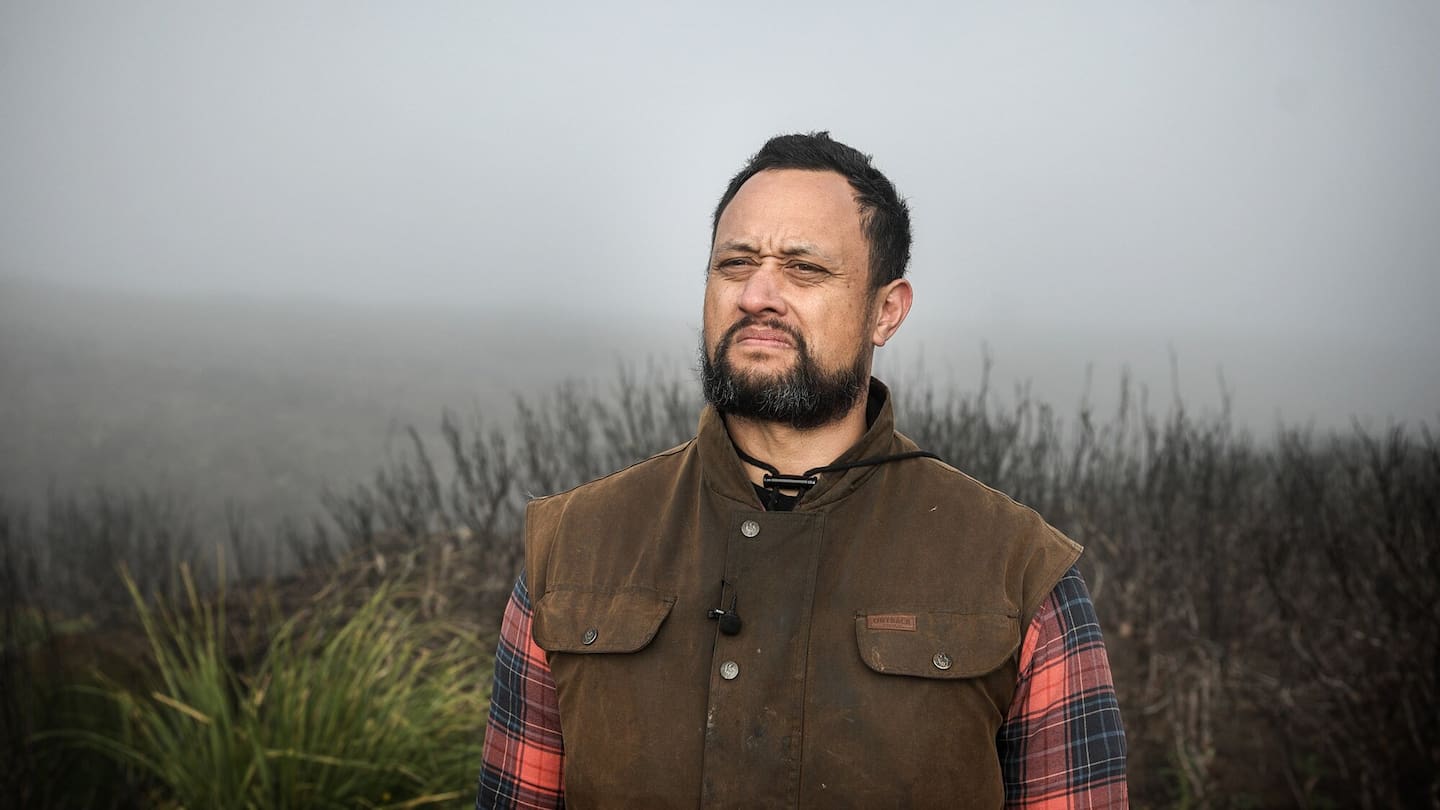
Te Rūnanganui o Ngāti Hikairo ki Tongariro spokesman Te Ngaehe Wanikau. Photo / Mike Scott
Fortunately for visitors, the iconic and popular Tongariro Alpine Crossing is not affected by the rāhui. When the Herald visited, hundreds of walkers spilled from shuttle buses and were welcomed by hapū representatives as they set off along the track.
“Our job is to be the haukainga [the people of Ngāti Hikairo] and to be present in the hapū spaces to ensure that when people come, we greet them and offer spiritual guidance,” Wanikau said.

The iconic Tongariro Alpine Crossing winds its way through the charred landscape. Photo / Mike Scott
“The important thing for Hikairo is that Tongariro is our kawa [system of values].
“He’s our guardian, our tūpuna [ancestor]. We cherish that kawa – it is a taonga [treasure] to us.
“It is our role as kaitiaki [guardians] to ensure that our kawa, Tongariro, and his korowai are restored.”

Walkers at the beginning of the Tongariro Alpine Crossing track. Photo / Mike Scott
Mike Scott is an award-winning visual journalist with more than two decades of experience telling stories across multiple media platforms.
Take your Radio, Podcasts and Music with you
Get the iHeart App

Get more of the radio, music and podcasts you love with the FREE iHeart app. Scan the QR code to download now.

Download from the app stores


Stream unlimited music, thousands of radio stations and podcasts all in one app. iHeart is easy to use and all FREE