
Shane Kereama was relieved when he was taken from his family as a young child. Excited, even.
After being sexually abused by a relative, he thought state care would be a safe haven, a chance to start again.
But the abuse continued. Another adult who should have protected him instead subjected him to repeated assaults.
Eight years after filing a historic claim with the Ministry of Social Development, he is still waiting for answers. Now, he is speaking publicly as part of his own healing — and to help others on the same path.
Senior journalist Anna Leask reports.

Shane Kereama says he just wants to be heard and acknowledged by the authorities who were supposed to protect him. Photo / Joe Allison
Shane Kereama is among thousands of New Zealanders who have lodged historical abuse claims, many of which have been stalled for years as agencies work through significant backlogs and shifting redress processes.
For Kereama, the delays are another chapter in a much longer interaction with the state. His parents’ separation in the early 1980s led to him being shifted between family members before authorities placed him in care.
He remembers the social worker picking him up, driving him to a family home run by a couple, full of theirs and other displaced kids.
For a start, things were okay. Not great - Kereama says there was neglect from both his guardians and social worker - but at least he was not being constantly violated.
But eventually, another man began to take advantage.
Every few months, Kereama’s main caregivers took time off, and an older couple came in to supervise the kids in the house.
During that time, Kereama says he was routinely sexually assaulted by the male.
He would come in at night, when the little boy was tucked up in bed, and do unspeakable things.
Kereama did not tell anyone about the abuse as he was deeply ashamed and did not think anyone would believe “a child in social welfare care”.
“I was repeatedly sexually abused while in the care of the state in a place that was meant to protect me,” he told the Herald.
“The abuse was not a single incident. It was a pattern. It occurred over time. It happened at night. It happened in a context where I was already displaced, already vulnerable, already separated from safety, consistency, and advocacy.
“The abuse was accompanied by neglect. I was not adequately visited. I was not properly checked on. I was not spoken to alone. I was not protected. The very system responsible for my wellbeing failed to see me, failed to hear me, and failed to act.
“For a child, this combination is devastating.”
Many promises, many failures
Kereama’s claim also outlines what he says are numerous other failures by authorities relating to his time in care, including his social worker repeatedly assuring him a suitable foster home was being sought, but nothing was ever done to find a place for him.
As a result, he spent 15 months in the group home, which his lawyer described as “an inappropriate time” for such a placement.
Kereama said the abuse in state care came after frequent abuse by an older relative.
He thought going into care would be a reprieve from that abuse, that he would finally be safe and that someone was finally going to help him.
But it only marked a new cycle of harm.
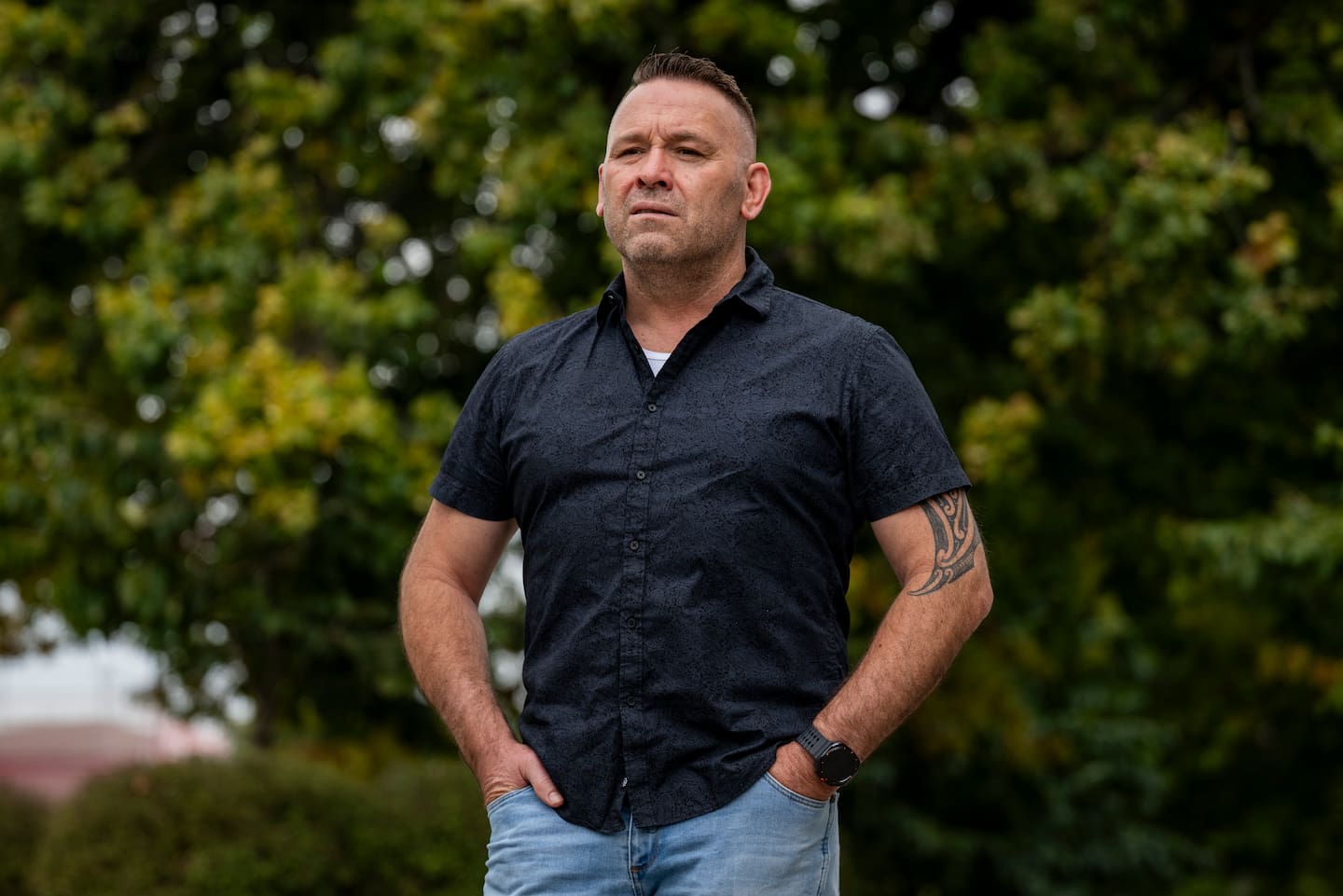
Shane Kereama, now 56, hopes his story will help other survivors. Photo / Joe Allison
“This has had a profound and enduring impact on every layer of my life,” he said.
“The abuse was done to me, but I grew up believing something was wrong with me … I carried the silence for decades.
“The shame did not belong to me, but it lived in me. The responsibility was not mine, but it weighed on me.”
Kereama has been diagnosed with Post Traumatic Stress Disorder.
He has battled and overcome addiction.
He has survived a number of suicide attempts.
“I have experienced intrusive memories, emotional flooding, hypervigilance, and periods of deep disconnection,” he said.
“This has affected my ability to rest, to trust, to feel secure, and to remain regulated under stress.
“Emotionally, shame became a companion. Not momentary shame, but the kind that seeps into identity … It has influenced my self-worth, my relationships, and my sense of deserving safety, care, and love.”
Kereama said the abuse had deeply impacted his relationships.
“Early betrayals of trust shaped how I bonded, how I attached, and how I protected myself,” he explained.
“I have struggled at times with boundaries, with closeness, with conflict, and with feeling truly safe in relationships. The abuse distorted my understanding of power, affection, and intimacy. It affected how I saw myself as a partner, a man, and a father.
“Behaviourally, the trauma did not remain in the past.”
He said “rebuilding” himself had been a “long, deliberate and often painful journey” and he had spent years “surviving” instead of living.
“The impacts of the abuse are real, ongoing, and deserving of recognition, accountability, and redress,” he said.
“What happened in state care did not simply hurt a child, it altered the course of my life.
“I am speaking out now because I want to be seen, believed, and acknowledged.”
In 2018, Kereama began the process of filing a historical abuse claim. He never imagined that he would still be in that process in 2026.
He decided to speak out about his experience because he wanted other victims to know they were not alone and to raise awareness and support for those who have experienced similar trauma.
Thousands waiting for redress
Ministry of Social Development general manager of historical claims Linda Hrstich-Meyer confirmed Kereama’s claim was registered in July 2018 and soon after the agency provided his lawyer with information about his time in care.
Hrstich-Meyer said MSD was still waiting on Kereama’s lawyers to take the next steps.
“When a claimant is legally represented, the next required step is for the law firm to send us a letter of offer,” she explained.
“This letter outlines the allegations and allows us to move to the next stage of assessing the claim.”

The Royal Commission was established in 2018 to investigate children, young people, and vulnerable adults' experiences of abuse and neglect in state care. Photo / RNZ, Patrice Allen
Hrstich-Meyer said MSD tried to process all claims “quickly and smoothly”.
“Claimants can choose between a rapid payment or an individualised assessment. Rapid payments, introduced in late 2022, offer a quicker option that does not require discussing experiences in detail,” she said.
“Individualised assessments take longer because they consider each person’s specific concerns and review their records from state care.
“Rapid payments have enabled us to connect with more claimants and progress more claims than we were previously able to.”
She said there were a “significant” number of claims and some took longer than usual due to factors like ongoing court action or a delay in finding or receiving relevant documentation.
As of December 31, 2025, there were 4573 open claims.
Of those, 481 had been open for more than five years, with 131 of those cases awaiting further details before MSD could proceed with the assessment process.
Hrstich-Meyer said the average timeframe for an individualised assessment was 5.1 years and 3.6 years for a rapid payment.
The longest wait time for resolution was 18.1 years, with the claimant in that case accepting an offer in 2021.
“We know long wait times can be distressing,” Hrstich-Meyer said.
“If a claimant believes the process is taking too long, they can contact the Office of the Ombudsman about their concerns.”
“Not enough lawyers” for victims
Kereama’s lawyer, Sam Benton, spoke to the Herald about his case, with his permission.
He said his firm, Cooper Legal, was one of 16 providers funded by Legal Aid authorised to represent victims of historical abuse in care.
“Six of us work at Cooper Legal, which is still the only firm specialising in this complex area,” Benton said.
“Cooper Legal acts for a very large number of clients, many with multiple claims, who experienced abuse in state and faith-based care.
“There are not enough lawyers doing this work in New Zealand who can take them on. At the end of 2025, we had more than 2500 open files against dozens of different organisations, each with their own approach to responding to claims – some of which involve intensive testing of evidence, mediation, or litigation.
“Some of those processes – including MSD’s – have changed multiple times over the past eight years, and each time we have to come to grips with those changes and their impacts, and change our own processes and advice to clients in turn.”

Shane Kereama is one of thousands of people who were abused in state care as children. Photo / 123RF
Benton said he and his colleagues travel around New Zealand interviewing clients in the community and in prison.
“Many of these interviews need to be held on multiple occasions due to clients being arrested, or the prison transferring them without telling us, or the client becoming homeless, or being unable to attend the interview due to their trauma experience.
“Our ability to work proactively is often hampered by external factors, such as funding issues that we need to challenge; the need to challenge redress schemes through complaints to the Ombudsman, High Court litigation … dying clients whose claims we do need to prioritise, having to file certain claims before the client reaches a certain age due to the Limitation Act and being constantly dragged into other issues.
“As we repeatedly advise our clients, including when we initially interviewed them, this is unfortunately a very lengthy process that takes many years, for the reasons above and more.”
Benton said Kereama’s case was one of many caught up in a “backlog of about six years” of the MSD responding to claims.
In November 2025, he explained the current options Kerema had available and a final course of action was agreed.
Benton said this included obtaining information from ACC about Kereama, which it had so far “failed to provide”.
He had “escalated” the request, and, once the information was received, it would be incorporated into Kereama’s claim and sent to the MSD.
Benton said he would be asking the agency to “progress in a matter of urgency”.
He sympathised with Kereama and other victims of abuse in state care who were still waiting for their case to be resolved.
Acknowledgement and recognition
Kereama is hopeful his claim will be finalised soon and he can move on to his next “season”.
He said while a payment would be helpful, money was not motivating his claim.
“It’s about acknowledgement and recognition - about being seen and heard,” he said.
“It’s like this has been imprinted on my DNA … it’s had a massive impact,” he said.
“I’m grateful for my life, and for the things that I’ve done. However, I look at my potential, I look at what I could have been able to do … it’s hard.”
He hoped that speaking up would help other victims of abuse, both in knowing they were not alone and also that if they wanted to come forward there was support.
“I can’t help but feel that all I want to do now is let this grow,” he said.
“I’m not looking for fame or anything. I just want to be an instrument in the right hands at the right time.
“There are people here who are prepared to listen (to survivors) … there are people who want to not just help but walk alongside you.
“We can get the help we need - it takes a lot of courage to just walk through the door, let alone endure.. But there is actually hope. I really do feel that.”
Do you need help?
Currently, survivors of historical abuse in state care can make a claim with one of four government agencies - the Ministry of Social Development, Oranga Tamariki, Ministry of Heath and Ministry of Education.
For more information about the process - click here.
SEXUAL HARM
Where to get help:
If it's an emergency and you feel that you or someone else is at risk, call 111.
If you've ever experienced sexual assault or abuse and need to talk to someone, contact Safe to Talk confidentially, any time 24/7:
• Call 0800 044 334
• Text 4334
• Email [email protected]
• For more info or to web chat visit safetotalk.nz
Alternatively contact your local police station - click here for a list.
If you have been sexually assaulted, remember it's not your fault.
Anna Leask is a senior journalist who covers national crime and justice. She joined the Herald in 2008 and has worked as a journalist for 20 years with a particular focus on family and gender-based violence, child abuse, sexual violence, homicides, mental health and youth crime. She writes, hosts and produces the award-winning podcast A Moment In Crime, released monthly on nzherald.co.nz
Take your Radio, Podcasts and Music with you
Get the iHeart App

Get more of the radio, music and podcasts you love with the FREE iHeart app. Scan the QR code to download now.

Download from the app stores


Stream unlimited music, thousands of radio stations and podcasts all in one app. iHeart is easy to use and all FREE