

A steam plume was visible over Mount Ruapehu this morning, GNS Science says.
Duty volcanologist Geoff Kilgour said the first sign of the plume above the mountain's Crater Lake (Te Wai ā-moe) occurred at about 9.45am.
It ascended slowly to about 1 to 1.5 km above the summit area, remaining visible until around 10.30am.
Kilgour said images of the plume indicate that atmospheric conditions favoured cloud formation, as cloud was also forming elsewhere around the volcano. The plume was seen widely around the volcano.
No seismic or acoustic activity accompanied the plume appearance, indicating the steam plume was not generated by strong activity in the lake.
"We cannot rule out that very minor activity has occurred, which is why our scientists conducted an observation flight early this afternoon. Observations from that visit indicate that central vent continues to be actively upwelling, and the lake level is marginally higher. These observations are like those reported yesterday."
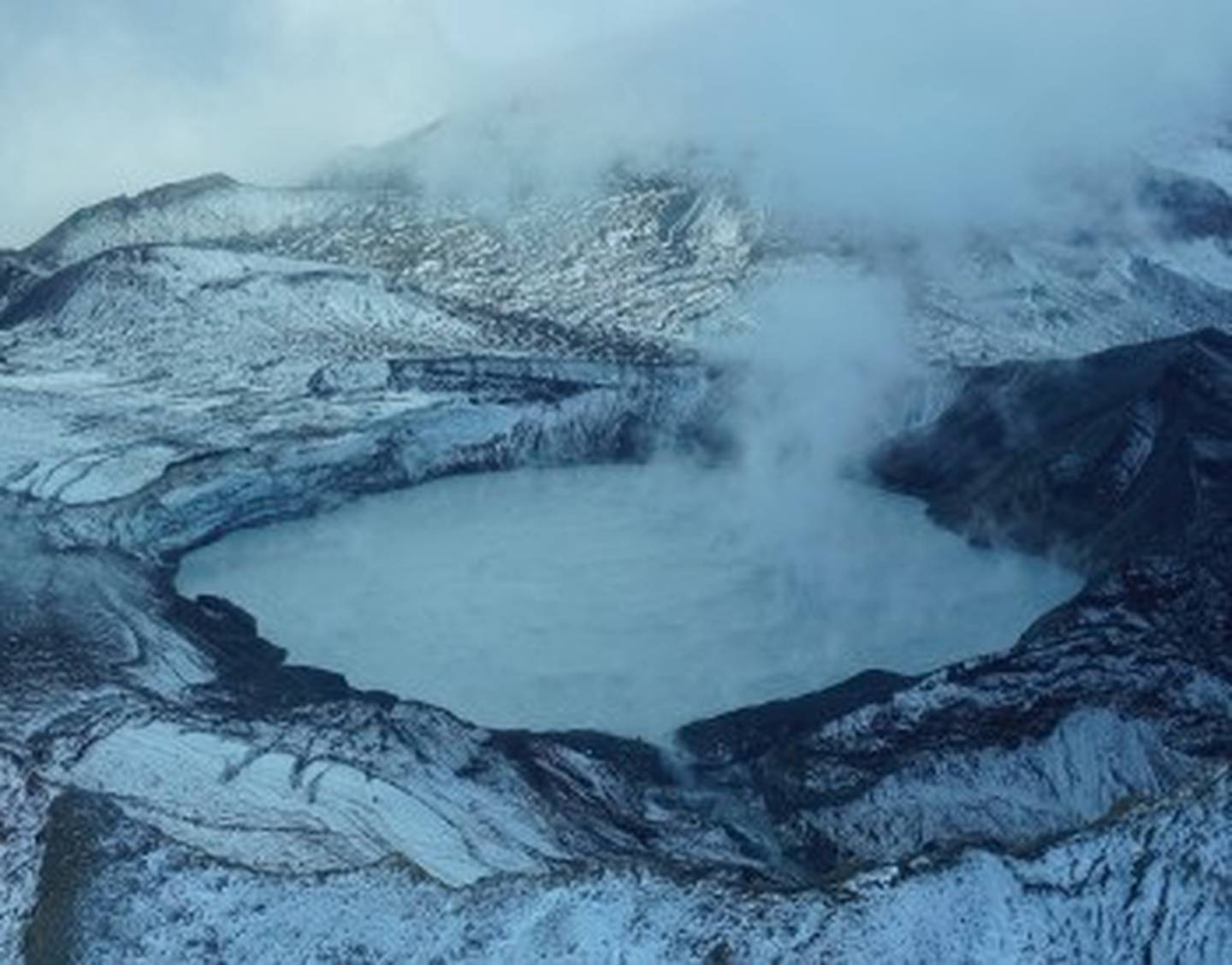
Image taken of Crater Lake (Te Wai ā-moe) from the observation flight this afternoon. Photo / GNS Science
The current lake temperature is now about 39ºC.
"In the past, lake temperatures this high, combined with cool and calm atmospheric conditions, have generated visible steam plumes above the lake. We may expect more plumes to be seen over the coming weeks/months under suitable weather conditions."
Laboratory analysis of the latest Crater Lake fluid samples are now processed. Results are very similar to past analyses and show no clear indication that magma is interacting with the hydrothermal system beneath the lake, Kilgour said.
The interpretation of this activity is consistent with elevated volcanic unrest at the heightened level and therefore the Volcanic Alert Level remains at Level 2. The Aviation Colour Code remains at Yellow.
Geonet will conduct further gas measurement and observation flights as weather conditions allow. Kilgour said Mt Ruapehu is an active volcano and has the potential to erupt with little or no warning when in a state of elevated volcanic unrest.
GNS Science and its National Geohazards Monitoring Centre continue to closely monitor Mt Ruapehu for further changes.
- The Volcanic Alert Level reflects the current level of elevated volcanic unrest. The Volcanic Alert Level should not be used to forecast future activity. However, at Volcanic Alert Level 2, eruptions are usually more likely than at Volcanic Alert Level 1.
- Volcanic Alert Level 2 indicates the primary hazards are those expected during volcanic unrest; steam discharge, volcanic gas, earthquakes, landslides and hydrothermal activity. While Volcano Alert Level 2 is mostly associated with volcanic unrest hazards, eruptions can still occur with little or no warning.
- For information on access to the Mt Ruapehu area, please visit the Department of Conservation's websites on volcanic risk in Tongariro National Park and follow the DOC Tongariro Facebook page for further updates.
- For information about responding to volcanic activity there are guidelines from the National Emergency Management Agency's Get Ready website.
Take your Radio, Podcasts and Music with you