
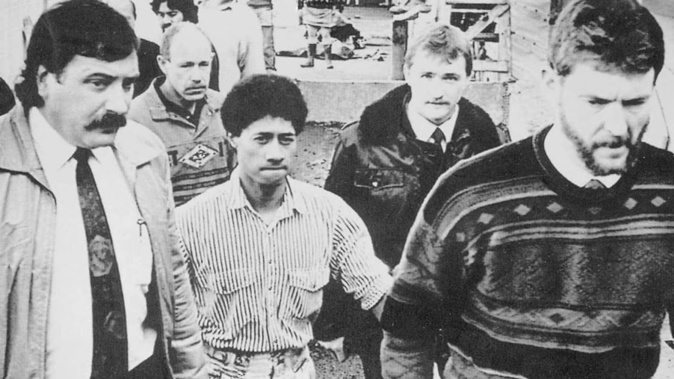
A mass murderer who killed seven people – including three of his young children – has given an assurance he has no desire to come back for the victims he didn’t manage to kill.
“I have taken so much away from them already,” he said. “[I’m] absolutely no danger to them in the ongoing future.”
Raymond Wahia Ratima was denied parole yesterday for the 17th time since being jailed in 1993.
Ratima, who is now in his late 50s, killed his sons Piripi, 7, Barney, 5, and Stacey, 2, in their grandparents’ home in 1992.
He also killed his brother-in-law Philip Ferguson jnr, 14, his heavily pregnant sister-in-law Nicola Ferguson, 20, her partner Bevan Tepu, 21, and their son Stephen, 3.
He then lay in wait in his in-laws’ darkened home on Judds Rd for his wife, Toni, and her parents, Phillip and Tubby Ferguson, to return home, where he attacked his father-in-law with a softball bat.
He went on the murderous rampage in Masterton after a relationship breakdown.
Ratima was later sentenced to life imprisonment with a non-parole period of 10 years after pleading guilty to seven counts of murder, attempted murder and killing an unborn child.
 Raymond Ratima was sentenced to life imprisonment in 1993 after pleading guilty to seven counts of murder, attempted murder and killing an unborn child. Photo / NZ Herald
He appeared before the Parole Board yesterday with the understanding he would not be likely to receive parole, because he needed to complete at least 12 months in a special treatment unit for men with a history of violent offending.
At his last parole hearing in July, he had explained he did not want to go to the unit out of concerns for his safety, but yesterday he confirmed he had agreed to go to the unit.
One board member, Professor Susanna Every-Palmer, asked Ratima questions through the parole hearing, and asked him to put himself in the shoes of his living victims.
“You intended to kill them but you did not,” she said, noting they might be fearful he would try to come back and finish the job if he were ever released.
Ratima said he wanted to reassure those victims that he meant them no harm.
“I want to send my aroha to them and wish them absolute healing.”
 The Judds Rd house in Masterton in which the massacre of seven people by Raymond Ratima (inset) took place.
At his last parole hearing in July, he tearfully spoke about missing the people he had killed.
“I’m very sorry and miss them profusely, all of them, the seven members of the whānau whose lives I took,” he said.
“Back then, [I] felt if I can’t have them, no one can have them. It was a very selfish thing, it is one of the most regretful and stupid things.
“I don’t blame any of the victims for having anger towards me for what I’ve done to their families. I still have anger toward myself for what I’ve done to those families.”
At yesterday’s hearing, Ratima’s lawyer said he had had an “exemplary” record in prison. A Corrections officer said it was expected Ratima would drop down to a minimum security classification when it was next up for review.
In giving their decision, the board members said they would decline parole on this occasion so they could “support” Ratima in receiving the right type of rehabilitation in the treatment unit.
They would look at a possible period of reintegration once he had completed at least 12 months in the unit. He will next appear for a parole hearing in January 2027.
Melissa Nightingale is a Wellington-based reporter who covers crime, justice and news in the capital. She joined the Herald in 2016 and has worked as a journalist for 10 years.
Take your Radio, Podcasts and Music with you