


The mother of a baby stillborn near full term has slammed hospital staff for their “lack of attention, repeated mistakes and poor communication” she says has caused irreparable harm.
“These human errors ultimately led to the death of my baby. I did everything I could to raise concerns and advocate for my wellbeing and that of my baby, but I was not heard,” she said in a report released today by the Health and Disability Commissioner (HDC).
The report outlines a chain of errors and oversights by multiple staff at Health NZ Waitematā, starting with a midwife’s error over an email address which meant the woman missed a critical hospital referral earlier in her pregnancy.
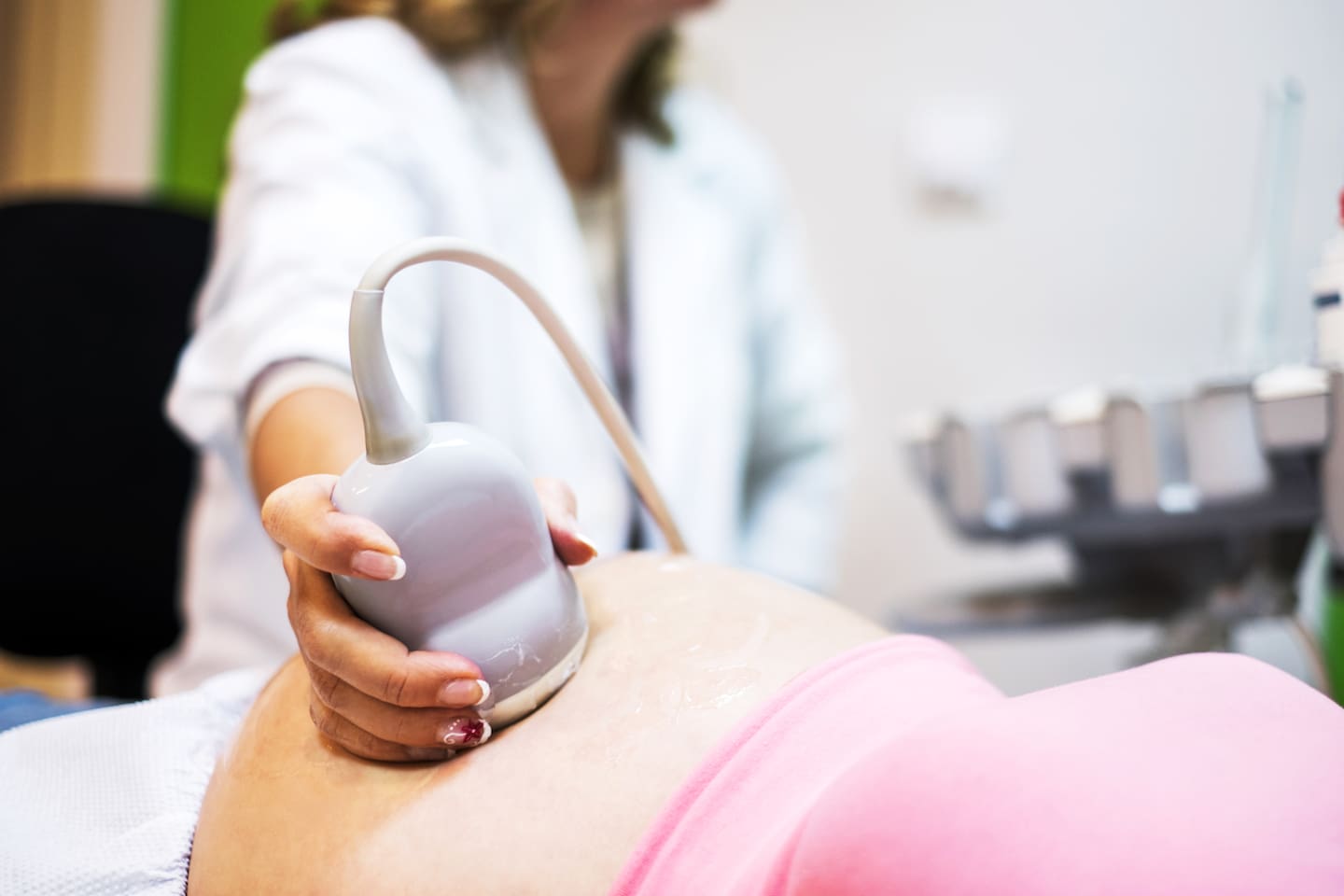
The woman was pregnant with her second child when a routine ultrasound in January 2021 identified she had a benign growth in her uterus. Photo / 123rf
“This has not only been a clinical failure but a deeply personal tragedy that has left lasting emotional and psychological damage,” the mother said.
Deputy Health and Disability Commissioner Rose Wall said failures by staff along the way to recognise the extent to which the baby was at risk, ultimately meant they had failed the mother and baby.
“I consider that overall, the care provided to [the woman] by Health NZ Waitematā was inadequate,” Wall said in finding the district health provider had breached the health consumers’ code.
An adverse event report by the health provider, which operated hospitals and community care facilities in the North Shore, Waitākere and Rodney areas of Auckland, found a list of failures.
They included staff misinterpreting specialist reports, incorrect plotting of the baby’s growth and a lack of appreciation for the significance of reduced foetal movements when there was documentation showing reduced movements for one week.
Wall said that was “very significant” in the context of a small foetus.
The report also noted heavy demand on resources, with North Shore Hospital at capacity at the time.
Waitākere Hospital was asked to provide acute maternity assessments for both sites, according to an adverse event report completed by Health NZ Waitematā.
‘Deeply sorry’
Wall expressed her condolences to the woman for the tragic loss of her baby. She acknowledged it had been traumatic for her and her whānau, and that answers were sought about whether the baby’s death could have been prevented.
Group director of operations at Health NZ Waitematā, Brad Healey, told NZME it was “deeply sorry” it did not provide the standard of care which was reasonably expected and needed.
“We have apologised to our patient for the failings identified in the report, the ongoing distress and acknowledged that this apology is likely to be of limited comfort after such a tragic loss.”
Growth found at routine scan
The woman was pregnant with her second child when a routine ultrasound in January 2021 identified that she had a benign growth in her uterus.
Guidelines were that fibroids required an obstetric consultation, the HDC said.
The midwife assigned as the lead maternity carer said referral to the obstetric team at Waitematā was discussed with the woman at a routine antenatal appointment in February.

Deputy Health and Disability Commissioner Rose Wall said several errors led to a failure to recognise the extent to which the baby was at risk, and that Health NZ Waitematā had failed the mother and baby.
The midwife sent a hospital referral, which included information about the uterine fibroids but entered the email address incorrectly, which meant it was not received.
The woman was however referred for a general obstetric review because of her previous caesarean section, but there was no reference to the growth found.
Wall said, despite that, as part of the appointment, it would be expected that the woman’s full history and scans to date would be reviewed and would provide the basis for recommendations for care in her pregnancy.
“The anatomy scan report documents the presence of a fibroid, and therefore that information was available to the obstetrician providing the secondary consultation,” she said.
‘Concern’ over baby’s growth
About nine weeks after the routine ultrasound scan, the woman had a telephone consultation with an obstetric registrar at North Shore Hospital.
The woman told the HDC the fibroid was discussed during the consultation and that she would receive some scans, but no follow-up arrangements were made, Wall said.
She said that from 28 weeks into her pregnancy, she had repeatedly asked the midwife to arrange an ultrasound scan, but nothing happened until she neared full term at 37 weeks’ gestation.
However, a comment in the antenatal records in May 2021 about the baby’s growth indicated concern at that stage, Wall said.
A string of monitoring and assessment appointments followed.
Hospital at full capacity
On May 27, the woman and two other patients from North Shore Hospital arrived at Waitākere Hospital for acute assessment, where the level of patient need was already very high, Wall said.
She said North Shore Hospital maternity was at full capacity, but the capacity of the medical staff at Waitākere Hospital was not taken into consideration.
The on-call obstetricians at North Shore and the Waitākere clinicians were not consulted or informed of the diversion order and only became aware of it when patients started to arrive from North Shore Hospital.
Clues in heart rate monitoring
After the woman arrived at Waitākere Hospital, a cardiotocograph (CTG) was performed which showed a normal baseline heart rate, but Wall said it also showed early on an abrupt decrease of greater than 15 beats per minute for more than 15 seconds, with slow recovery and no accelerations.
The mother said a doctor came into the room multiple times afterwards, reviewed the CTG and told her she needed to be monitored for another hour.
Another doctor then told her that a “deep, prolonged deceleration” that was slow to recover was concerning, especially because she was not in labour.
The doctor who had carried out the initial CTG assessment considered that it was safe for the woman to be discharged with a plan to review her in two days’ time, or sooner if she had continuing concerns.
The following day, the woman arrived at North Shore Hospital because she could not feel her baby move.
A doctor used the bedside scanning equipment and found no foetal heartbeat.
Sadly, the baby had died, Wall said.
The HDC’s finding did not specify the baby’s cause of death, only that there was a failure to recognise that a normal-sized baby was unlikely to have low amniotic fluid volume, and it was not recognised that the baby was small for its gestational age because the estimated foetal weight was plotted on the CGC incorrectly.
“These errors were made by multiple staff, for which I hold Health NZ Waitematā responsible,” Wall said.
Changes made since
Healey said that since the tragic event, a series of process changes had occurred to ensure that when abnormal findings or urgent issues were identified, they were escalated as soon as possible.
Wall noted the changes included the introduction of a dedicated “assessment midwife” email inbox at Waitākere Hospital, and contingency plans were now in place for using beds at Waitākere Hospital when North Shore Hospital was full, and vice versa.
The woman hoped her complaint and its outcome would serve to prevent others from having to experience the “same preventable heartbreak”.
Tracy Neal is a Nelson-based Open Justice reporter at NZME. She was previously RNZ’s regional reporter in Nelson-Marlborough and has covered general news, including court and local government for the Nelson Mail.

Take your Radio, Podcasts and Music with you
Get the iHeart App

Get more of the radio, music and podcasts you love with the FREE iHeart app. Scan the QR code to download now.

Download from the app stores


Stream unlimited music, thousands of radio stations and podcasts all in one app. iHeart is easy to use and all FREE


