

Photos have emerged showing mallard ducks hunting and killing freshly hatched native pūteketeke chicks.
The images show the ducks preying on the vulnerable chicks beside an outlet near Lake Alexandrina, south of Lake Takapō/Tekapo.
The photos have stunned Department of Conservation (DoC) staff, who say the behaviour is virtually unheard of.
DoC principal biodiversity ranger Dean Nelson said they were horrified to see graphic photos of pūteketeke chicks being eaten alive, knowing how unusual it was for ducks to prey on other birds.

DoC rangers are horrified after discovering mallard ducks hunting native pūteketeke chicks. Photo / Supplied
“Mallard ducks usually eat plant material, with a little bit of protein from insects and snails during the breeding season,” he said.
“We went out there straight away and I observed three mallard ducks in the outlet creek where the grebe nests are. They were actively scoping out the pūteketeke nests to see if they had chicks.
“The adult pūteketeke didn’t see the danger as they don’t perceive the ducks as a threat.”
This duck behaviour was unknown to DoC experts, and there was a concern that it would spread, as ducks learned from each other, said Nelson.
“There was a case, which was referenced in a research paper from a Cambridge University scientist, describing how a group of mallard ducks were attacking and eating the chicks of two common bird species in Romania in 2017. It claimed this was a world first and the ducks may have been searching for a source of protein before laying eggs and nesting.”
Nelson said the member of the public did exactly the right thing in calling DoC and taking photos as evidence, otherwise it would have been hard to believe, he said.
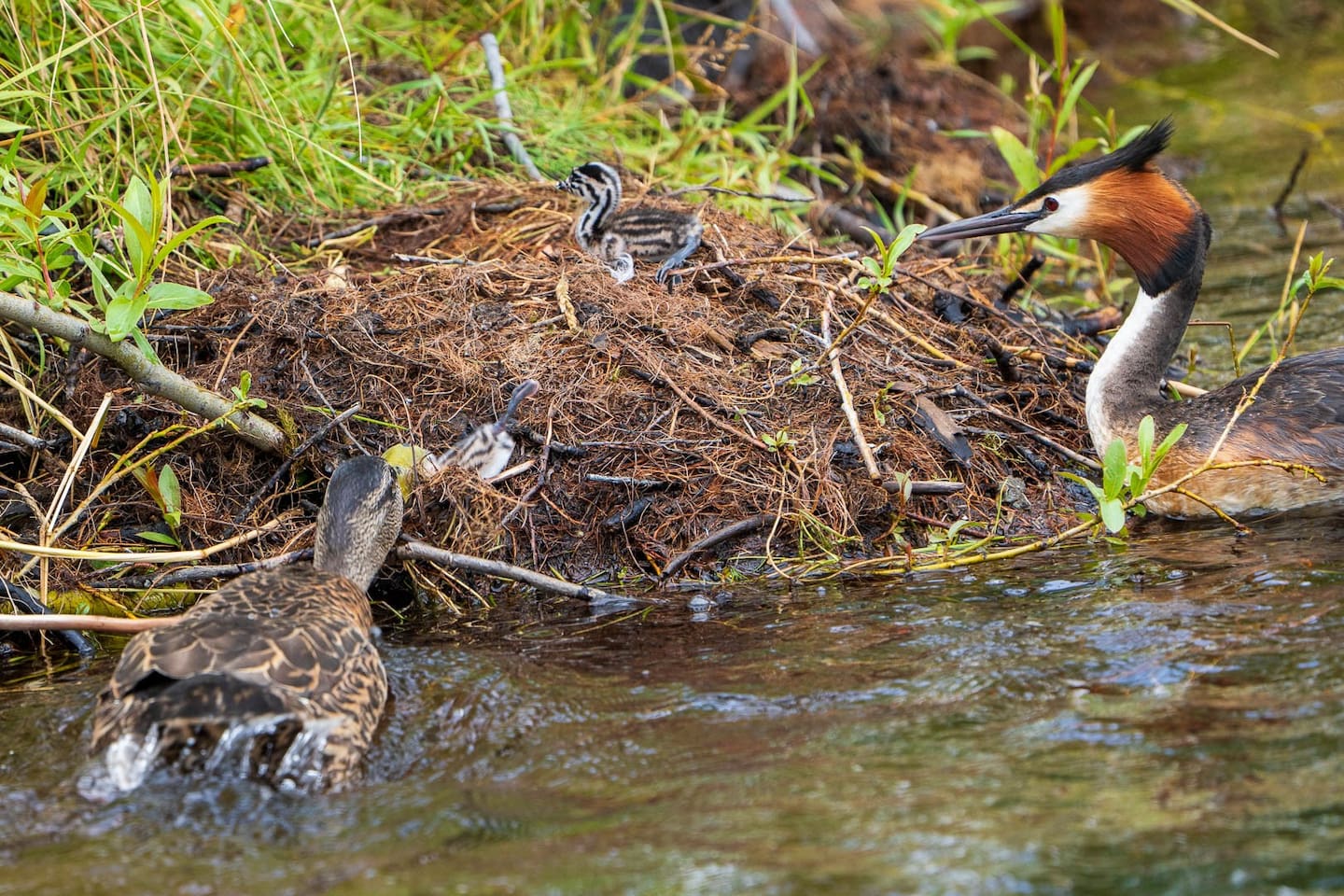
DOC rangers said the behaviour was virtually unheard of. Photo / Supplied
“This is a great example of people taking action for nature and looking out for our vulnerable species. While some people think the pūteketeke is introduced because of its name [the Australasian crested grebe], the reality is they’re native and are classed as nationally vulnerable.
“We want the public to be really engaged with nature. People can be our eyes and ears out ‘naturing’ and that’s fantastic for us, as our rangers can’t be everywhere,” he said.
Last December, campers and boaties around the popular Lake Benmore shoreline in Canterbury were asked to look out for pūteketeke over the summer holidays after reports of nests being disturbed at the Ōhau campground.
Many nests were adjacent to the boat ramp and spread out around the lakeshore.
The pūteketeke colony has had 40 to 50 nests each year for the last five breeding seasons and birds have raised their young much later than usual in the outlet creek next to Lake Alexandrina.
The “colonial” style of nesting so close together makes them easy prey for predators.
DoC staff have caught the three offending ducks with nets and removed them from the site and humanely euthanised them.
Staff would also heading out again today to check that no other mallard ducks have learned the behaviour.
Anyone who sees sick, injured or at-risk native wildlife can ring 0800 DOC HOT (0800 362 468).
The pūteketeke hit global headlines when comedian John Oliver successfully campaigned for the Australasian crested grebe to win the Forest & Bird, Bird of the Century crown in 2023.
They were once found throughout New Zealand, but now were only found in the South Island, living on lakes in Canterbury and Otago.
Predators include stoats, ferrets, cats and raptors.
Take your Radio, Podcasts and Music with you