


The Christchurch mosque shooter wanted to be described as a terrorist and was pleased when police laid a terrorism charge.
Today, the two lawyers who represented Brenton Tarrant when he was first charged have given evidence for the Crown at the Court of Appeal in Wellington.
Tarrant is seeking leave to appeal his convictions, asking the court to vacate his guilty plea for the mass shootings at two Christchurch mosques on March 15, 2019.
The gunman was jailed for life without parole in 2020 for murdering 51 people at the Al Noor and Linwood mosques.
Lawyers Jonathan Hudson and Shane Tait acted for Tarrant between March 2019 and July 2020.
Questioned by one of Tarrant’s five lawyers, all of whom have name suppression, Hudson told the court that when police laid a terrorism charge, Tarrant was pleased.
“He wanted to be described as a terrorist,” Hudson said.
There is conflicting evidence about whether Tarrant wanted to change his plea to guilty after initially entering not guilty pleas.
Yesterday, Tarrant told the court that he planned to represent himself at the time, and the only reason he retained his counsel was so they could tell him what was going on in the outside world.
Both Hudson and Tait denied that it was the case, telling the court that from their many meetings, they gained the impression that Tarrant always planned to plead guilty; it was just a matter of when.
Tait told the court that Tarrant indicated that he would plead guilty at a time that suited him.
He said when he pressed Tarrant about his defence, asking “Brenton, what am I going to tell the jury if we go to trial?” his response was, ”Don’t worry, it’s not going to get that far."
Despite indications of a guity plea, the lawyer said they continued preparing for a trial right up to the point he pleaded guilty. That continued to be the case until he entered his guilty pleas.
Tarrant had indicated that he wanted a defence of self-defence, but they explained this was not available to him and they didn’t believe he had a lawful defence to the charges he faced.
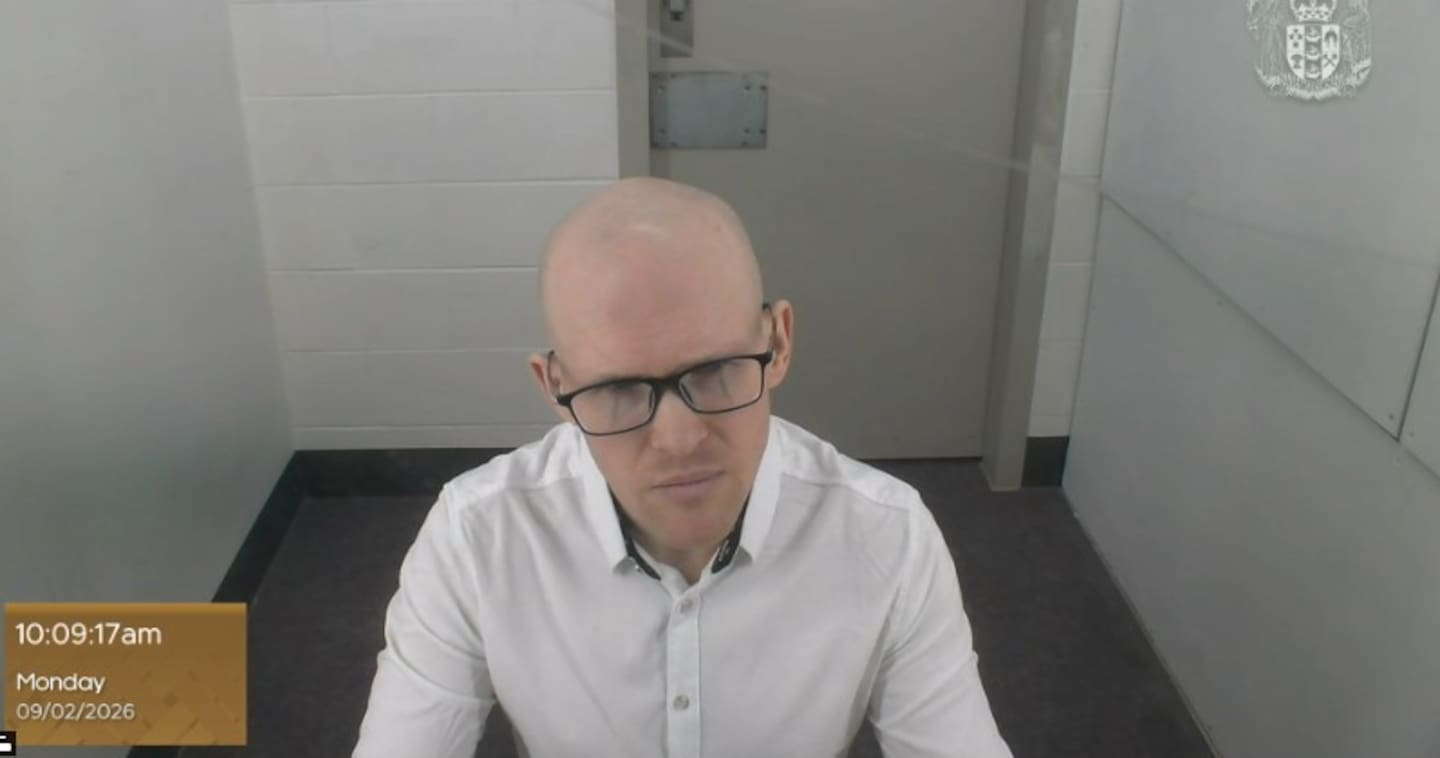
Brenton Tarrant gave evidence at the Court of Appeal on Monday morning. Photo / Ministry of Justice
Both lawyers were questioned about Tarrant’s conversation with them, in which he formally indicated he wanted to change his guilty plea in August 2019, something which Hudson admitted surprised him. Tarrant eventually pleaded guilty in March 2020.
Both denied that this had to do with Tarrant’s declining mental health.
Much of the questioning by Tarrant’s lawyer centred on his mental health and questions over whether it deteriorated over the time he was in custody, when he was being held in solitary confinement.
Hudson told the court he “took comfort” from two mental health assessors’ reports, which indicated no problems with Tarrant’s fitness to plead.
He said Tarrant’s mental health was consistent across the charges they faced.
In his evidence, Tarrant told the court at one meeting that the two had raised concerns about his mental health, saying he wasn’t speaking the same way. But neither lawyer said they could recall that conversation.
Both lawyers said the way they were treated in prison, when visiting Tarrant, was different from that of other lawyers visiting their clients. They claimed they were subject to more stringent searches and were taken to the isolation unit where he was being held.
But they said after some initial problems with the way Tarrant was being treated, including being handcuffed and forced to wear a suicide suit, that they settled down after a month or so.
Tait told the court that Tarrant showed some anxiety during this period, but did not appear to be depressed.
Tarrant, who initially denied all charges and had planned to stand trial, unexpectedly changed his mind in March the following year.
He now says the guilty pleas he entered to 51 counts of murder, 40 counts of attempted murder and a single charge of engaging in a terrorist act, were the result of harsh prison conditions, which drastically impacted his mental health.
In late 2022, he launched a bid to appeal his conviction and sentence.
This week’s hearing is to seek leave from the Court of Appeal for the 2022 appeal bid, which was lodged out of time.
Yesterday, the convicted terrorist spoke at length for the first time, by audiovisual link from prison.
Wearing a white shirt and dark rimmed glasses, his head shaved, Tarrant told the court he was effectively “forced” to plead guilty because of the harsh prison conditions.
“If I had another option, I would have taken it,” he said.
Tarrant told the court his mental health deteriorated after he was imprisoned and awaiting trial, and he was essentially not fit to plead guilty when he did.
The court also heard from a psychologist who concluded that the solitary confinement Tarrant was subjected to likely contributed to a decline in his mental health.
The hearing before Justices Christine French, David Collins, and Susan Thomas is set down for this week.
Catherine Hutton is an Open Justice reporter, based in Wellington. She has worked as a journalist at the Waikato Times and RNZ. Most recently she was working as a media adviser at the Ministry of Justice.

Take your Radio, Podcasts and Music with you
Get the iHeart App

Get more of the radio, music and podcasts you love with the FREE iHeart app. Scan the QR code to download now.

Download from the app stores


Stream unlimited music, thousands of radio stations and podcasts all in one app. iHeart is easy to use and all FREE