
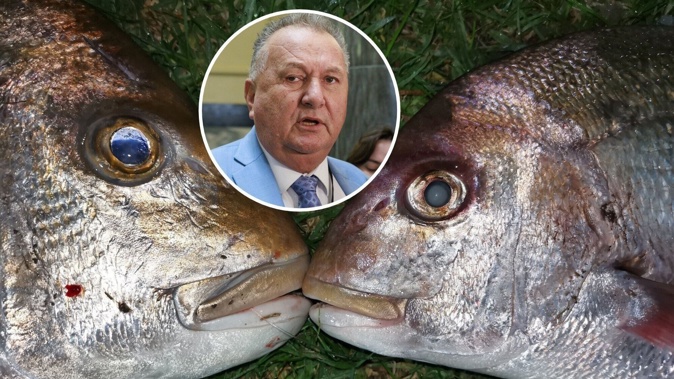
New rules have quietly been proposed that would remove commercial minimum legal-size limits for a range of popular fish species, including snapper and trevally, in a move that’s been condemned as “outrageous” by recreational fishers.
“There is no consideration for New Zealanders in this proposal. It’s the biggest threat I’ve seen probably in my lifetime and is incredibly shortsighted,” LegaSea CEO Sam Woolford told the Herald.
Details of the planned changes are buried in amendments to the Fisheries Amendment Bill published online on Wednesday - information Woolford said left him blindsided.
They show the minimum legal-size limit for a range of species, including snapper, tarakihi, butterfish, blue moki and trevally would be removed.
 Recreational fishers would still have to adhere to minimum size limits.
Current laws mean a commercial fishing vessel can only keep snapper bigger than 25cm and anything smaller must be returned to the sea.
The Ministry for Primary Industries (MPI) confirmed the proposed size limit change and said in the case of snapper it would apply to all trawl, Danish seine and set net fishers.
A spokesman said the bill would also revoke minimum size limits for “most other” commercially caught fish in the Quota Management System.
The bill suggests commercial size limits for kingfish would be abandoned too, but the spokesman said limits would be retained for that species.
An introductory note in the bill says it’s about delivering on “Government priorities to grow the value of seafood sector exports while continuing to ensure sustainability”.
 Legasea CEO Sam Woolford says he was blindsided by the plan to remove minimum legal-size limits for the commercial sector.
Woolford said rules allowing the killing of baby snapper are bad for the economy and future generations.
“Killing baby fish in order to create more fish for export – that’s kneecapping productivity. If you take a juvenile fish out of the ecosystem, it doesn’t have a chance to reproduce.”
Recreational fishers would still have to adhere to minimum legal size limits.
For recreational fishers in the Snapper 1 area, which covers Auckland and the east coast up to North Cape, the minimum legal size for snapper is 30cm with a daily bag limit of seven snapper per fisher.
“There is absolutely no consideration for the ecosystem impacts, but also for the societal ones – the fact that New Zealanders still have minimum size limits to adhere to.”
Woolford feared that if the rules were passed, his children wouldn’t be able to catch a legal-sized trevally because juveniles will be taken by trawl nets and shipped offshore.
 Oceans and Fisheries Minister Shane Jones. Photo / Mark Mitchell
Oceans and Fisheries Minister Shane Jones has been forthright in his approach to fisheries reform, saying on multiple occasions he wants to unleash the industry’s economic potential.
The Herald sought comment from Jones on the latest rule changes, but a spokeswoman said he was busy.
The size limit changes follow multiple controversial reforms that also feature in the Bill.
These changes include plans to block the public from obtaining footage of fish dumping under the Official Information Act.
Other changes set to go before a select committee include giving quota owners the right to carry forward an increased amount of uncaught catch into another fishing year; there’s more flexibility to dump unwanted catch at sea, and the ability for fisheries decisions to be challenged in court will be reduced.
Seafood New Zealand CEO Lisa Futschek praised Jones’ leadership in a statement welcoming the bill on Wednesday.
“New Zealand’s fisheries are a public resource that must be managed carefully. We support changes that help ensure healthy fisheries which all New Zealanders can enjoy,” she said.
Woolford said the bill removes the premise of sustainability, and when the initial changes were proposed, around 25,000 New Zealanders made submissions opposing the reforms.
A previous Government statement on plans said the public will get the chance to comment on the bill, which is now expected to progress to the select committee phase of deliberations.
“It really feels like New Zealanders are an afterthought right now. We’re outside the tent,” Woolford said.
He urged people to make their feelings known to both the Government and opposition parties before the upcoming general election.
Jones had also signalled plans to allow commercial vessels to land dead marlin and sell them – plans he backed away from after a backlash from the public, including fishing icon Matt Watson.
He’s also done a U-turn on a plan to let commercial fishers land and sell certain reef fish if they were caught in nets as bycatch.
“I have weighed up the costs and benefits of the proposal, along with feedback from the recreational fishing community and the public, and decided to keep the current restrictions in place,” Jones said on Thursday.
Michael Morrah is a senior investigative reporter/team leader at the Herald. He won News Journalist of the Year at the 2025 Voyager Media Awards and has twice been named Reporter of the Year at the New Zealand Television Awards. He has been a broadcast journalist for 20 years and joined the Herald’s video team in July 2024.
Take your Radio, Podcasts and Music with you
Get the iHeart App

Get more of the radio, music and podcasts you love with the FREE iHeart app. Scan the QR code to download now.

Download from the app stores


Stream unlimited music, thousands of radio stations and podcasts all in one app. iHeart is easy to use and all FREE


