

Convicted murderer Malcolm Rewa, one of New Zealand’s most notorious serial rapists, now has yet another sentence added to his substantial criminal record thanks to the decades-long persistence of a teenage survivor who never forgot his sadistic and terrifying treatment of her in a chance encounter nearly 40 years ago.
Rewa, now 73, returned to the dock today in the High Court at Auckland, a place he’s well familiar with, having sat through three high-profile trials for the 1992 murder of Susan Burdett.
His last retrial, in 2019, saw him convicted of that killing after jurors were told about 20 of his rape cases.
“Your actions profoundly changed her life,” Justice Simon Mount told the Rewa today in the most recent case.
He stole the woman’s faith in humanity, the judge said, “replacing it with shame, fear ... and despair”.
“She’d be perfectly entitled to consider it too little too late,” he said of the sentencing, commending her for taking steps to get the cold case solved.
Authorities, he pointed out, could not be credited for doing so.
The case for which Rewa was sentenced today involved a 16-year-old girl who was approached from behind and strangled into unconsciousness with a rope in 1988.
She had been attending an 18th birthday party at an Onehunga home that night and strayed down the street to get some fresh air. She was sitting on the kerb when Rewa, then 35, tapped her on the back, according to the agreed summary of facts.
He then threw the rope around her neck and dragged her to the back of the property as she grasped at the ligature before passing out.
“As the complainant regained consciousness, she was pushed face-first onto the wet grass,” court documents state. “She began to panic, she started yelling and swearing. The defendant pushed her down further until she was flat on her stomach.”
He then bound her hands behind her back with the same rope, leading her to think she was going to die, and gagged her with her pantyhose so tightly that she lost a tooth. Her top was pulled over her head so she couldn’t see.
Rewa raped her for 10 to 15 minutes before walking away. She was later able to walk blindly to a tree, rubbing against it until the shirt covering her face was lowered, then walked back to the party, still exposed and with her arms bound, to raise the alarm.
But by then Rewa was gone, and neither she nor anyone else knew who he was.
Details of her case bear a striking resemblance to other rapes that had been described to juries at Rewa’s previous trials. Other victims were also caught by surprise by a stranger who blindfolded them and covered their tops.
That same night, the victim let authorities take a DNA swab in hopes of identifying the rapist. But it would be another eight years before a nationwide DNA databank was created, and by then the investigation was no longer active.
Last year, however, it was revived after the woman called police to ask whether the DNA sample was still on file and whether it had ever been compared to the databank.
“She noted that the nature of the attack on her made her think that the person may well have offended against someone else,” court documents state.
‘I paid dearly’
The woman, now 53, told the court today that the attack had been a defining feature of the past 37 years – something that would be “etched in my mind forever”.
Before that evening, her future had looked bright, she explained.
“I lost part of myself that night, and I’ll never get that back,” she said as Rewa looked down at the ground from the dock, only the thinning hair on the top of his head visible. “You destroyed my faith and trust in mankind.”
Not knowing who was responsible for the attack for so long was also damaging, she said, explaining that she lost trust even in her friends.
“I’ve replayed that night over and over in my mind tens of thousands of times, trying to figure out who would do such a despicable thing. I lived in fear every single day.”
The bruising and scars around her neck eventually faded, but the psychological damage cut much deeper, she said. With no one to hold accountable, she instead blamed herself.
“I paid dearly for that night and struggle to put into words just how profoundly it has changed me.”
But with Rewa now identified, she did not want the case to burden her anymore.
“Finally, somebody will be held accountable and I can start to trust again,” she said, holding in tears as she finished her statement.
“I’m not looking over my shoulder anymore. I will move forward with strength and pride ... despite what he did to me.”
‘Young woman’s nightmare’
Under normal circumstances, rape carries a maximum sentence of 20 years’ imprisonment. However, the maximum sentence when Rewa committed the rape was 14 years.
In terms of how long Rewa will spend in prison, today’s sentencing was a largely academic exercise.
He’s already serving a life sentence for murder and preventive detention for his previous rapes.
“You will remain subject to those sentencings for the rest of your life, regardless of the penalty I impose today,” the judge told him.
Crown solicitor Alysha McClintock said it appeared the woman who was in court today was Rewa’s second of a total of 26 victims.
“This is in so many respects a young woman’s nightmare,” she said, describing the victim as having been dragged into his “depraved game”.
“It’s hard to imagine greater premediation to be carrying a rope and looking for a young woman to sexually violate.”
 Justice Simon Mount, photographed in Invercargill District Court in 2024, before he was appointed to the bench. Pool photo/ Robyn Edie / Stuff
Judge Mount agreed the premediation was disturbing, noting that Rewa had previously described a “game” in which he targeted white women to “see how many you could get away with”.
Defence lawyer Mark Jepsom asked for a starting point of eight to nine years. The judge ordered 10 years but allowed a 25% reduction for Rewa’s early guilty plea.
A two-and-a-half-year uplift was added for his lengthy history of predatory sexual behaviour before and after the teen’s rape.
There were no other mitigating factors, he said.
“You have done nothing to make amends for this offending,” the judge said, noting that Rewa continued to be considered a high risk of further sexual offending.
He settled on a sentence of 10 years, considering the totality of the unusual situation.
He said he could have imposed another sentence of preventive detention, but the finite sentence would push back his parole eligibility from next February to August 2029.
It resulted in an effective non-parole period of 33 years and three months when taking into account the other crimes for which Rewa is already serving sentences.
“There is no guarantee that you will ever get parole, and there is nothing I’ve seen that should give you any optimism in that regard,” the judge said.
“That will be a real consequence for you, but it is justified and required.”
Five trials, one murder
Rewa’s criminal history has been repeatedly thrust into the spotlight over the past three decades through various trials - and for having never intervened when another suspect in the Susan Burdett case spent 22 years behind bars despite his innocence.
Teina Pora was released on parole in 2014, and his convictions were overturned by the Privy Council a year later after it was determined he had given a false confession during a 14-hour police interview when he was 17 years old.
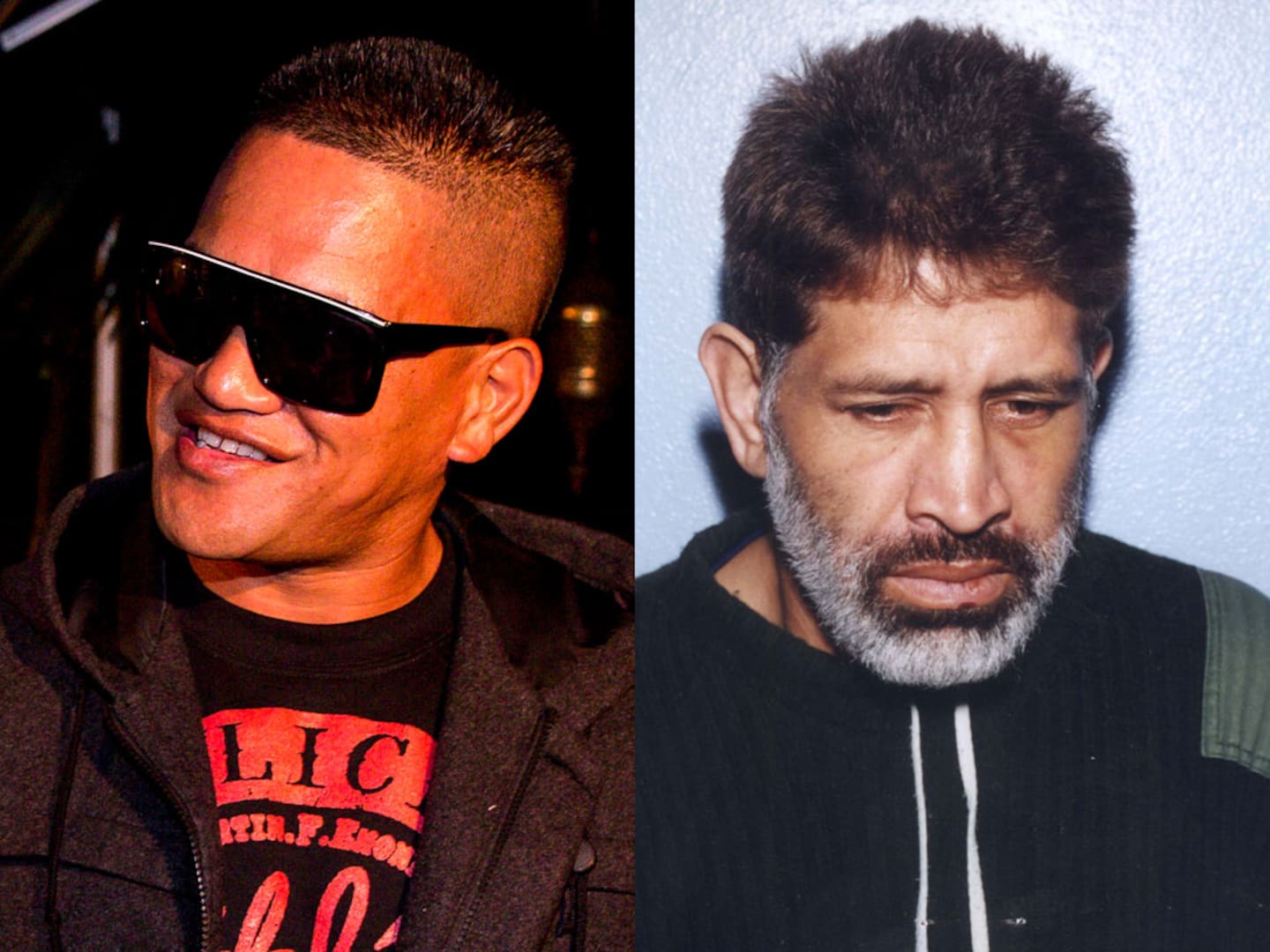 Teina Pora (left) spent over 20 years in prison after falsely confessing to the murder of Susan Burdett. The real killer, it would later be established, was serial rapist Malcolm Rewa (right). Photo / NZ Herald
Pora was found guilty by two juries, in 1994 and 2000, of fatally bludgeoning Burdett with a softball bat.
Rewa, meanwhile, first went to trial on the charge in 1996.
The first jury was unable to reach a consensus on both the murder charge and an allegation that Rewa raped her. But the panel did find him guilty of most of the 43 charges of sexual offending against 25 other complainants.
The Crown tried again with a trial in 1998. Jurors that time found Rewa guilty of raping Burdett but again could not agree on the murder charge.
 Susan Burdett was killed in her Auckland home in 1992. Photo / File
The third and final murder trial took place in 2019, four years after Pora’s murder conviction was quashed. That time, Rewa was found guilty of murder.
He was given a life sentence for the killing, to be served concurrently with his existing 22-year preventive detention sentence for the previous rape convictions.
He appealed against the murder conviction, trying to take the case to the Supreme Court when the Court of Appeal failed to find a miscarriage of justice. The Supreme Court declined to hear the matter in 2024.
Craig Kapitan is an Auckland-based journalist covering courts and justice. He joined the Herald in 2021 and has reported on courts since 2002 in three newsrooms in the US and New Zealand.
Take your Radio, Podcasts and Music with you
Get the iHeart App

Get more of the radio, music and podcasts you love with the FREE iHeart app. Scan the QR code to download now.

Download from the app stores


Stream unlimited music, thousands of radio stations and podcasts all in one app. iHeart is easy to use and all FREE


