Covid-19 Response Minister Chris Hipkins believes the real number of daily infections in New Zealand could be closer to 100,000 than the 20,000 being reported daily.
And when vaccine mandates start to end will largely depend on when New Zealand's Omicron outbreak starts to wane, he told TVNZ's Q&A on Sunday morning.
Hipkins said mandates would remain only for as long as they could be "absolutely justified".
He said the mandates started with the border workers when Covid-19 wasn't circulating in the community, and when it moved on to other sectors there were strong justifications to do so.
Hipkins said when we get to the point that the mandates were no longer justified for those sectors, then these would be removed – although he would not say when.
"You're not going to wake up one morning and suddenly find all those requirements are gone. For our front-line health workers, for example, it's likely to be there for a while," he said.
Hipkins said the Government was keeping other mandates and Covid restrictions that remain in place under "regular review".
The key purpose of the mandates was to help reduce the impact of the virus that's killed more than 5.9 million people and infected nearly 438 million around the world.
The mandates were introduced in response to the Delta variant.
However, studies have shown that double vaccination isn't as effective against Omicron as it was Delta and previous strains, which is why the Government is pushing ahead with its booster jab rollout which provides 90 percent protection against hospitalisation from Omicron.
"There is certainly more infections in the community than our testing numbers show," Hipkins said.
The minister said it was possible the real numbers could be up to five times higher, as some modelling shows.
Some people could be completely oblivious that they have Covid-19 because the symptoms could be pretty mild, he said.
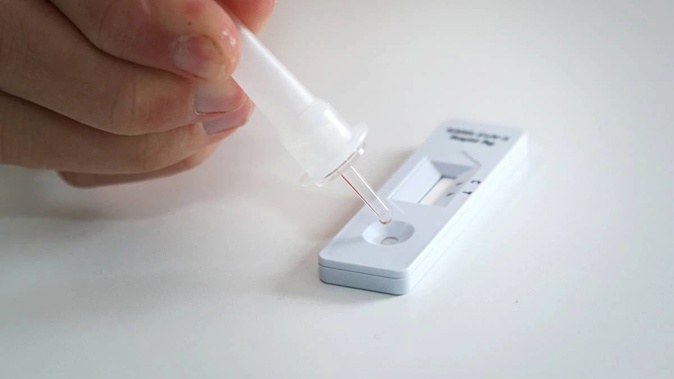
Hipkins defended the Government's rapid antigen tests rollout, but admitted that with the benefit of hindsight it would have tried to get more earlier.
"One of the reasons we didn't expand on the use of rapid antigen tests was because we weren't willing to accept potentially missing one in five cases," he said.
"That would potentially set us back in our response to Delta and our earlier variants."
He also indicated further changes to shorter isolation period, and most MIQ facilities returning to operating as hotels within the coming months.
Hipkins would not rule out border closures returning should there be other, more dangerous variants.
Take your Radio, Podcasts and Music with you