

It’s been eleven years since I last filled my heart with Ireland – a shamefully long break in transmission. On my latest visit to this most enchanting of destinations, my road trip began with a jaunt through Ireland’s “Hidden Heartlands.” Far beyond the heavily trafficked haunts like Dublin, Galway, or Killarney, this interior patchwork of counties beats to a slower pace across Ireland’s central plains. Steeped in nature, resolute village life, and bucket loads of history, it is quite the revelation to get off the beaten track and dabble with the authentic charm, artisanal verve, pastoral beauty and homely hospitality that underpins this lesser-known realm.
From Dublin Airport, I settled into my pure-electric Mercedes SUV rental car, dashing northwest through Counties Meath and Cavan to reach County Leitrim. It was the first time I’d extensively road-tripped in an EV, so overcoming my range anxiety was an immediate challenge. But with a comprehensive network of EV charging stations scattered across the country, a little bit of forward-planning soon dealt to that. Feeling rather virtuous, treading such a light footprint, my first port of call was the colourfully named town of Drumshanbo. If the name sounds vaguely familiar, chances are you’re a Father Ted fan, like me. One of Father Jack’s students was grimly referred to as the perpetrator of the fictional Drumshanbo massacre. It put the town on the map. There’s even a mural in honour of the TV show on the main street!
Snugly surrounded by soft rolling hills, Drumshanbo’s real claim to fame is its namesake gin, produced by The Shed Distillery. Even if you think distillery visits are becoming two-a-penny, The Shed is in a league of its own. Just over a decade old, PJ Rigney and his team of distillers are spirit-producing powerhouse, headlined by Drumshanbo Gunpowder Gin. Fusing oriental botanicals with local Irish ones and Chinese gunpowder tea, in medieval copper pot stills, their gin is simply sublime. I took a distillery tour which has been gorgeously designed, underscoring PJ’s globe-trotting curiosity, which inspired the enterprise. Alongside whisky tasting, finish off with a refreshingly exotic Drumshanbo Gunpowder Irish gin and tonic at the Honey Badger Bar, in the distillery’s majestic Botanical Glasshouse. And you’ll love the gift shop, too.
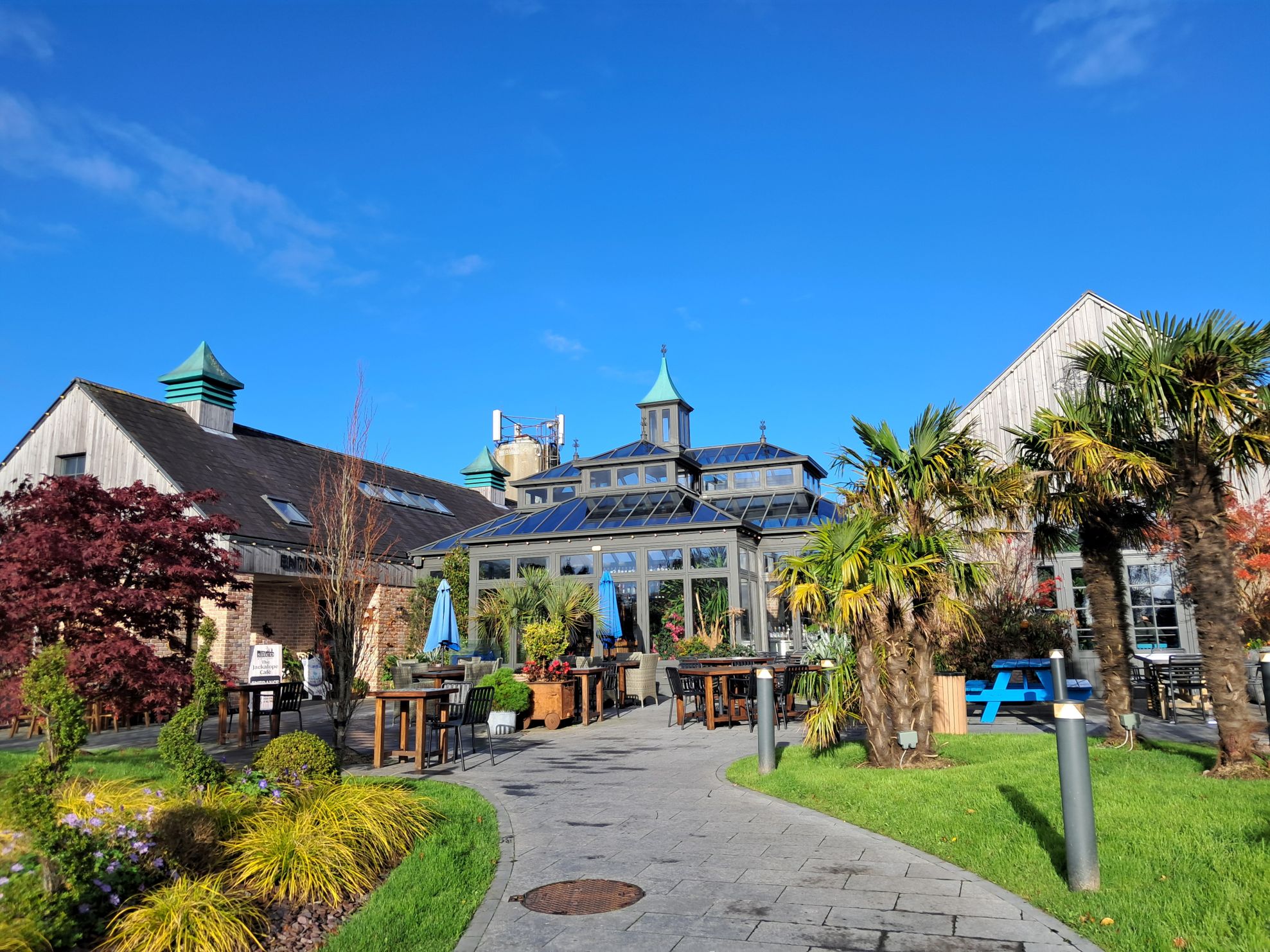 The Shed Distillery. Photo / Mike Yardley
Lording over the landscape, the Iron Mountain, looming like an emblem to the area’s rich mining history. Just across in County Roscommon, I headed to the Arigna Mining Experience, which brings to life over 400 years of iron and coalmining history, including what was Ireland’s first and last coal mine. (It closed 35 years ago.) In what was one of the narrowest coal seams in the western world, the underground tours are led by a former miner, complete with striking light and sound effects. Kids love it – I was happy to see daylight, again!
Just minutes from Arigna, I dabbled with one of the numerous megalithic sites peppering Ireland. Like roadside curiosities, they speak to the nation’s vast back-story reaching back 8000 years. I popped into Knockranny Woods for a sample of Ireland’s rich prehistoric heritage, home to a remarkable example of a megalithic court tomb. Dating back 5000 years ago to the Neolithic period, this ancient stone structure provides a fascinating glimpse into when farming was first introduced to Ireland and the burial chambers of these farmers. Many of the stones used for these constructions have actually been repurposed to bolster surrounding stone walls in nearby paddocks! I also pulled over to explore St. Lasair’s Holy Well, opposite Kilronan Abbey (the saint dates back to the 6th century).
Every parish in Ireland has its holy well, with specific healing properties and a Patron Day for the local saint that the well honours. St. Lasair’s Holy Well is a star specimen for pilgrims, dating back to the 17th century. Pope John Paul II visited the well. It’s considered a hot spot for curing bad backs, which entails crawling in a figure of eight around the legs of the altar. Someone has kindly laid matting under this slab to prevent muddy knees. Many locals swear by its healing powers, while I also noticed that quite a few students had left a pen by the well, ahead of exams, in the hope of divine intervention spurring them to academic success!
As the sun dipped and bathed the bucolic landscape in its gilded glory, I turned off the highway at the grand, crenelated entrance gate to Kilronan Castle. Nestled within 40 acres of scenic woodlands and overlooking the serene Lough Meelagh, the estate is home to a grey stone castle with turrets, chimneys and stately arched windows. The original castle was built in the 1600s by the O’Rourke clan. The stately property you see today was constructed 200 years ago. After falling into decline (the roof was even removed to avoid high taxes), the property was fully restored just over 20 years ago, blending the best of old-world charm with new-world elegance.
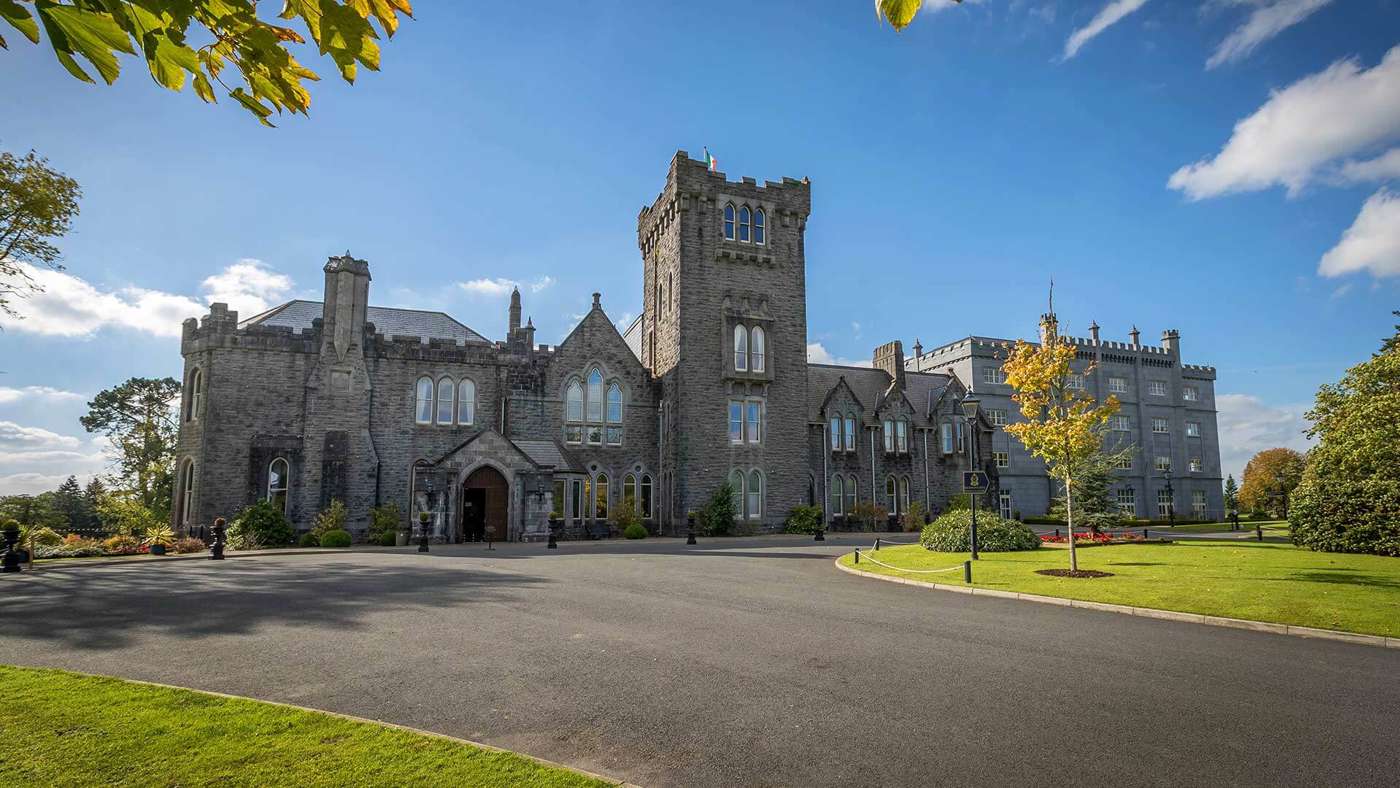 Kilronan Castle exterior. Photo / Supplied
Its fully restored interiors combine opulence with modern comfort, headlined by regally styled accommodation. Each of the 84 bedrooms is designed to offer the ultimate in luxury relaxation. My suite was elegantly designed with an imperial flair; from silken fabrics adorning the four-poster bed to antique furnishings in polished wood, complemented by ambient lighting and soothing views over the woodlands and Lough Meelagh. After enjoying a twilight stroll through the picturesque grounds and formal gardens, I took a seat for dinner in the acclaimed Douglas Hyde Restaurant, which is named of honour of Ireland’s first president – Roscommon’s most famous son. This is a fine dining affair, anchored by an array of truly divine dishes, paired with unrivalled service and dreamy decor. Don’t go past the Irish Skeaghanore Duck, accompanied with Confit Yam, Morelle Mousseline, Blaukraut Red Cabbage, Hazelnut Crumb, Truffle Potato Apple & Cassia Bark Velouté.
It's an exceptional authentic Irish dining experience from an award-winning kitchen, with high-quality, locally sourced ingredients to the fore. Post-dinner drinks? The Library Bar provides an elegant, intimate setting, while the atmospheric Dungeon Bar, is a delightfully escapist space to unwind and absorb the history of Kilronan Castle. The level of hospitality is second to none – hearty, attentive and faultless. Sample a night or two of indelible castle magic.
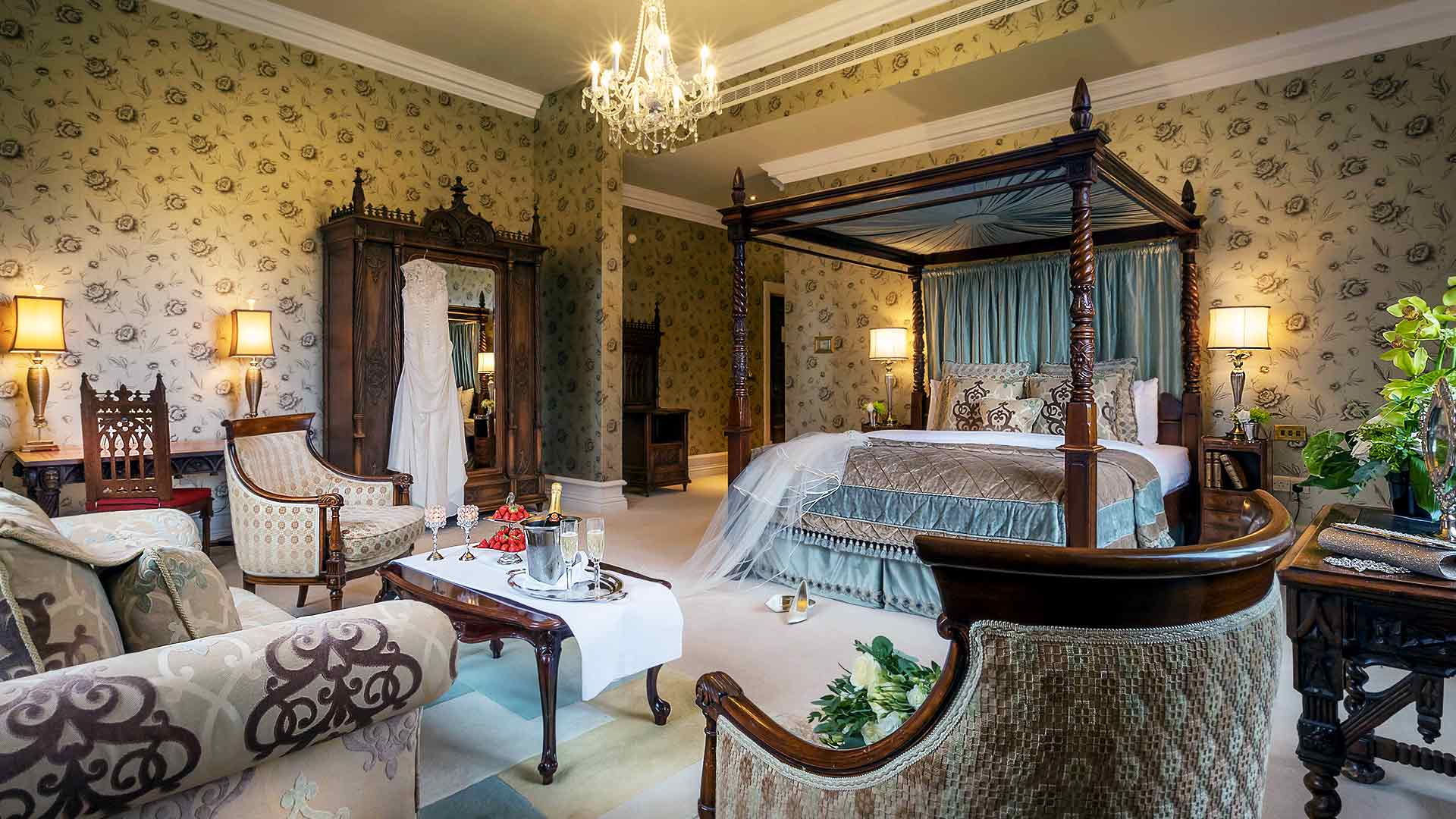 Kilronan Castle suites. Photo / Supplied
Pointing the car north, I jaunted up to neighbouring County Sligo and its namesake town, as the ravishing countryside was lashed by morning rain. Sligo is charismatic, colourful and compact – the sort of place that instantly appeals. I love how so many Irish towns still have highly appealing high streets, studded with attractive stores – many of which are inter-generational going concerns that have been passed down the family. Sligo is stacked with such specimens, with gorgeous shopfronts and old-school customer service that is gentle and welcoming.
Lyons department store is a cracker, as is Mullaney Bros Drapers and Wehrly Watchmakers. Sligo is also a hot-spot for traditional music, with many pubs staging “trad nights” featuring free-form jam sessions with charming, chatty locals. I gave the hospo scene a good shake and a lot of craic! Walker, Gracie’s Bar, Foleys and Hargadon’s would be my picks. Hargadon’s is everything an Irish pub should be, complete with a roaring peat fire and uneven flagstone floors. Be careful if you are doing a jig!
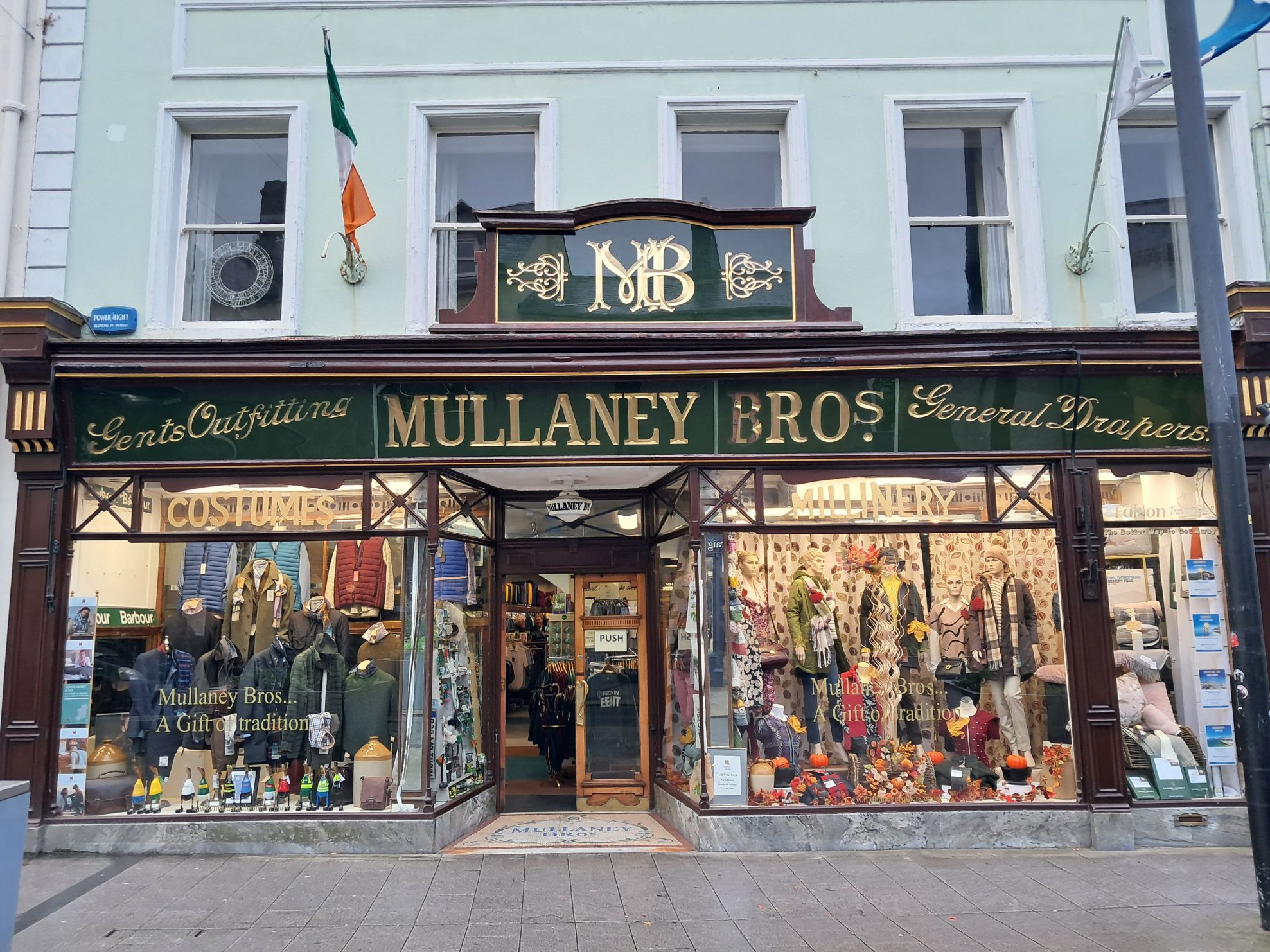 Mullaney drapers in Sligo. Photo / Mike Yardley
Many Irish folk refer to Sligo as “Yeats Country,” thanks to its association with the famed Irish poet, W.B. Yeats, who spent much of his childhood here. Literature lovers should visit the Yeats Memorial Building, located in the heart of town, celebrating Yeats’ life and work. From there, you can also take a Yeats-themed tour, visiting landmarks like the graveyard of St. Columba's Church, where Yeats is buried, or Lough Gill, which inspired some of his most famous poems.
As is the case across much of Ireland, the past butchery of the British scars the streetscape in melancholy. Sligo Abbey is a case a point, a 13th-century Dominican friary in the heart of the town, that was destroyed by the imperial British. Though much of the abbey is now in ruins, it’s still an achingly atmospheric place to explore, with its stone cloisters, Gothic windows, and ancient tombstones. If you’re up for more megalithic marvels, just south of town, take a stroll through Carrowmore Megalithic Cemetery. It presents a remarkable array of some thirty megalithic passage tombs, one of the biggest prehistoric graveyards in Europe that dates back nearly 6000 years.
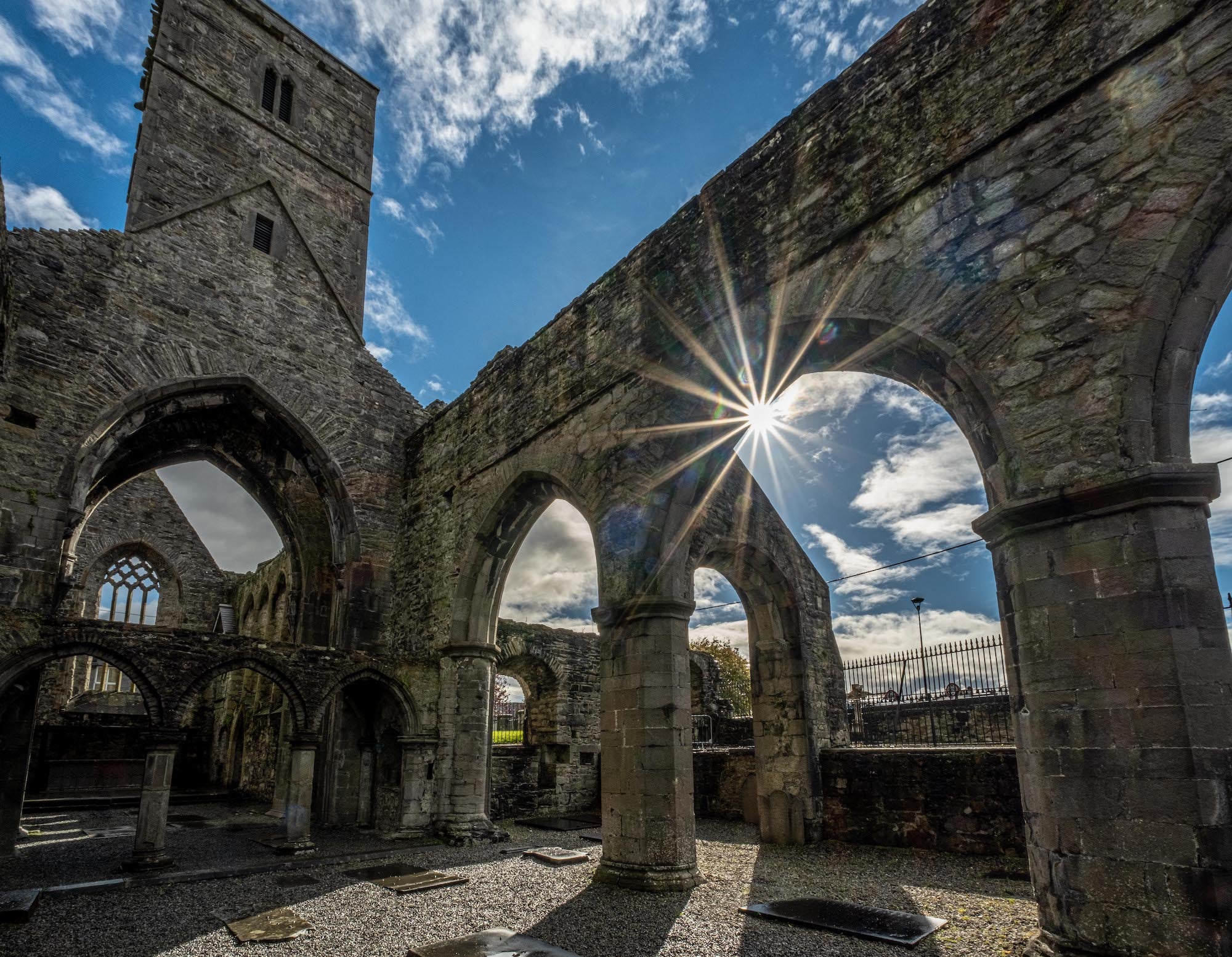 The ruins of Sligo Abbey. Photo / Sligo
Just west of Sligo town, Benbulben Mountain towers over the landscape like a giant. Part of the Dartry Mountain range, Benbulben offers fantastic hiking opportunities, particularly the Benbulben Forest Walk, which is a cracking trail that lassoes this iconic tabletop rock formation. It has an otherworldly quality, its edges seem to have been sliced away, with large claw marks scarring the slopes. The near-vertical structure towers above the land and keeps its people living in its shadow, protecting them from the wild winds. It’s essentially a monstrous pile of shells, layers and layers of limestone that have been compressed for millions of years under the sea, rising up from the ocean floor.
It's like a waymarker on the Wild Atlantic Way, a dedicated touring route stringing together the wild and woolly wave-bashed wonders of Ireland’s Atlantic coastline. My destination was Strandhill, the county's most popular seaside resort. The beach is a beaut, even if the only way you can get into its waters is on a surfboard. Don’t even think about swimming here, but watching the convulsion of crashing waves is quite compelling – even meditative. The Atlantic is like a wild animal.
When I was done gazing at the thunderous breakers, I treated myself to some serious canoodling with seaweed at the Voya Seaweed Baths, a globally acclaimed local spa where you relax in hand-harvested seaweed and hot seawater, renowned for its rejuvenating properties. 25 years ago, Neil Walton and his family founded this bathhouse, combining their passion for sports recovery, knowledge of aquaculture, and the age-old seaweed bathing traditions founded by their Irish forefathers. Steeped in Celtic tradition, seaweed baths have a remarkable ability to remove toxins from the body and accelerate the healing process. Over a century ago, Ireland’s west coast was dotted with over 100 seaweed bathhouses.
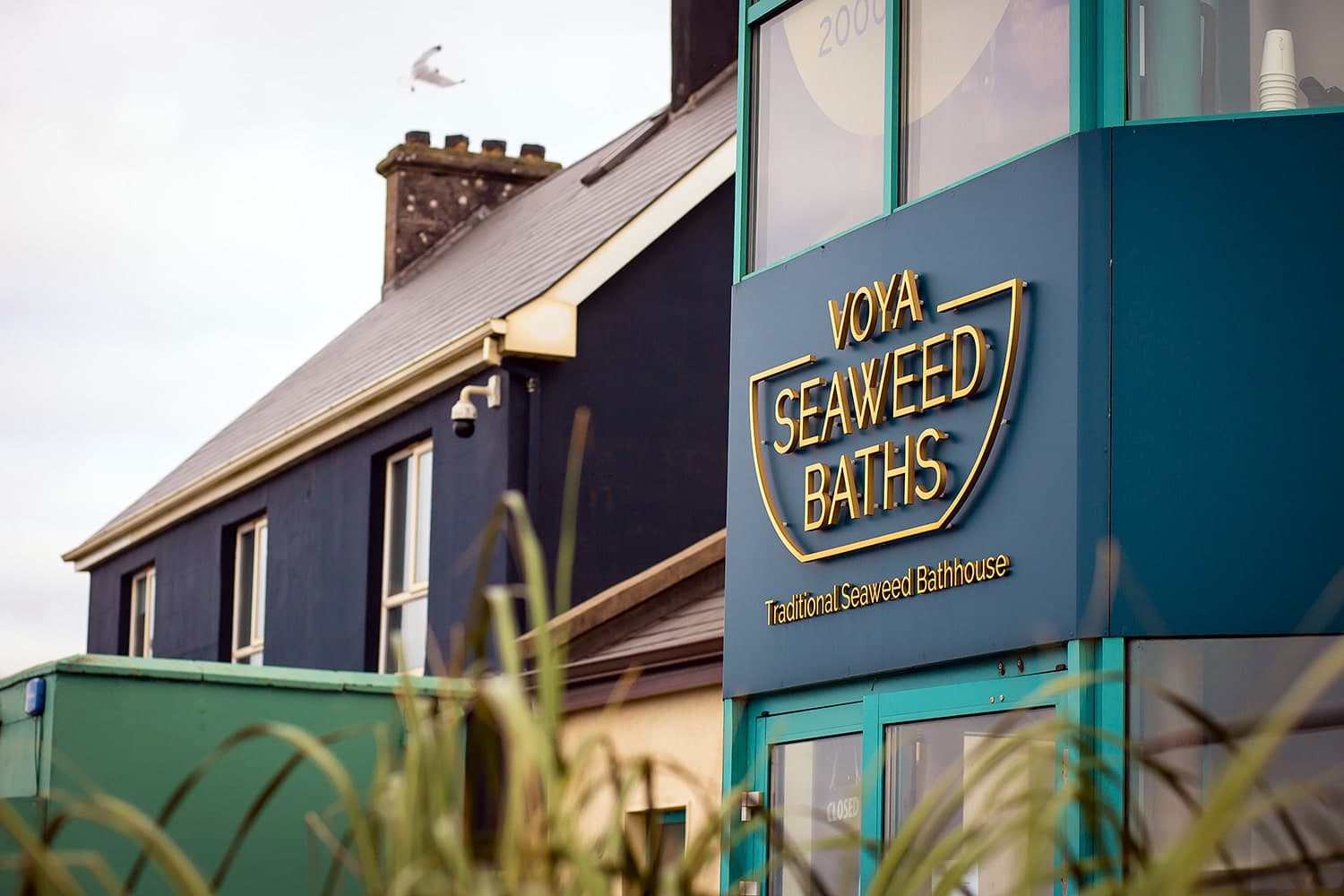 Voya Seaweed Baths on the waterfront in Strandhill. Photo / Supplied
I met up with Neil who remarked how many Irish rugby players frequent his establishment. He also told me about a Wall St rich-lister, who regularly flies in to Shannon Airport and choppers up to Sligo, simply to take a soak in his seaweed. The hand-harvested wild seaweed is meticulously selected, using sustainable practices. I took a seaweed bath and after customising myself to the unmistakably and rather potent briny smell, I could feel my body melt into a cocoon of oily, gel-like ocean goodness. What is it about seaweed therapy? Apparently, it’s the absorption of seaweed’s iodine content—an essential mineral—as well as its anti-radiation, anti-bacterial, and anti-pollutant properties. The detoxifying seaweed baths utilise the natural power of the seaweed to deeply moisturise your skin, increase circulation and promote healing. I felt ten years younger.
Fill your heart with Ireland in the enchanting Emerald Isle. For more touring insights and inspiration, head to the official website.
I flew to Dublin with Qatar Airways, recently crowned the 2025 World’s Best Airline by Skytrax, scooping the supreme honours for the ninth consecutive year. Qatar Airways flies non-stop between Doha and Auckland daily, with onward connections to 170 destinations, including daily flights to Dublin. I flew in Economy and you’ll notice the difference with one of the widest seats in the industry, complete with adjustable headrests. Lap up generous dining, complimentary Wi-Fi and over 8000 on-demand entertainment offerings in the Oryx One system.
Mike Yardley is Newstalk ZB’s resident traveller and talks travel every week on Saturday mornings with Jack Tame.
Take your Radio, Podcasts and Music with you
Get the iHeart App

Get more of the radio, music and podcasts you love with the FREE iHeart app. Scan the QR code to download now.

Download from the app stores


Stream unlimited music, thousands of radio stations and podcasts all in one app. iHeart is easy to use and all FREE