

Fuelled by popular culture and history’s long shadow, Derry~Londonderry is enjoying its moment in the sun. The Walled City in Northern Ireland has stamped its mark on the tourist map, appealing to a broad band of visitors. On my recent swing through the island of Ireland, Derry~Londonderry certainly didn’t fail to impress, serving up a heady cocktail of colour, culture, and the echoes of extreme conflict. The official name of this border town has long been the subject of a naming dispute between Irish nationalists and unionists. Generally, although not always, nationalists favour using the name Derry, and unionists favour Londonderry. On my approach to the city, I noticed most highway signs have had the Londonderry name scratched or painted over. And while I was in the “hyphenated city”, most locals I spoke to resolutely called the city simply Derry.
Parking up in Ebrington Square, on the banks of the River Foyle, I strolled across the landmark Peace Bridge, conceived as a project to literally ‘bridge’ the gap between the two communities of the waterside (Protestant) and the cityside (mostly Catholic). This striking S-shaped pedestrian bridge has proven to be a great success in bringing the two communities together, stretching across the river from Guildhall Square to Ebrington Square. Ebrington Square was the site of the British Army barracks until 2002 and have been beautifully regenerated as a public space with a host of attractions. This gathering place beckons like an emblem of reconciliation in this "legend-Derry" city.
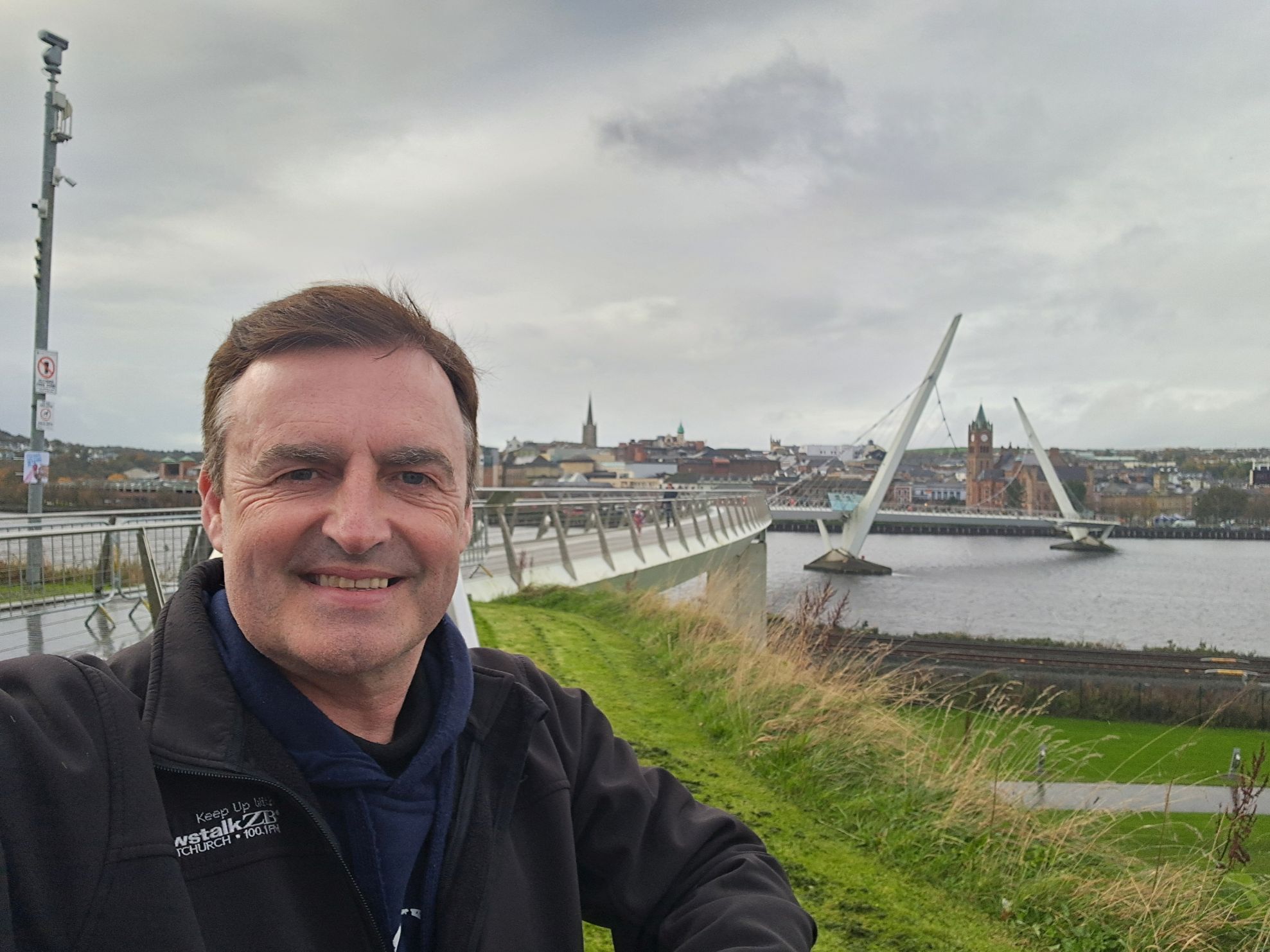 Mike by the Peace Bridge. Photo / Mike Yardley
Heading over into the city centre, Derry’s starring attraction is the 400-year-old walls that lasso the old city – one of the finest examples of a fully intact walled city in Europe. When the English arrived in 1613 to establish a Protestant foothold in this strongly Catholic part of Ireland, and flooded the area with Protestant settlers, they soon built this stout defensive wall to keep the Irish out. Cannons used during the siege still stand sentinel around the walls today. The most notable cannon is called Roaring Meg, renowned for the fury of its firing – pivotal in defending the Protestant stronghold of the Walled City from Irish Catholics. You'll find her, beautifully restored, on the walls at the Double Bastion, a fortified platform that overlooks the Catholic Bogside neighbourhood.
The walls form a historic walkway of just under a mile all around the old city, affording superb views over the surrounding neighbourhoods. Definitely strike out on the walls on a guided walking tour with Martin Mcrossan. His commanding passion and forthright patter about Derry’s backstory is compelling. Over the course of an hour, Martin gave us a crash-course in the Siege of Derry, ‘The Troubles’, and the more recent era of peace and reconciliation. His storytelling is woven with balance and humour. We were also introduced into the original catwalk.
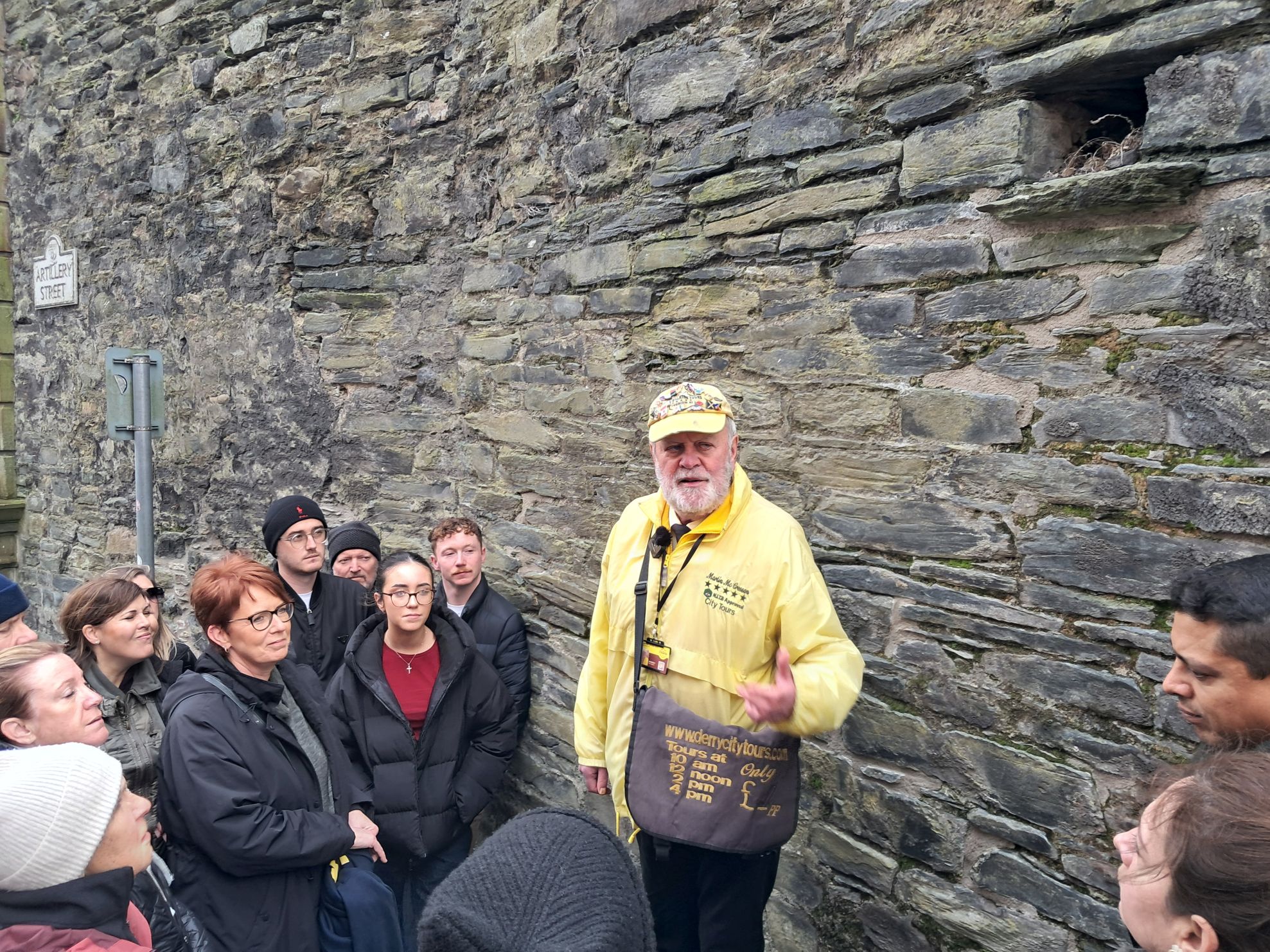 Tour guide Martin holds court on the Walls. Photo / Mike Yardley
One of the widest parts of the Walls is the Grand Parade. It was this particular area in which the phrase 'catwalk' apparently originated. It is claimed a newspaper writer from London was visiting the area and noted that people walked like 'cats' on this part of the Walls; dressed in their finest garb, parading themselves, giving rise to the coining of the term, catwalk.
Derry is undeniably a place of new-found hope and of increasing prosperity but the trail of tragedy to scar its story is still very raw and conspicuous. For many years, the sprawling neighbourhood beneath the walls, Bogside was the tinderbox of the modern Troubles in Northern Ireland. Most notably, the horrific 1972 Bloody Sunday massacre unfolded here, during a march protesting the internment of pro-Catholic activists. When a British regiment moved in to make arrests, several British soldiers opened fire on unarmed civilians, many of whom were simply trying to get out of the way or help those in need, tragically leading to 14 deaths and more than a dozen injuries.
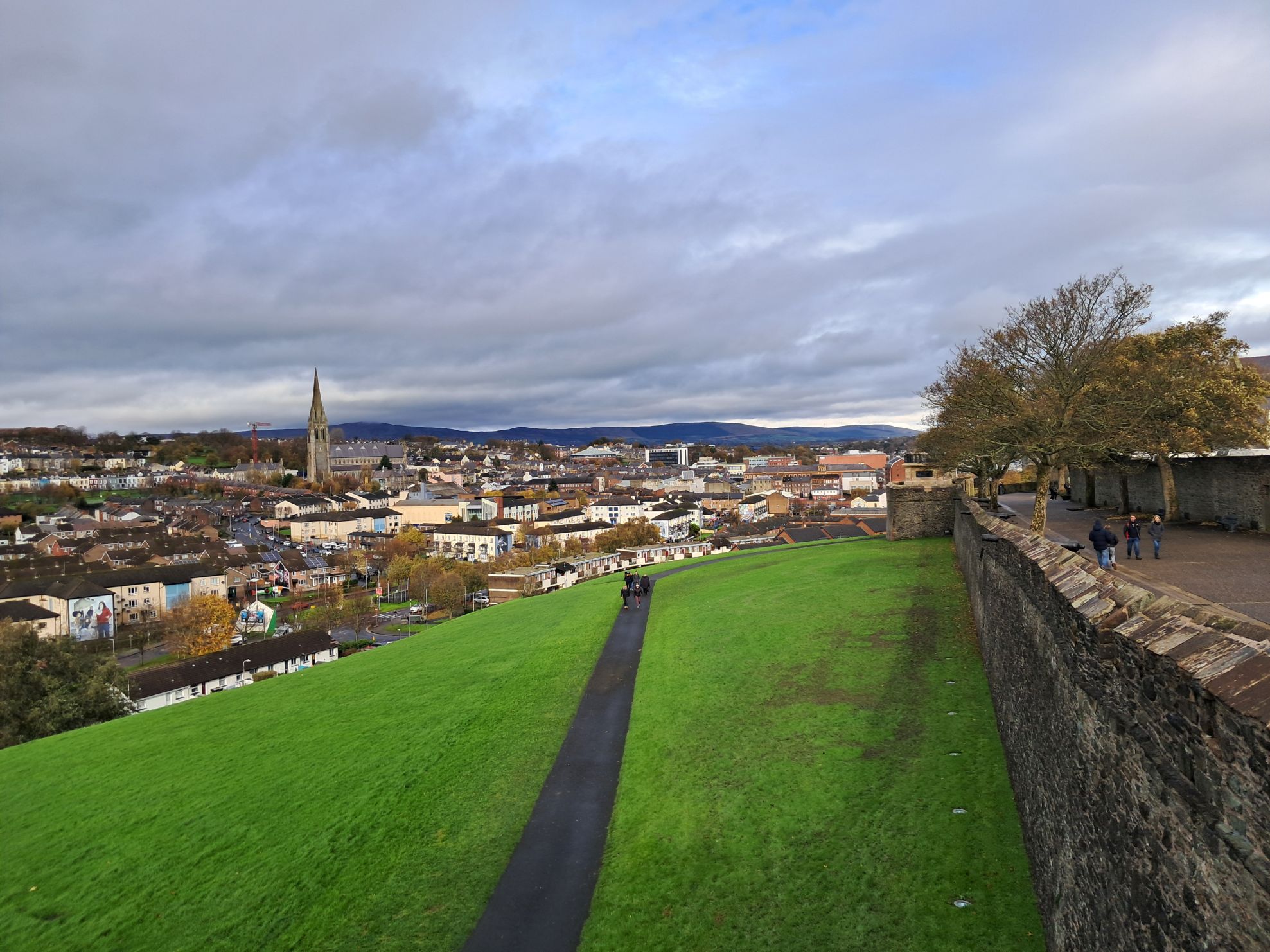 The catwalk on the Walls, overlooking Bogside. Photo / Mike Yardley
The clash sparked a sectarian firestorm whose ashes took more than 40 years to cool. I strolled around Bogside, paying my respects at the Bloody Sunday site, and viewing the multitude of political murals, that endow the neighbourhood with a raw, emotive edge, like a weeping wound. It was a profoundly moving to experience the neighbourhood that has seen so much horror and hatred. There is no denying that an element of locals still staunchly oppose British rule in these parts, even though both sides have come to the position that "an eye for an eye leaves everyone blind”.
As the character Erin says in the starting words of the TV series Derry Girls, “I come from a place called Derry, or Londonderry, depending on your persuasion.” The hit TV show is perhaps the most famous pop culture product to come out of Derry, following the lives of five teenagers during the Troubles. The Derry Girls mural in the city centre is an essential photo-stop. As is the Derry Girls Experience at the Tower Museum, packed with original memorabilia from the hit show.
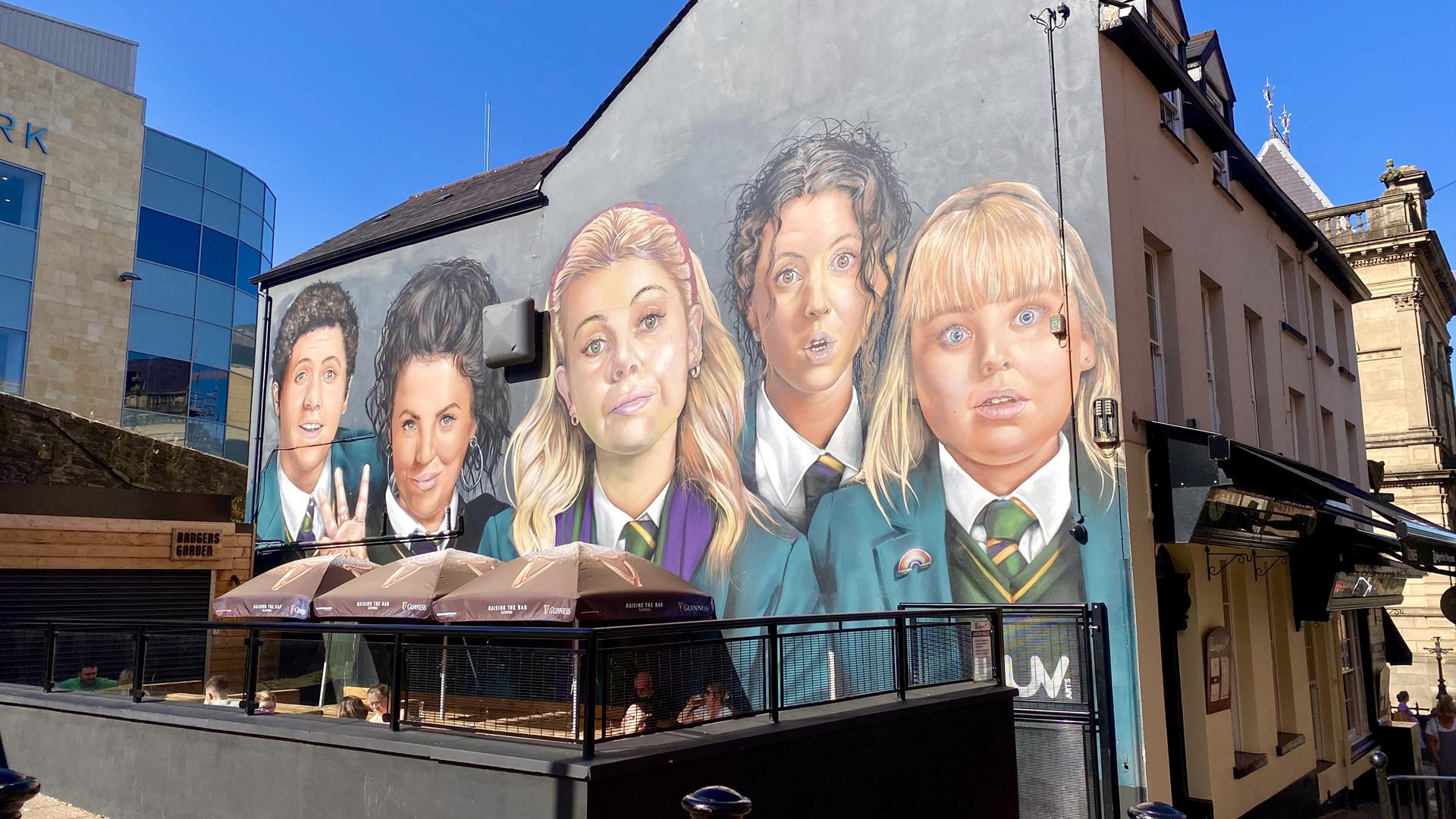 Derry Girls mural. Photo / Visit Derry
There’s a stack of museums in the city, showcasing the battle-scarred history steeped in Derry’s story. The Tower Museum walks you through the warts and-all-history with aplomb. I’ve always been intrigued the Spanish Armada’s attacks on Ireland in the 16th century. 24 ships were wrecked along the Irish coastline as they tried to return to Spain, resulting in the deaths of roughly 6,000 men from drowning or execution by locals. The Armada's invasion in Ireland had a lasting impact on Irish history. The failed attempt to overthrow English rule paved the way for future rebellions and uprisings. It also cemented the divide between the Protestant English and the Catholic Irish. A huge amount of artifacts from one of the shipwrecks, La Trinidad Valencera, were recovered from the seabed and exhibited at the Tower Museum. The collection is currently being moved and will take pride of place at the soon-to-be-opened DNA Museum at Ebrington.
I happened to be in town on October 31 and soon discovered why the city is regarded as one of the world’s greatest Halloween destinations, bursting into life or afterlife, deep into the night. Halloween is the modern incarnation of the ancient Celtic festival of Samhain that has been celebrated on the island for over 2,000 years, with October 31 marking the last night of the Celtic calendar, marking the end of summer and beginning of the new year. Celts believed that it was on this day that the worlds of the living and the dead were at their closest and that spirits could move between them. The Celts would light fires to scare off the roaming spirits and disguise themselves in costumes to confuse them – traditions that have survived into modern-day Halloween customs.
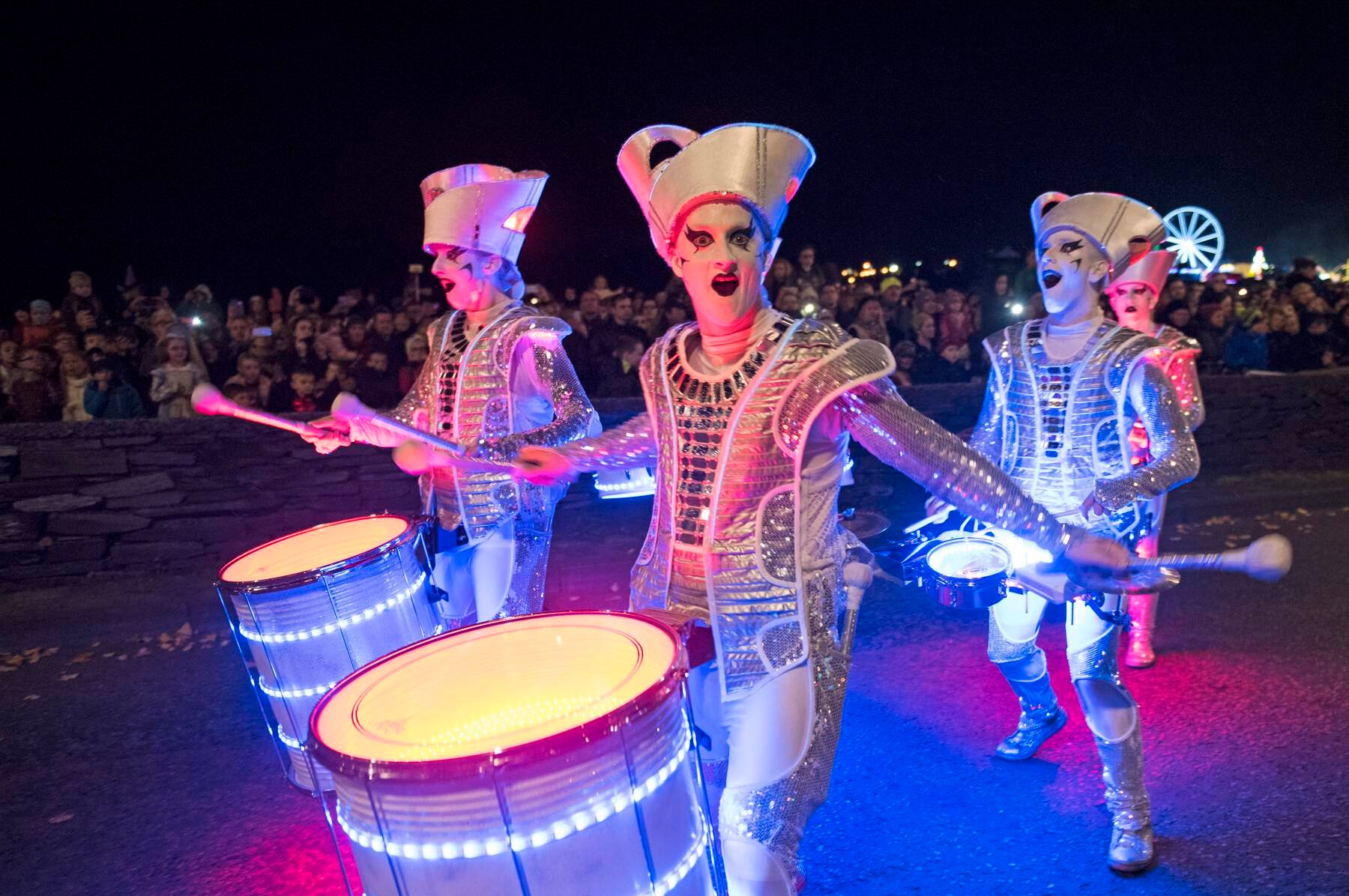 Parade spectacle for Derry Halloween. Photo / Tourism Ireland
Derry stages a multi-day Halloween festival, culminating with the most fantastical parade on October 31, consuming the city in a sea of costumes. The mood is electric. The lengths the locals —of all ages— go to to get suitably dressed up in elaborate costumes and Hollywood-worthy make-up is quite staggering. The carnival-like vibe spreads across both sides of the River Foyle, with a lavish fireworks display, food stalls and a Halloween-themed fairground, being all part of the revelry. I’ve never sampled a Halloween night, quite like it! A frightfully good night is had by all. It’s a bigger bash than Christmas.
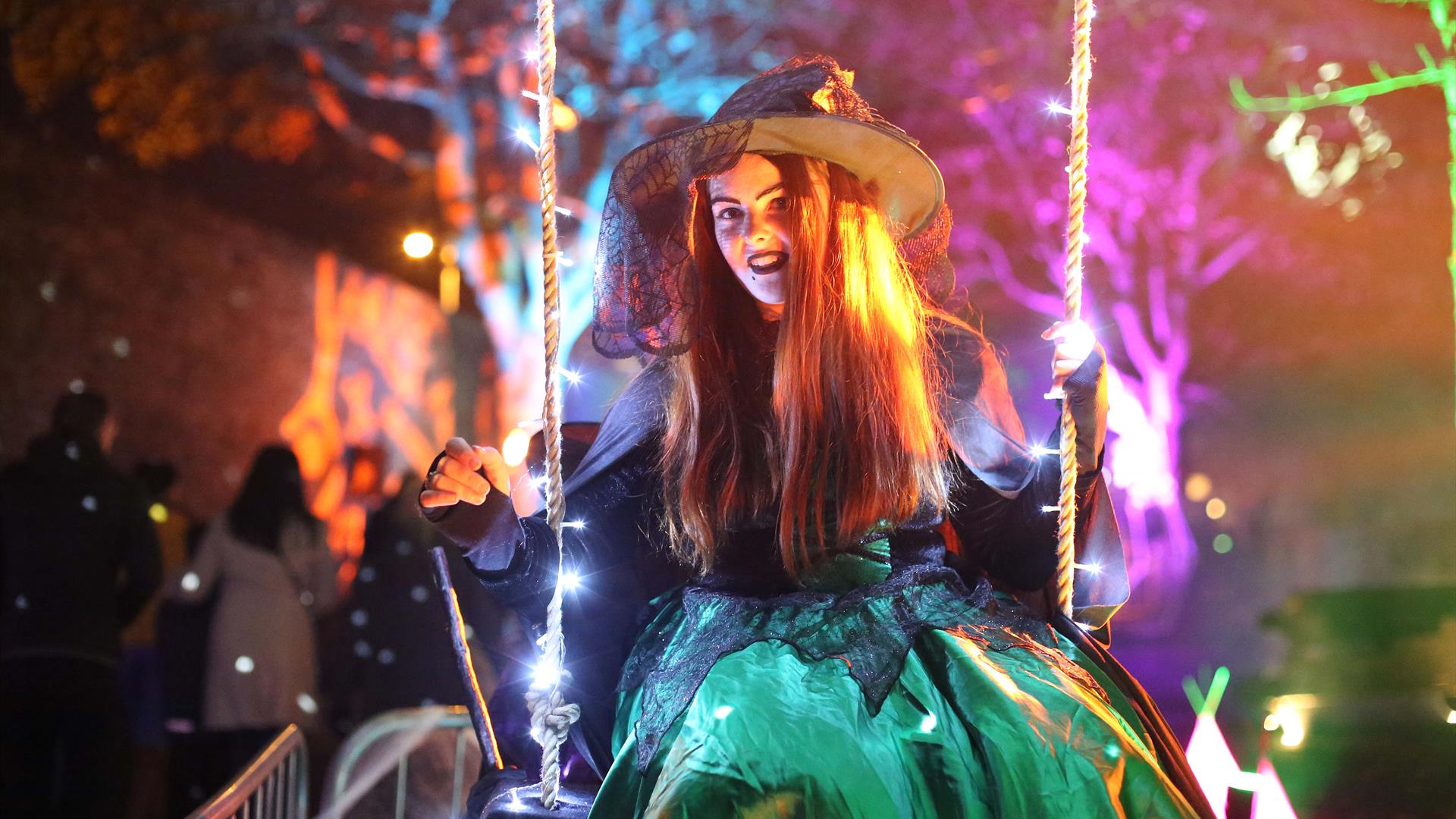 Halloween parade in Derry. Photo / Visit Derry
Beloved by locals and visitors alike, the decade-old Walled City Brewery is a beacon of hospitality in Ebrington Square, constantly showered with awards. This independent gastropub is housed in the old Pay Office of the British Army barracks, and if you need a palette change from Guiness, you’ve come to the right place. The craft beer is outstanding, with the hipster brewers pumping out a huge range of signature brews – including hoppy IPAs, refreshing wheat beers, and silky stouts. Complement the craft beer adventure with some tasty bites at The Kitchen restaurant, which showcases local produce. I started with cauliflower croquettes, before settling into a massive main of pork fillet and crispy belly.
Just down from Walled City Brewery, The Ebrington Hotel combines opulence, modern luxury, and historic charm in a landmark building dating back to 1842. With stylish rooms, top-notch amenities and sparkling customer service, it’s a winning perch in a prime location to savour the city.
If it’s a traditional pub you’re after, Derry abounds with spirited possibilities. Head to Peadar O’Donnell’s, home to three different bars (including the Gweedore Bar and Gweedore upstairs). The home of trad music in the city, O’Donnell’s boasts an epic whisky collection and the vintage interiors are captivating. I also enjoyed the fire-engine red establishment of O’Loughlins, where the craic flows warmly. For all the city has endured, the spirit and charisma of the friendly locals shines strong.
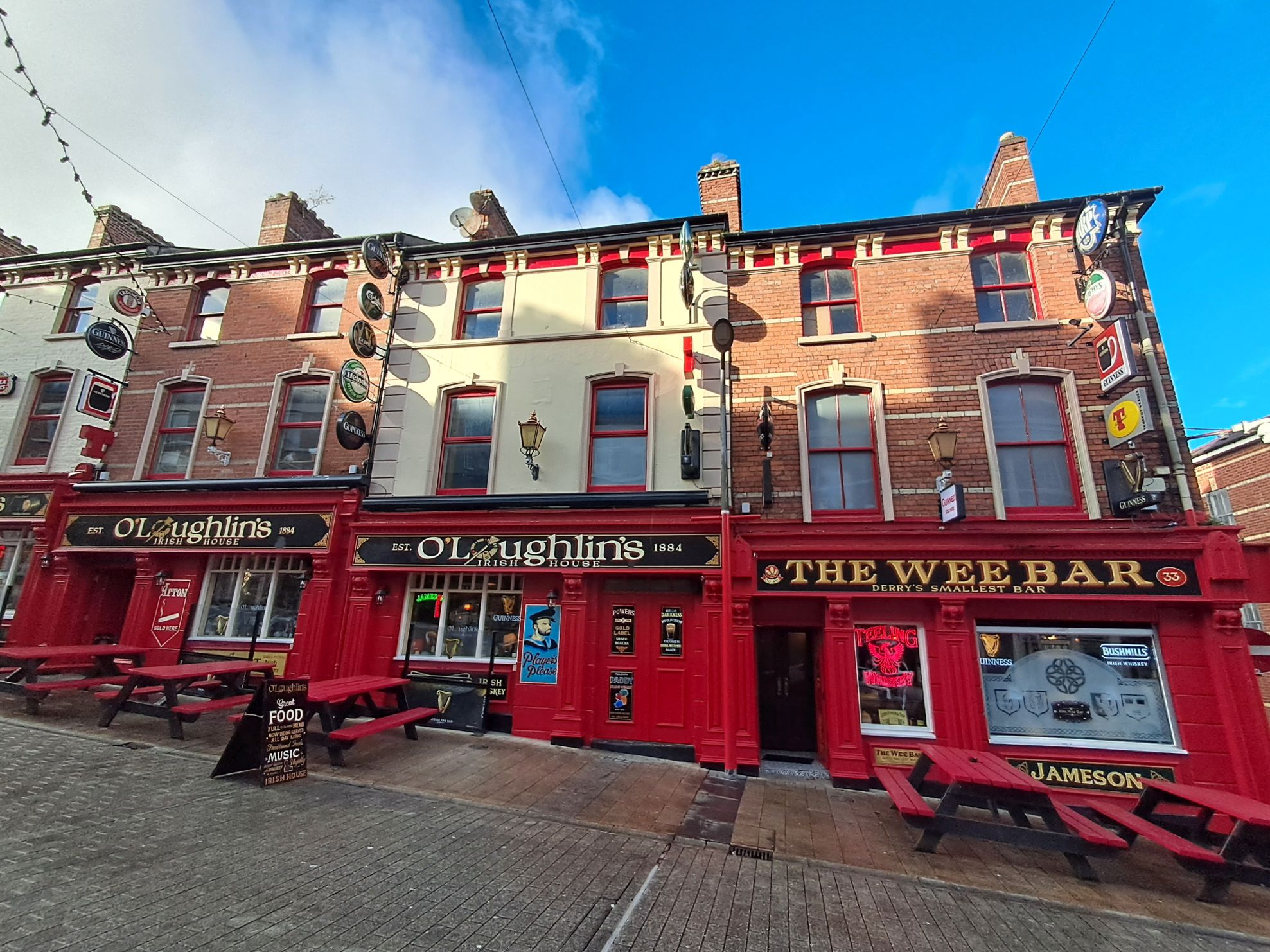 O'Loughlin's Pub in Derry. Photo / Mike Yardley
Fill your heart with Ireland in the enchanting Emerald Isle. For more touring insights and inspiration, head to the official website.
I flew to Dublin with Qatar Airways, recently crowned the 2025 World’s Best Airline by Skytrax, scooping the supreme honours for the ninth consecutive year. Qatar Airways flies non-stop between Doha and Auckland daily, with onward connections to 170 destinations, including daily flights to Dublin. I flew in Economy and you’ll notice the difference with one of the widest seats in the industry, complete with adjustable headrests. Lap up generous dining, complimentary Wi-Fi and over 8000 on-demand entertainment offerings in the Oryx One system. For best fares and seats to suit.
Mike Yardley is Newstalk ZB’s resident traveller and talks travel every week on Saturday mornings with Jack Tame.
Take your Radio, Podcasts and Music with you
Get the iHeart App

Get more of the radio, music and podcasts you love with the FREE iHeart app. Scan the QR code to download now.

Download from the app stores


Stream unlimited music, thousands of radio stations and podcasts all in one app. iHeart is easy to use and all FREE


